
REVIEW: There are no words for Audra McDonald at Roy Thomson Hall
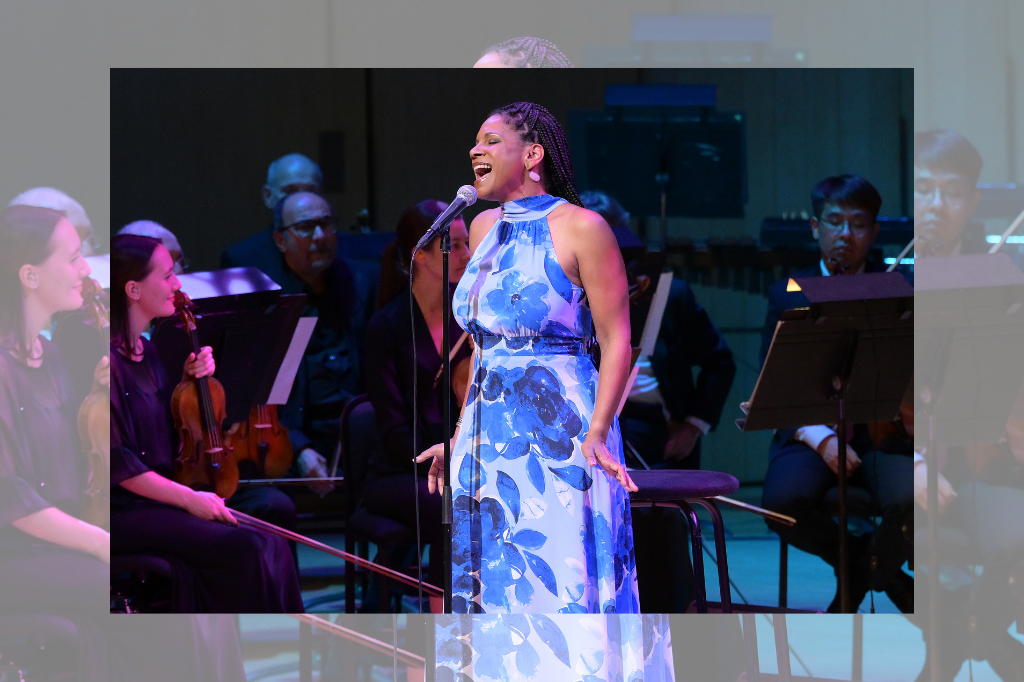 iPhoto caption: Photo by Jag Gundu
Any critic tasked with reviewing Audra McDonald must confront language’s inadequacy. Adjectives like “brilliant” and “heart-stopping” confuse her with the swaths of lesser performers who’ve been described similarly, flattening the matter. Her greatness is so established, so obvious, that such declarations feel empty. And yet to avoid them is to risk understatement.
Her touring concert An Evening with Audra McDonald, which played at Roy Thomson Hall on November 2 with the Toronto Symphony Orchestra, blurs descriptive poles: the singer’s manner is laid-back though poised, the selections predictable yet profound, her voice controlled but free. McDonald has collaborated with conductor Andy Einhorn for over a decade, and their act glistens with polish.
Perhaps unsurprisingly for a six-time Tony winner (the most of any actor), the concert includes many showtunes. Act One trends toward standards — “Summertime,” “It Don’t Mean a Thing (If It Ain’t Got That Swing),” “I Could Have Danced All Night” — while Act Two gets a bit more contemporary, to the point that it features a song found on R&B singer Emily King’s TikTok.
Much of the show orbits notions of childhood. McDonald sings “Pure Imagination” because she used to love Willy Wonka and the Chocolate Factory, tells many a story about her four children, and invokes Kermit the Frog with a “Bein’ Green” cover. This exploration climaxes with a mash-up of “Carefully Taught” from Rodgers and Hammerstein’s South Pacific and “Children Will Listen” from Sondheim’s Into the Woods, two numbers highlighting how young people are shaped by their environments.
That song pairing has a hidden biographical resonance: Hammerstein was Sondheim’s writing mentor, his own careful teacher.
The program includes other subtle nods at the artistic lineage of American musical theatre. McDonald sings “Fable” from The Light in the Piazza — which, she points out, was written by Rodgers’ grandson, Adam Guettel. And a Bernstein medley (“Some Other Time” / “Somewhere”) follows a Sondheim one (“What Can You Lose?” / “Not A Day Goes By”), reminding us of the duo’s collaboration on West Side Story. This material is standard for a musical theatre concert, but it feels different in McDonald’s hands because she’s directly worked with many of these writers, making her part of the family. Especially in the case of Sondheim, her interpretations feel rooted in the man and his spirit (“We miss him terribly,” she says).
What gets me about McDonald is her phrasing. She’s performed most of this repertoire for several years, and her delivery is both sublime and mature. Whereas many musical theatre singers wander into vibrato haphazardly, spontaneously adding it halfway through a note, McDonald largely restricts such transitions to held-out vowels at the end of songs. Most other notes are either entirely straight, or entirely vibrato. This careful juxtaposition between (poppy) tension and (operatic) release gives McDonald’s storytelling its exhilarating texture.
An Evening with Audra McDonald includes a handful of songs from the singer’s most recent solo album, 2018’s Sing Happy. As the concert winds down, a thesis related to that title emerges: live in the moment. Love today. It’s not an original message; but with McDonald’s voice filling the air, it’s more achievable than ever.
An Evening with Audra McDonald played at Roy Thomson Hall on November 2. More information is available here.
Intermission reviews are independent and unrelated to Intermission’s partnered content. Learn more about Intermission’s partnership model here.
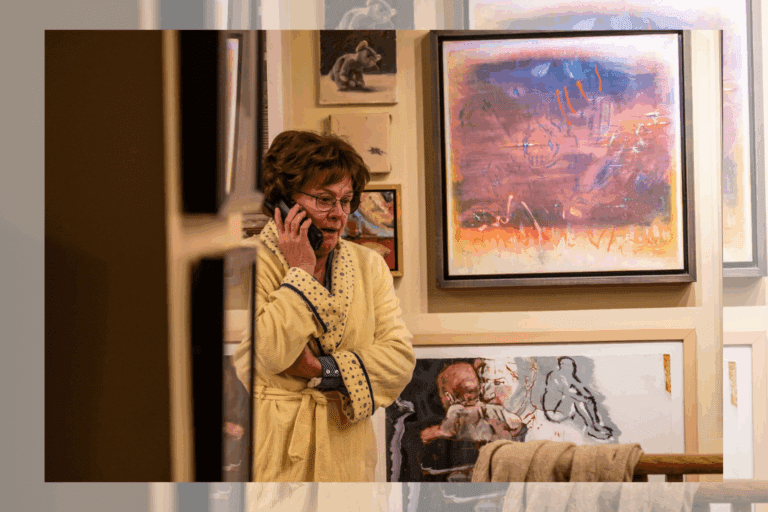 iPhoto caption: Jane Spidell in 'Twelve Dinners.' Photo by Dahlia Katz.
REVIEW: Family tensions run high in TIFT’s intimate Twelve Dinners
In the now-closed Twelve Dinners, an autobiographical play written and directed by Steve Ross, audiences received intimate access to an unvarnished version of a younger Ross through 12 evening meals with his parents.
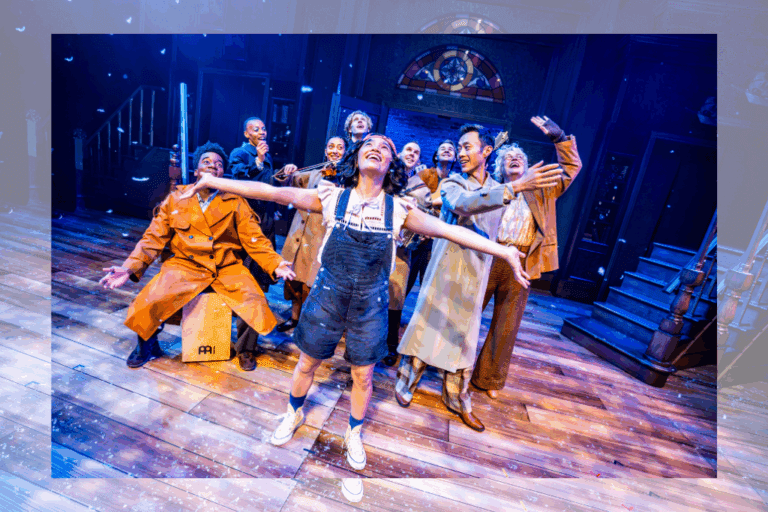 iPhoto caption: Members of the company of 'Narnia.' Photo by Dahlia Katz.
REVIEW: Bad Hats’ Narnia is a joyful, heartwarming escape
The spirit of openness and the joy of discovery rule over this Narnia. Open the wardrobe and see.
 iPhoto caption: Members of the company of 'Robin Hood.' Photo by Dahlia Katz.
REVIEW: Canadian Stage’s Robin Hood panto is anti-capitalist fun for the whole family
Following Ross Petty’s legacy of scene-stealing, Damien Atkins as the evil Prince John is easily the greatest delight of the show.
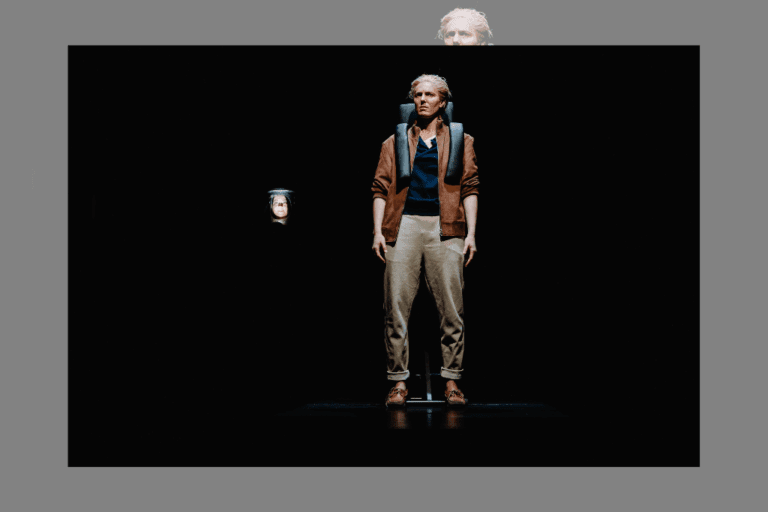 iPhoto caption: Lauren Gillis and Alaine Hutton in 'Public Consumption.' Photo by Eden Graham.
REVIEW: Lester Trips’ stylish Public Consumption captures the internet’s profound emptiness
Rather than directly representing online life, Public Consumption speculates — with virtuosity — about how the digital world affects our bodies. And the show's findings are by no means comfortable.
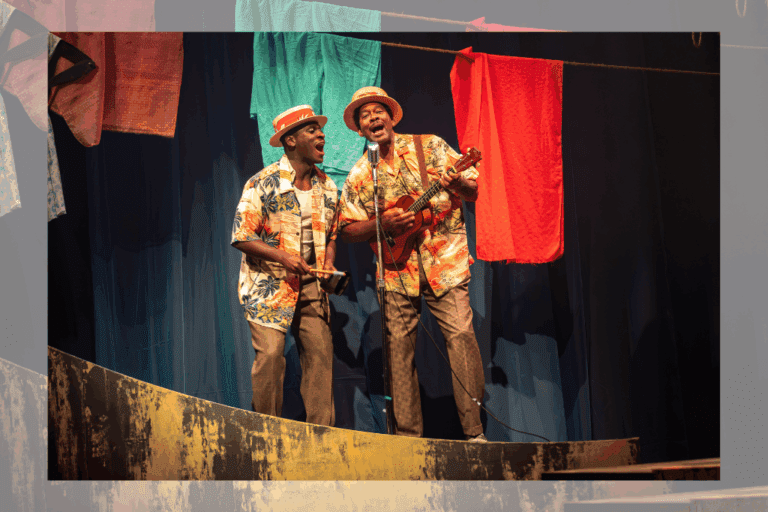 iPhoto caption: Tony Ofori and Daren A. Herbert in 'Moonlight Schooner.' Photo by Dahlia Katz.
Kanika Ambrose’s Moonlight Schooner is animated and visually stunning, but its individual pieces don’t come together as neatly as I would've expected.
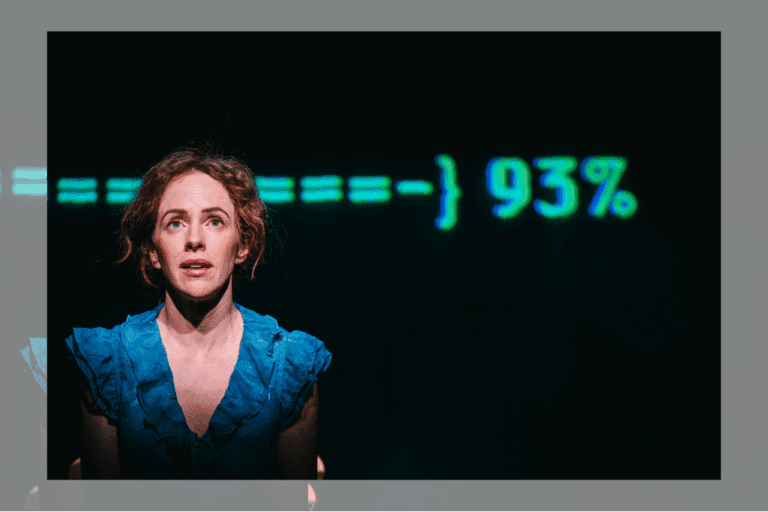 iPhoto caption: Fiona Mongillo in 'Reproduktion.' Photo by Ann Baggley.
REVIEW: Here For Now’s well-acted Reproduktion attempts to tackle too much
Amy Rutherford’s world premiere script is ambitious and the material it covers is complex — but the narrative feels disjointed.
iPhoto caption: Lauren Gillis and Alaine Hutton in 'Public Consumption.' Photo by Eden Graham.
REVIEW: Lester Trips’ stylish Public Consumption captures the internet’s profound emptiness
Rather than directly representing online life, Public Consumption speculates — with virtuosity — about how the digital world affects our bodies. And the show's findings are by no means comfortable.
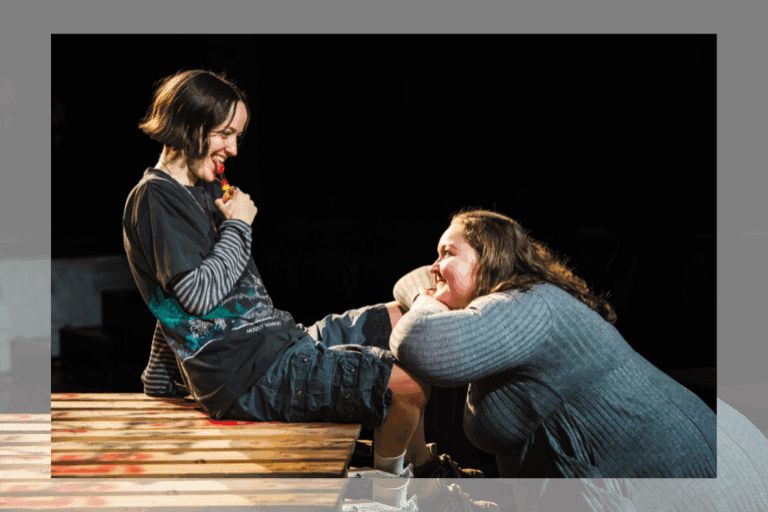 iPhoto caption: Photo by Elana Emer.
REVIEW: Icarus Theatre’s DNA paints a disturbing mural of teenage rebellion
While director Erik Richards’ tendency toward snappy, thriller-esque pacing doesn’t suit all of DNA’s more intimate moments, it adds electricity to the drama’s group scenes, bringing playwright Dennis Kelly’s reflections on groupthink and collective grief into clear view.
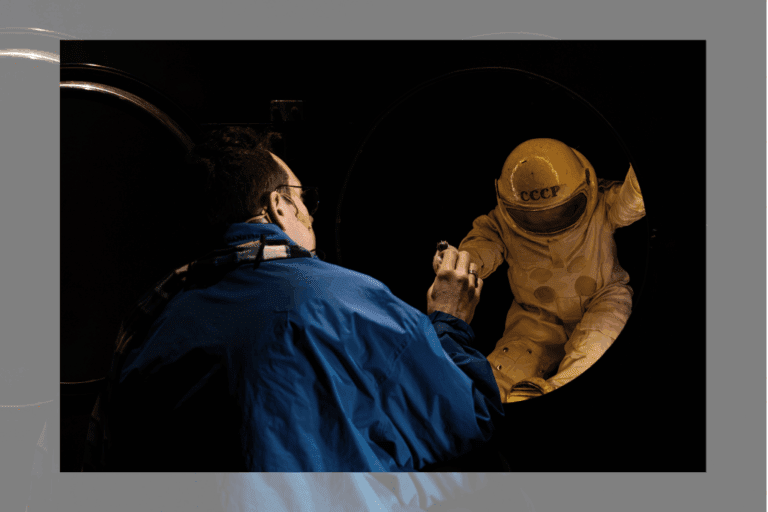 iPhoto caption: Olivier Normand in 'The Far Side of the Moon.' Photo by Li Wang.
REVIEW: Lepage’s ethereal The Far Side of the Moon is insomniac theatre
The Far Side of the Moon begins and ends with a large mirror on stage, and the show extracts enigmatic power from the tantalizing question of whether its protagonist is losing himself in his reflection, or moving toward self-discovery.
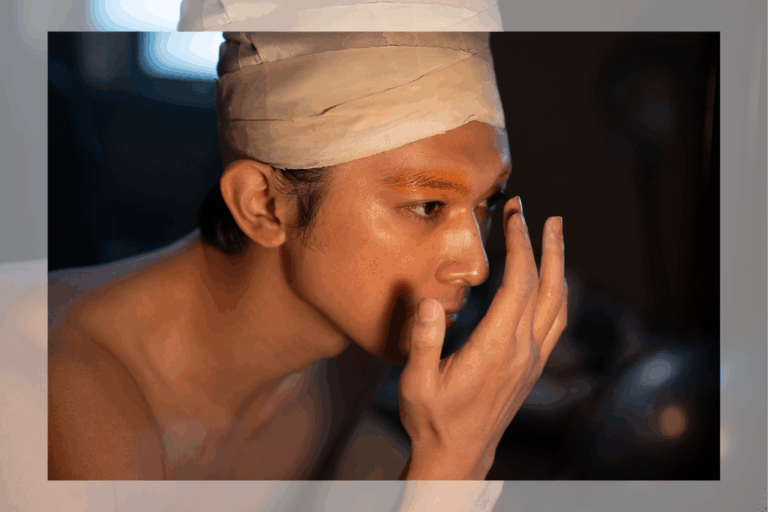 iPhoto caption: 'Kokuho' still courtesy of TIFF.
REVIEW: During this year’s TIFF, two films depicted theatre as a vessel for transcendence
Of the several performing arts-adjacent selections I took in, most affecting were two dramas: Lee Sang-il’s Kokuho and Chloé Zhao’s Hamnet. In both period pieces, theatre creation serves as an emotional outlet for an artist navigating devastating loss.
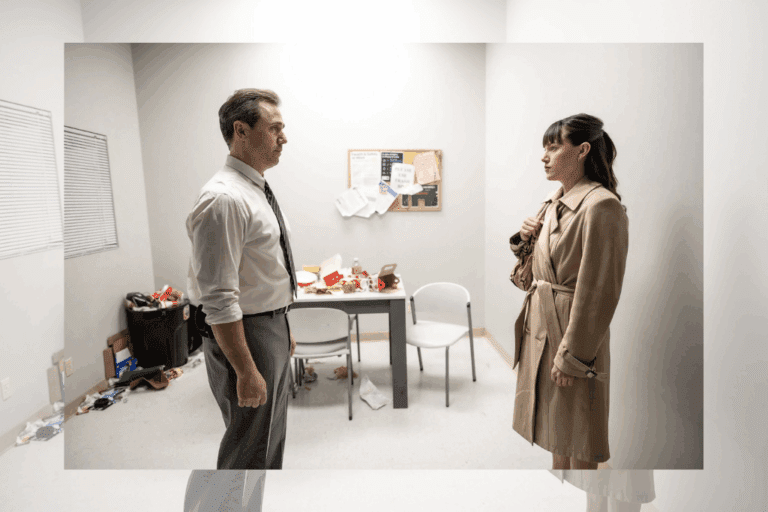 iPhoto caption: Cyrus Lane and Kirstyn Russelle in Barrie run of 'Blackbird.' Photo by Dahlia Katz.
REVIEW: Talk is Free Theatre’s Blackbird offers a close-up look at two detailed performances
Emerging director Dean Deffett has concocted a tight, straightforward production, primarily of interest as an intimate character study.
 iPhoto caption: Sleman Aldib and an audience member in 'The Opposite.' Still from a trailer by Spectrum Associates.
REVIEW: Kitchener’s biennial IMPACT Festival crackled with urgency
Most of the six works I viewed tackled urgent topics, from the convoluted Canadian immigration system to the Palestinian experience of displacement: explorations that line up with artistic director Pam Patel’s curatorial statement, which discusses how IMPACT ‘25 “unpacks what it means to survive, to resist, and to seek refuge” through a global, Indigenous-focused lens.
Comments