
REVIEW: Talk is Free Theatre’s Blackbird offers a close-up look at two detailed performances
 iPhoto caption: Cyrus Lane and Kirstyn Russelle in Barrie run of 'Blackbird.' Photo by Dahlia Katz.
Among traversing the globe, producing Sondheim musicals, and conducting site-specific experiments in its hometown of Barrie, Ontario, Talk is Free Theatre (TIFT) has taken to putting on well-acted stagings of contemporary Anglophone scripts just old enough to have been forgotten.
Nine months ago was Mike Bartlett’s Cock, an English play from 2009, at a circus studio in Toronto’s east end; and now there’s David Harrower’s Blackbird, a Scottish drama from four years earlier, in an office at Hope United Church on the same side of the city. Emerging director Dean Deffett has concocted a tight, straightforward production, primarily of interest as an intimate character study.
In one location, a long-awaited encounter leads to a spiral of reveals about the past: Yes, Blackbird’s structure is fairly conventional. But its content glows with danger. Ray (TIFT regular Cyrus Lane), a 55-year-old white-collar worker, finds a 27-year-old woman named Una (Kirstyn Russelle) at his office. He doesn’t recognize her at first, because their last meeting happened when she was 12, and he was her sexual abuser — a crime for which he spent three-and-a-half years in prison.
Ray has meticulously refashioned his life. He’s taken on a new identity in a new town, and even has a wife. There’s an unreal quality to Ray and Una’s meeting; Harrower implies that both previously assumed they’d never see each other again. While Una doesn’t articulate a precise reason for tracking Ray down, it appears to me that her motivation partly stems from the need to reaffirm the past — to confirm that her trauma is real, and that there’s another person out there who remembers the events with similar vividity.
Her desire to retrace history gives way to dialogue that painstakingly maps the duo’s affair. On the level of design, Deffett doesn’t do much to add theatricality to these lengthy stretches of exposition. The only lighting source is the room’s harsh, built-in overhead (no designer credited). And the church’s tiny, cage-like office feels entirely realistic, with the floor’s discarded Tim Horton cups signalling a Canadian setting (set and prop coordination by Lauren Cully).
The space’s tightness means the actors’ reactions are highly visible, and it’s fascinating to track their characters’ intense reactions.
Una’s presence crumples Ray. After recognizing her, he takes on an immense physical heaviness. His eyesight drifts toward the floor, his body rigid with stress. A centre-stage table supports his attempts to keep himself upright. Speaking also requires labour: text lurches out of him uncomfortably, an extension of his pained exhales. Lane’s brutal, boxy physicality, clothed in neutral office wear (designed by Sequoia Erickson), exudes a dissociative aura; his character is so overwhelmed that he can only afford the occasional, desperate movement. His mental fog clouds the office.
But Una evinces mercuriality. While Ray’s energy tends to slant forward, she defaults upright, often backing herself up against a bookshelf or wall, grounding herself in defensive but powerful positions. Her hands flit about, nervously searching for an activity other than nail-picking. Russelle’s physical agitation mirrors the turbulence of Una’s mental state. More than once, she springs forward with a confession that would seem to change the terms of the encounter; her words hang in the air for a moment before she changes courses, taking a step back. During these outbursts, her emotion manifests in a tense, quivering neck.
The production’s excitement lies in observing these behavioural patterns. Even when the text gets stuck in a web of description, the actors’ subtle dynamic churns on. Through their carefully sculpted performances, the show’s topic becomes power. Una could raze Ray’s new life, but she abstains from verbal threats. Her agency instead manifests in physical and emotional changeability. While Ray stands paralyzed, Una tests different ways of occupying the space — different routes the encounter could go. Fifteen years ago, he was in control; now, she’s the one following her impulses.
Blackbird runs at Toronto’s Hope United Church until October 18. More information is available here.
Intermission reviews are independent and unrelated to Intermission’s partnered content. Learn more about Intermission’s partnership model here.
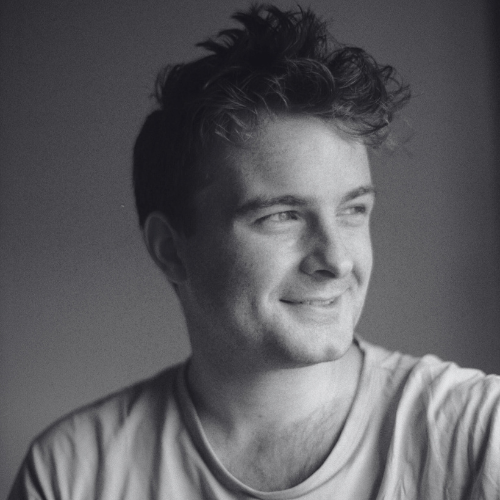
 iPhoto caption: Members of the company of 'Robin Hood.' Photo by Dahlia Katz.
REVIEW: Canadian Stage’s Robin Hood panto is anti-capitalist fun for the whole family
Following Ross Petty’s legacy of scene-stealing, Damien Atkins as the evil Prince John is easily the greatest delight of the show.
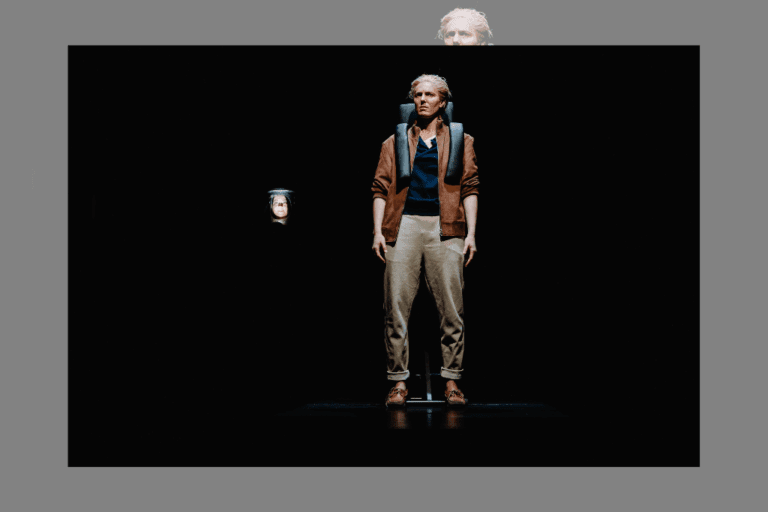 iPhoto caption: Lauren Gillis and Alaine Hutton in 'Public Consumption.' Photo by Eden Graham.
REVIEW: Lester Trips’ stylish Public Consumption captures the internet’s profound emptiness
Rather than directly representing online life, Public Consumption speculates — with virtuosity — about how the digital world affects our bodies. And the show's findings are by no means comfortable.
 iPhoto caption: Tony Ofori and Daren A. Herbert in 'Moonlight Schooner.' Photo by Dahlia Katz.
Kanika Ambrose’s Moonlight Schooner is animated and visually stunning, but its individual pieces don’t come together as neatly as I would've expected.
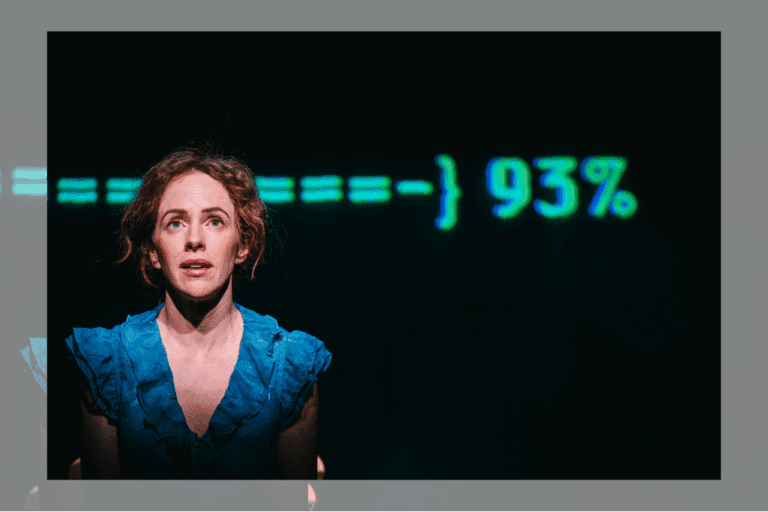 iPhoto caption: Fiona Mongillo in 'Reproduktion.' Photo by Ann Baggley.
REVIEW: Here For Now’s well-acted Reproduktion attempts to tackle too much
Amy Rutherford’s world premiere script is ambitious and the material it covers is complex — but the narrative feels disjointed.
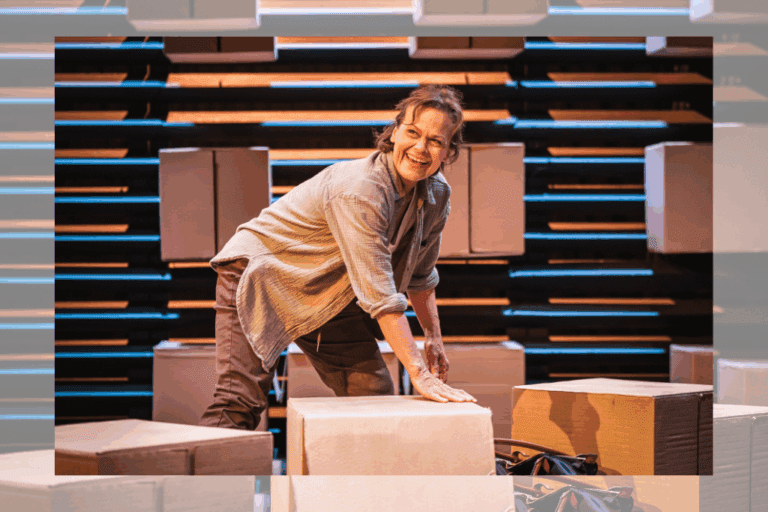 iPhoto caption: Kristen Thomson in 'Fulfillment Centre.' Photo by Elana Emer.
REVIEW: Coal Mine’s Fulfillment Centre asks how we end up alone, together
The production understands the play’s themes, yet feels limited by a script that delivers a package it never fully opens.
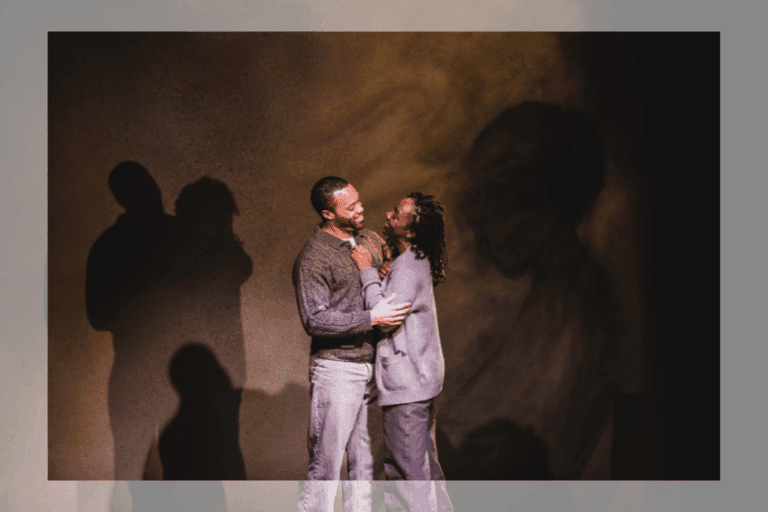 iPhoto caption: Dwain Murphy and Virgilia Griffith in 'a profoundly affectionate, passionate devotion to someone
(-noun).' Photo by Jae Yang.
iPhoto caption: Dwain Murphy and Virgilia Griffith in 'a profoundly affectionate, passionate devotion to someone
(-noun).' Photo by Jae Yang.
REVIEW: Obsidian and Tarragon co-production reflects on the inadequacy of language
a profoundly affectionate, passionate devotion to someone (-noun): the title says it all, offering a definition for an absent word. The thing is the thing unsaid. For the play’s three couples, language falls short: beautifully, tragically, sublimely.
iPhoto caption: Lauren Gillis and Alaine Hutton in 'Public Consumption.' Photo by Eden Graham.
REVIEW: Lester Trips’ stylish Public Consumption captures the internet’s profound emptiness
Rather than directly representing online life, Public Consumption speculates — with virtuosity — about how the digital world affects our bodies. And the show's findings are by no means comfortable.
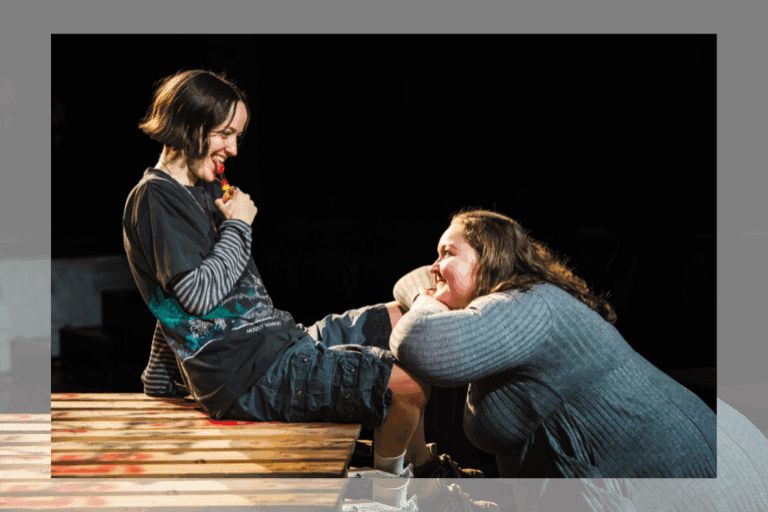 iPhoto caption: Photo by Elana Emer.
REVIEW: Icarus Theatre’s DNA paints a disturbing mural of teenage rebellion
While director Erik Richards’ tendency toward snappy, thriller-esque pacing doesn’t suit all of DNA’s more intimate moments, it adds electricity to the drama’s group scenes, bringing playwright Dennis Kelly’s reflections on groupthink and collective grief into clear view.
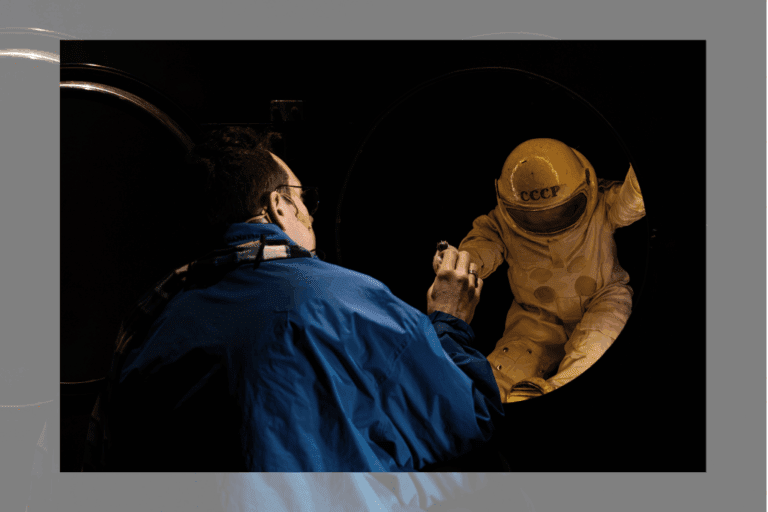 iPhoto caption: Olivier Normand in 'The Far Side of the Moon.' Photo by Li Wang.
REVIEW: Lepage’s ethereal The Far Side of the Moon is insomniac theatre
The Far Side of the Moon begins and ends with a large mirror on stage, and the show extracts enigmatic power from the tantalizing question of whether its protagonist is losing himself in his reflection, or moving toward self-discovery.
 iPhoto caption: 'Kokuho' still courtesy of TIFF.
REVIEW: During this year’s TIFF, two films depicted theatre as a vessel for transcendence
Of the several performing arts-adjacent selections I took in, most affecting were two dramas: Lee Sang-il’s Kokuho and Chloé Zhao’s Hamnet. In both period pieces, theatre creation serves as an emotional outlet for an artist navigating devastating loss.
 iPhoto caption: Sleman Aldib and an audience member in 'The Opposite.' Still from a trailer by Spectrum Associates.
REVIEW: Kitchener’s biennial IMPACT Festival crackled with urgency
Most of the six works I viewed tackled urgent topics, from the convoluted Canadian immigration system to the Palestinian experience of displacement: explorations that line up with artistic director Pam Patel’s curatorial statement, which discusses how IMPACT ‘25 “unpacks what it means to survive, to resist, and to seek refuge” through a global, Indigenous-focused lens.
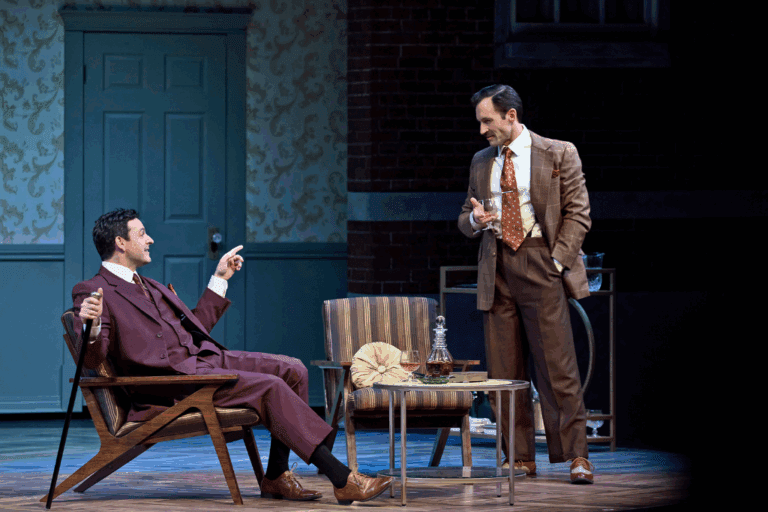 iPhoto caption: Tyrell Crews and Stafford Perry in 'Dial M For Murder.' Photo by Trudie Lee.
“There's a magic in theatre, and a spiritual part of theatre, that's really important," says Keiley. "It's the gathering, but it's also: ‘How did you make me believe that? How did you do that?’ That's the mystery I play with in all my shows. And it's a tightrope every time."
Comments