
REVIEW: Garner Theatre Productions’ Bright Star coasts on charm and likability
 iPhoto caption: Kaylee Harwood with members of the 'Bright Star' ensemble. Photo by Dahlia Katz.
Steve Martin and Edie Brickell’s Bright Star begins with a tantalizing promise: “If you knew my story,” its main character sings, “you’d have a good story to tell.” But the effectiveness of any story depends entirely on the teller.
Inspired by Martin and Brickell’s 2013 bluegrass album, Bright Star premiered at San Diego’s Old Globe Theatre before a short Broadway run in 2016. A sweet, feel-good show with a telegraphed twist and a message about the power of hope, it coasts on charm and likability, but doesn’t include most of the elements that make a musical theatre story stick, such as unique characterization, well-paced suspense, and memorable language.
In director Jacob Wolstencroft’s production, Brandon Kleiman’s appropriately homey set features wooden porches and the backdrop of a house’s gray-blue exterior occasionally sprayed with stars. Windows fill the backdrop, as if each might open to reveal a story of its own.
The prospect of stories compels Alice Murphy (Kaylee Harwood), a carefree North Carolina teen in the early 1920s, who’s desperate to get out from under her conservative family’s roof and into a good university. She’s distracted from her exit plan by Jimmy Ray Dobbs (George Krissa), son of the town’s blowhard mayor (Brendan Wall), who with equal fervour opposes Jimmy Ray’s romantic inclinations and his college applications.
We meet the heroine of this classic tale of star-crossed lovers, loosely based on true events, two decades later; single and grim, she rules the Asheville Southern Journal with a literary iron fist. It’s unusual for her to even read a new writer’s story, but something about eager Billy Cane (Nick Dolan), a young man just returned from serving in the Second World War, speaks to her.
Bright Star covers it all: thwarted love, coming of age, family drama, the power of art, the importance of remaining true to oneself. Yet Martin’s wit, which blazes in plays like Picasso at the Lapin Agile, merely twinkles here, largely contained to Alice’s magazine office and her two wisecracking employees (Andrew Legg and Marie Mahabal Hauer). The book features short scenes that rise quickly to sudden declarations and decisions before a song starts, as if Martin doesn’t trust the audience to stay awake without a revelation every three minutes.
Mirvish and Garner Theatre Productions’ staging is appealingly homegrown, featuring a cast of enthusiastic Canadian actors. In keeping with Garner’s mandate, the actors are also the instrumentalists, letting violins, banjos, and guitars become extensions of their characters’ actions. Jason Hand’s lighting does nice work in focusing our attention on the important parties while letting the chorus swirl around them like a sonic river. Underscored by the varying levels of comfort (and tuning) the actors display with their instruments, there’s the rousing feeling of community theatre. Adding to the hang-out vibe, Wolstencroft directs everything with a laid-back pace.
Winsome and winning Yunike Soedarmasto stands out as hometown bookstore owner Margo, who hopes that her long-term friendship with Billy can turn into love now that they’re both grown. Beau Dixon injects humour and heart into his friendly, caring Daddy Cane, a welcome contrast to all the terrible parents on display.
Krissa, who nearly stole the show in Natasha, Pierre & The Great Comet of 1812 as a dashing cad, shows that he can be both hunky and soulful as the conflicted Jimmy Ray, at his best when he’s playing his chastened older self. And Harwood in particular has a beautiful voice, tinging her songs with irony and regret.
It’s a pity that the sound balance (designed by Deanna H. Choi) almost swallows up her entire opening number and, despite improvement, still makes the evening feel vaguely muted.
Also muting the show are Brickell’s lyrics — the biggest disappointment. Instead of layered, personality-driven pieces distinct to each character, the songs are largely straightforward descriptions of what is happening or the singers simply stating their emotions in the moment.
Martin and Brickell paint a balanced picture of the American South; their leads are readers and artists seeking to defy the prejudices of their family members, and speak about the importance of well-chosen words. Yet the lyrics give no window into those personality traits, rarely rising above aphorism and usually less interesting than the dialogue. Love songs for different couples are virtually indistinguishable; one tries to rhyme “go” with “porch,” which is a stretch for even the thickest Southern accent.
That being said, there is value in the songs’ simplicity, which gives them an air of naked vulnerability. Brickell and Martin’s bluegrass and folk music is gentle and lovely, often feeling like an antidote to the harshness of the world beyond the theatre doors; “Sun Is Gonna Shine,” with the resonant backing of the strings, is a stirring anthem.
I just wish that “good story,” written by stars, shone a bit brighter.
Bright Star runs at the CAA Thetre until November 2. More information is available here.
Intermission reviews are independent and unrelated to Intermission’s partnered content. Learn more about Intermission’s partnership model here.

Ilana Lucas
Ilana Lucas is a professor of English in Centennial College’s School of Advancement. She is the President of the Canadian Theatre Critics Association. She holds a BA in English and Theatre from Princeton University, an MFA in Dramaturgy and Script Development from Columbia University, and serves as Princeton’s Alumni Schools Committee Chair for Western Ontario. She has written for Brit+Co, Mooney on Theatre, and BroadwayWorld Toronto. Her most recent play, Let’s Talk, won the 2019 Toronto Fringe Festival’s 24-Hour Playwriting Contest. She has a deep and abiding love of musical theatre, and considers her year working for the estate of Tony winners Phyllis Newman and Adolph Green one of her most treasured memories.
LEARN MORE iPhoto caption: Members of the company of 'Robin Hood.' Photo by Dahlia Katz.
REVIEW: Canadian Stage’s Robin Hood panto is anti-capitalist fun for the whole family
Following Ross Petty’s legacy of scene-stealing, Damien Atkins as the evil Prince John is easily the greatest delight of the show.
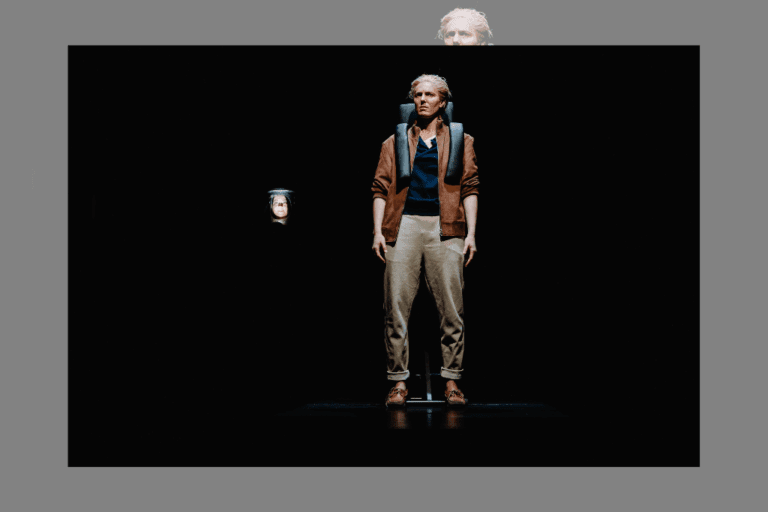 iPhoto caption: Lauren Gillis and Alaine Hutton in 'Public Consumption.' Photo by Eden Graham.
REVIEW: Lester Trips’ stylish Public Consumption captures the internet’s profound emptiness
Rather than directly representing online life, Public Consumption speculates — with virtuosity — about how the digital world affects our bodies. And the show's findings are by no means comfortable.
 iPhoto caption: Tony Ofori and Daren A. Herbert in 'Moonlight Schooner.' Photo by Dahlia Katz.
Kanika Ambrose’s Moonlight Schooner is animated and visually stunning, but its individual pieces don’t come together as neatly as I would've expected.
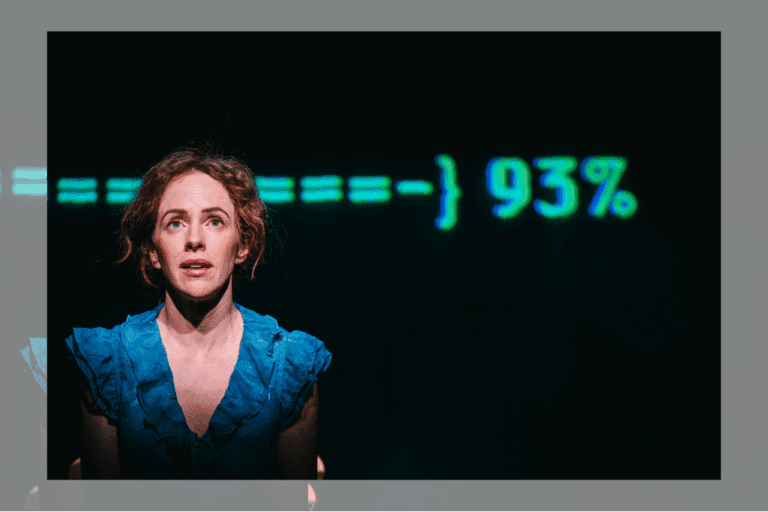 iPhoto caption: Fiona Mongillo in 'Reproduktion.' Photo by Ann Baggley.
REVIEW: Here For Now’s well-acted Reproduktion attempts to tackle too much
Amy Rutherford’s world premiere script is ambitious and the material it covers is complex — but the narrative feels disjointed.
 iPhoto caption: Kristen Thomson in 'Fulfillment Centre.' Photo by Elana Emer.
REVIEW: Coal Mine’s Fulfillment Centre asks how we end up alone, together
The production understands the play’s themes, yet feels limited by a script that delivers a package it never fully opens.
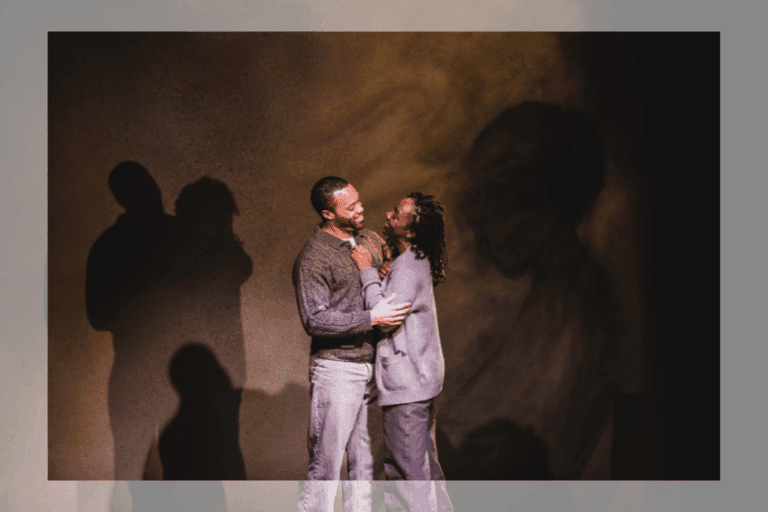 iPhoto caption: Dwain Murphy and Virgilia Griffith in 'a profoundly affectionate, passionate devotion to someone
(-noun).' Photo by Jae Yang.
iPhoto caption: Dwain Murphy and Virgilia Griffith in 'a profoundly affectionate, passionate devotion to someone
(-noun).' Photo by Jae Yang.
REVIEW: Obsidian and Tarragon co-production reflects on the inadequacy of language
a profoundly affectionate, passionate devotion to someone (-noun): the title says it all, offering a definition for an absent word. The thing is the thing unsaid. For the play’s three couples, language falls short: beautifully, tragically, sublimely.
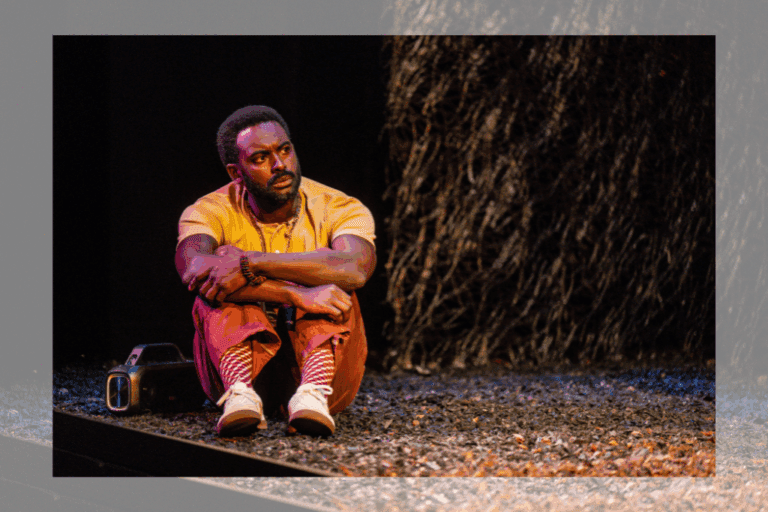 iPhoto caption: Mazin Elsadig in 'The Comeuppance.' Photo by Dahlia Katz. Set design by Shannon Lea Doyle, costume design by Ming Wong, lighting design by Jason Hand.
Macabre and drama-filled yet surprisingly gentle, The Comeuppance will probably be most compelling to the around-40 crowd who share its specific touchstones and millennial angst from a high-school experience bookended by Columbine and 9/11.
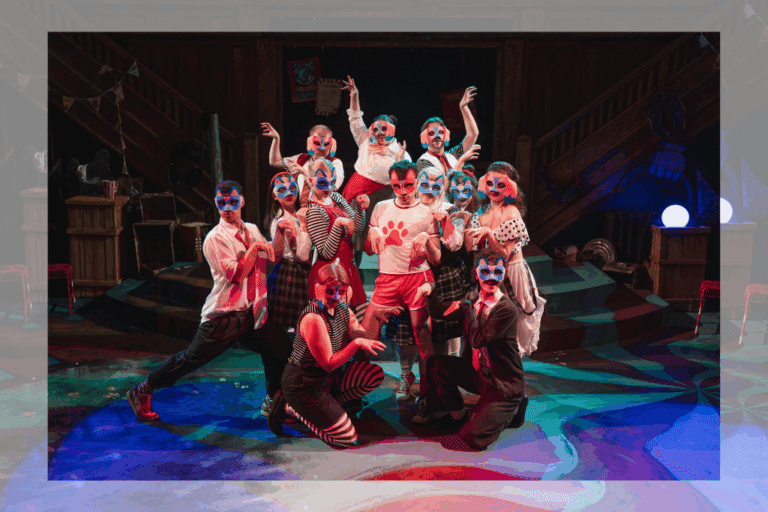 iPhoto caption: The company of 'Ride the Cyclone.' Photo by Taylor Long.
REVIEW: Shifting Ground Collective delivers heartfelt, overloaded Ride the Cyclone
Director 郝邦宇 Steven Hao hits the carnival bullseye when it comes to heart and fun, but just misses the top prize by expanding the cast and reducing the original’s compelling creepiness.
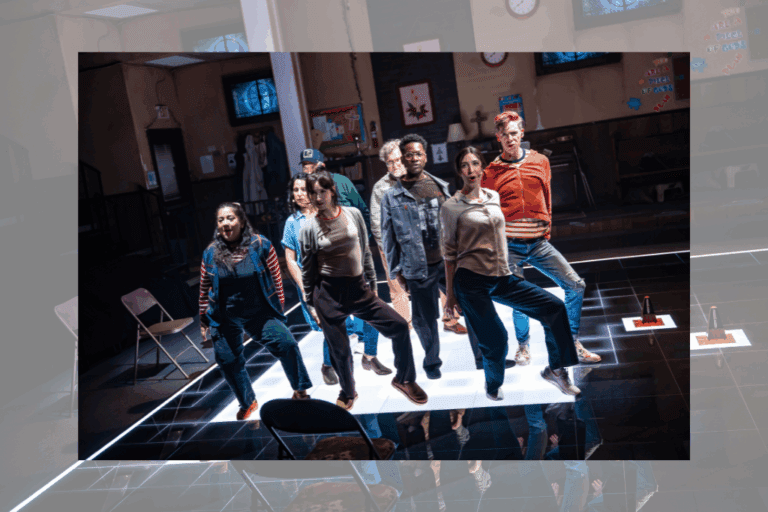 iPhoto caption: Photo by Dahlia Katz.
REVIEW: Dave Malloy’s Octet vibrates with sublime vocal beauty at Crow’s Theatre
Malloy’s intricate a cappella compositions, rich with complex harmonies, are the hymns and confessionals in a show about a support group for internet addiction. Regardless of what form their ego-feeding or doomscrolling compulsions take, the characters know it’s actually about appeasing what they call “the monster” inside — that gaping maw of emptiness that begs for shiny treats in the absence of real connection.
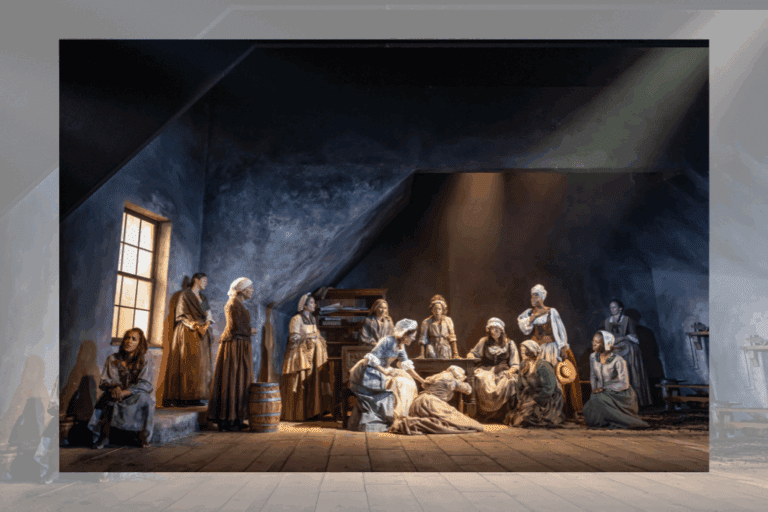 iPhoto caption: The company of 'The Welkin.' Photo by Dahlia Katz.
REVIEW: The Welkin careens from raucous comedy to crushing tragedy
The problem with human rights is that, if you believe in them, you have to apply them to everyone. Political opponents. Murderers. Your ex. People whose phones go off at the theatre. Women. The character of Sally puts this theory to a stress test; in bahia watson’s assured hands, she’s gleefully unlikeable, glorying in a storm of suspiciously modern swearing, lacking any flicker of conscience, and biting the hands that are trying to help her.
 iPhoto caption: Heeyun Park 박희윤 in 'The Great Comet.' Photo by Dahlia Katz.
REVIEW: Natasha, Pierre & The Great Comet of 1812 dazzles in Mirvish transfer
The upscaled edition is slightly different, but it’s still a rave in multiple ways, with lived-in performances making it seem at times even more immediate than at Crow’s. The show feels more like a vibe than anything cohesive, but what a vibe it is.
 iPhoto caption: The company of 'The Frogs.' Photo by Dahlia Katz.
Staged inches from the audience by director Griffin Hewitt, the show commendably captures the free-wheeling, anarchic spirit of the text. It’s a toad-ally great opportunity to see this rarity in the froggy flesh.
Comments