
REVIEW: The Welkin careens from raucous comedy to crushing tragedy
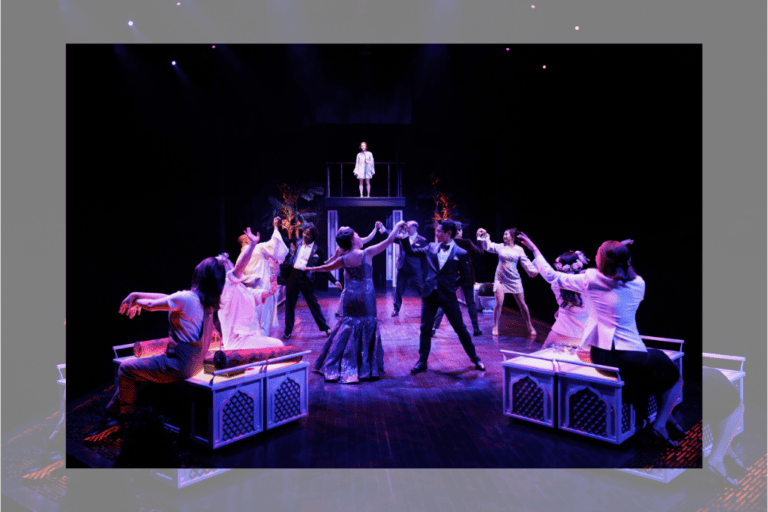
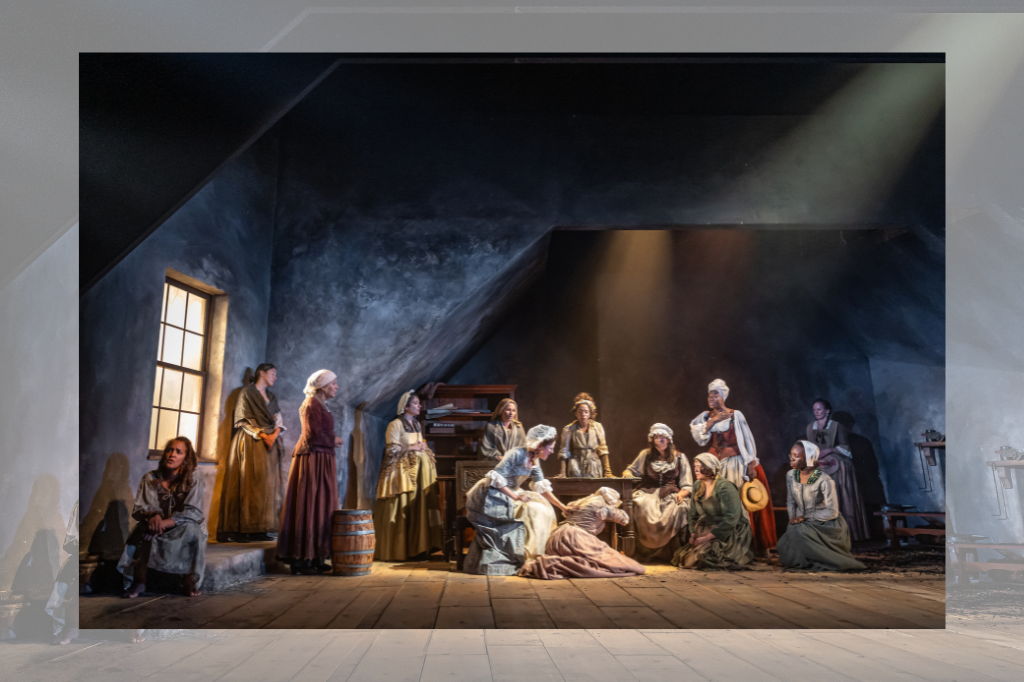 iPhoto caption: The company of 'The Welkin.' Photo by Dahlia Katz.
What is the sound of one butter churn pounding?
One loom weaving, one rag scrubbing, wielded by one woman, forever?
Lucy Kirkwood’s marvellously daring The Welkin, the first show in a series of collaborations between Soulpepper and Crow’s Theatre (here joined by the Howland Company), careens from raucous comedy to crushing tragedy in its dizzying exploration of female suffering under the boot of a perpetual patriarchy.
Welkin is another term for the heavens, and though the script eventually overstuffs its heaven with more things than you can shake a butter stick at, an effective staging by Weyni Mengesha and a large cross-section of the city’s most powerful actors make for compelling viewing of a suspenseful story that sifts through centuries of sexist sediment like an archaeological dig.
A sort of precursor and successor to jury drama 12 Angry Men, the play, which premiered at London’s National Theatre in 2020, revolves around convicted child murderer Sally Poppy (bahia watson). She’s set to hang on a sunny 1759 afternoon in rural England, but her claim she is pregnant halts the execution. It’s up to a jury of 12 matrons — women who have given birth — to decide whether she’s faking or sincere. With child, she’ll be sent to America; without, she’ll go to the gallows in front of an increasingly unruly mob.
Lizzy Luke (Mayko Nguyen), the town’s midwife, is conscripted by lover and case bailiff Mr. Coombes (Craig Lauzon) to lead the discussion. She’s frustrated when her expertise fails to immediately sway the other women — some already with punishment on their minds, some inclined towards clemency, and all waiting to return to the housework piling up in their absence.
Comets have historically been seen as portents of horror, beacons of hope, and symbols of cyclic return. All of these feature in The Welkin, as the women eagerly await the reappearance of Halley’s Comet, while wondering why we know with near exactitude when a celestial body will streak across the sky, yet the mysteries of woman’s bodies go unsolved.
The comet’s return seems to pierce the boundaries between centuries, women’s struggles through the ages bleeding through its barriers. Coombes jokingly opines that the future begins where the past ends; here, the two are in stereo with the present, the play seemingly unstuck in time. If you’re expecting a period piece with dramaturgically accurate language, accents, or music, you’re in for a shock.
Mengesha copes well with outsized stage directions, from thorough gynecological examinations to stage-filling smoke, highlighting scenes of repetitive household tasks to the heavy beat of that butter churn and building to a genuine stage surprise in the chaotic Act One closer. The sooty edges of Julie Fox’s chiaroscuro set ebb away into blackness when illuminated by a lone candle (lighting design by Bonnie Beecher). The stark grime shows by the light of the chamber’s window, which opens to let in angry chanting from frenzied spectators waiting for the execution (sound design by Thomas Ryder Payne). Arranging up to 15 actors in the Baillie Theatre is daunting, but Mengesha makes sure that, at crucial moments, there’s a pathway to everyone’s expressive face.
The problem with human rights is that, if you believe in them, you have to apply them to everyone. Political opponents. Murderers. Your ex. People whose phones go off at the theatre. Women. The character of Sally puts this theory to a stress test; in watson’s assured hands, she’s gleefully unlikeable, glorying in a storm of suspiciously modern swearing, lacking any flicker of conscience, and biting the hands that are trying to help her.
Yet she’s also a victim of abuse, from her childhood home to her current treatment by the justice system. Kirkwood refuses to offer a simple message about victimization or right and wrong, instead asking larger questions about class, sexuality, gender roles, and truth, to which each character has a complex relationship. Her expansive worldbuilding even finds space for characterization beyond a single personality trait or what’s immediately plot-relevant.
Nguyen’s commanding performance of a woman torn between mercy and rage anchors the cast, each of whom gets a showcase moment. Brefny Caribou and Annie Luján provide much of the comic relief in Kirkwood’s rapid-fire dialogue, while Hallie Seline as Helen Ludlow, the only matron never to have birthed a surviving child, has a stunning scene of grief in response to the world’s caprice.
In the second half, Kirkwood’s script becomes heavy with symbolism and plot twists. It’s here where we get the most audacious moments of beauty and violence, but also where the play loses the thread of its larger framing device regarding the ties that bind women, in favour of introducing additional shocks. Reveals around specific, secret connections the jurors have with each other seem petty next to greater messages about the justice system and class struggle. And when most of the women leave the stage without returning, the show deflates the unique alchemy of the divided-yet-forever-enmeshed group in favour of presenting an affecting but more pedestrian tragedy.
But there’s something gleeful in a production that has so much to say, and says it without remorse or hesitation:
Comets may come and go, but women’s drudgery is eternal.
The Welkin runs at Soulpepper Theatre until October 5. More information is available here.
Intermission reviews are independent and unrelated to Intermission’s partnered content. Learn more about Intermission’s partnership model here.

Ilana Lucas
Ilana Lucas is a professor of English in Centennial College’s School of Advancement. She is the President of the Canadian Theatre Critics Association. She holds a BA in English and Theatre from Princeton University, an MFA in Dramaturgy and Script Development from Columbia University, and serves as Princeton’s Alumni Schools Committee Chair for Western Ontario. She has written for Brit+Co, Mooney on Theatre, and BroadwayWorld Toronto. Her most recent play, Let’s Talk, won the 2019 Toronto Fringe Festival’s 24-Hour Playwriting Contest. She has a deep and abiding love of musical theatre, and considers her year working for the estate of Tony winners Phyllis Newman and Adolph Green one of her most treasured memories.
LEARN MORE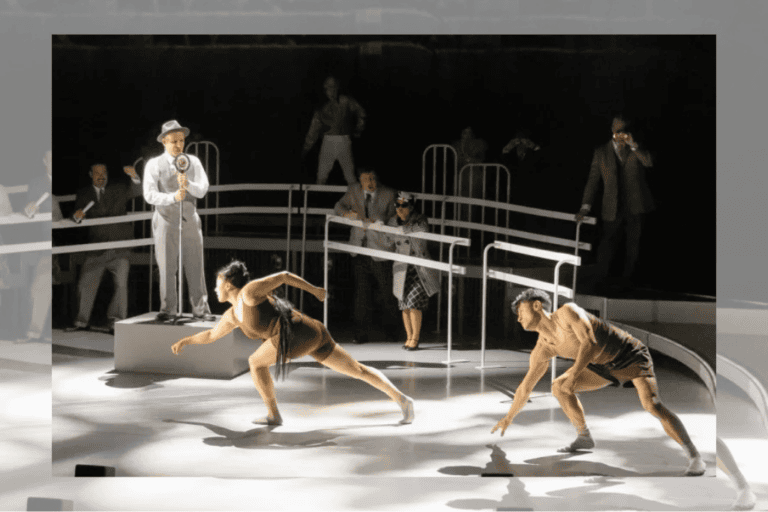 iPhoto caption: Sam Rosenthal and Keanu Uchida with members of the company of 'Dancer.' Photo by Racheal McCaig.
REVIEW: Hit Fringe musical Dancer returns for another lap
Somewhat hampered by the facts of its own story, Dancer is worth attending for its inventive balletic choreography and plucky spirit.
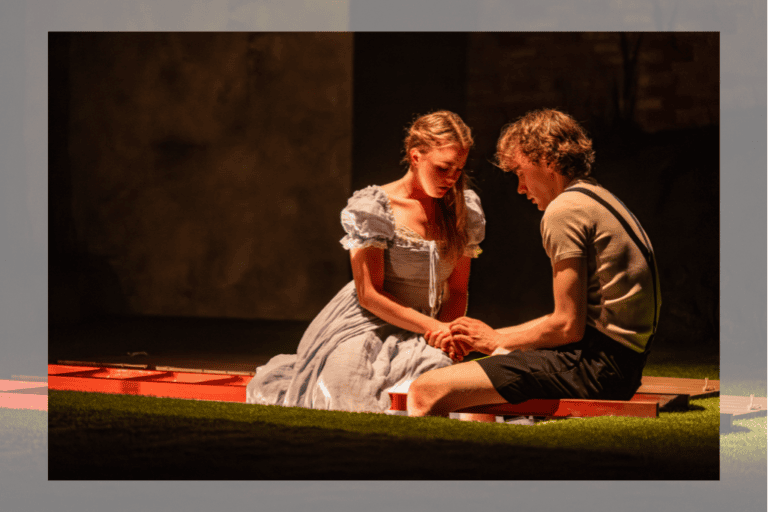 iPhoto caption: Olivia Neary-Hatton and Jake Bunyan in 'Spring Awakening.' Photo by Dahlia Katz.
REVIEW: A sparkling young cast buoys Soulpepper’s slick Spring Awakening
If knowledge is the best defence, the adults in Frank Wedekind’s 1906 play Spring Awakening hand their children suits of armour perforated with thousands of holes.
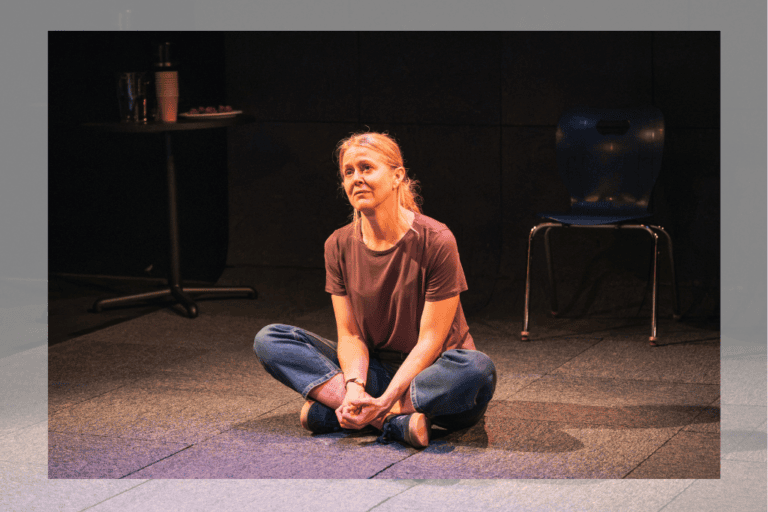 iPhoto caption: Amy Rutherford in 'Pre-Existing Condition.' Photo by Elana Emer.
In an attempt to create an issue-based work with a central everywoman, the play sends the message that we shouldn’t allow domestic violence to define a person while simultaneously staging that definition.
 iPhoto caption: Members of the company in 'The Tao of the World.' Stratford Festival 2026. Photo by David Hou.
Set in an opulent world of Singaporean elites, writer-director Jovanni Sy 施崇梵’s world premiere work at the Tom Patterson Theatre is a bubbly, Crazy Rich Asians-style romcom that sweetens the palate before releasing a poignant pop of acidic social commentary, arguing that the concept of restoration is laughable to those who suffered most in the interim and returned to a status quo little better than the disruption.
 iPhoto caption: André Sills and Krystin Pellerin in 'Othello.' Photo by David Hou.
REVIEW: In The Tempest and Othello, the Stratford Festival gets vengeful — and it rocks
The two strong productions, seen as a double bill, make a compelling case against choosing vengeance, with director Haysam Kadri’s Othello an especially riveting and taut interpretation.
 iPhoto caption: Sara Farb and Qasim Khan in 'Funny Girl.' Photo by David Cooper.
REVIEW: Sara Farb shines in Funny Girl at the Shaw Festival
One theme of Funny Girl is acceptance of the self despite its flaws and inconsistencies. The musical, likewise, is full of flaws and inconsistencies, but compelling all the same. Luckily, Sara Farb as Fanny Brice in all her boastful vulnerability gives us that central figure who delights — an umbrella to ward off the rain.
Comments