
REVIEW: Icarus Theatre’s Fiji combines competing genres
 iPhoto caption: Photo by Emily Anne Corcoran.
Two men meet online and instantly connect: a 21st-century love-at-first-sight moment brought to you by Icarus Theatre’s Fiji.
They are destined for each other, a perfect balance, much like how the tide meets the sand at the beach. Yin and yang.
Sam arrives at Nic’s apartment to spend the weekend with him. Their internet chemistry translates to real life – they move in sync opening their Molson beer cans in perfect unison. They’re not just a fling; it’s more intense, more meaningful, a life-altering event. The audience feels the heat radiating off them, enough to thaw the Canadian cold.
However, Sam and Nic have agreed this will be their first and last meeting. Why? Well, this is a self-declared “true crime rom-com.”
Director-producer Anthony Goncharov captures a clumsy young love – it’s all very Disney Channel Original Movie at the beginning, as Sam and Nic share nervous glances. I could practically hear the fumbling voiceovers in both of their heads. Produced in the intimate Bob Nasmith Innovation Backspace at Theatre Passe Muraille, this two-hander is a pressure cooker for romantic chemistry and perhaps something darker looming beneath the surface. I’m a big fan of this concept, and though I’m tempted to dive into the play’s meaty plot, I’ll leave it to the reader’s imagination (experiencing the twist in person is a good enough reason to see the show, so I can’t in good conscience reveal it here in writing).
As their time together dwindles, Sam and Nic decide to do the 36 Questions To Fall In Love survey published in the New York Times, originating from a 1997 study that explored how intimacy can be achieved between two strangers. Fiji, written by Eddie Loodmer-Elliott, Pedro Leandro, and Evan Lordan, flashes back and forth between Sam and Nic answering these questions and the rest of the men’s weekend as it spirals towards its end. The dialogue in the script is a little simplistic, sometimes airing on the cheesy. Though I believe this is the intention, especially at the beginning of the piece, this cheesiness feels somewhat out of place as the show continues to barrel on to its end. The playwrights can be a little heavy-handed in hinting at themes in dialogue; I found myself wishing more had been left up in the air to interpret without having to spell it out for the audience.
The building of tension in this piece works well, though, and I really started to care about Sam and Nic’s adorable, if not a bit fucked-up, relationship (but alas, whose relationship isn’t?). Jack Copland is compelling as Sam, bringing a delightful deer-in-the-headlights quality to the role. He’s gripping in more vulnerable moments, and frolicsome in his comedic bits, such as when he prances around the room belting the ”˜60’s hit “I Think We’re Alone Now.” Desmond Lazar’s Nic is undeniably charming. Despite being a tad unconvincing during the more hefty emotional moments at the end of the play, he brings a kindness to this complicated character which grounds the play in reality, as well as a bone-chilling coldness about certain matters.
Emily Anne Corcoran’s set successfully plays with contrasting reds and blues that hint at the twisty core of the piece, the central set piece being a gorgeous velvet red couch with a blue tarp over the back. On the coffee table sits a black apple on top of a red and blue book, a symbol of desire that has blackened – an omen. Lighting design by Lidia Foote follows suit and plays with bright colours that intensify as the piece unfolds. There is a bit of odd green lighting that begins to appear, only really illuminating the tops of the actors’ heads as they sit on the couches. Though I see the vision of using green to perhaps highlight more grotesque parts of the piece, I found it felt out of place. Erik Richards’ sound design is subtle and effective, cuing in gentle sea-side sounds and hauntingly romantic melodies on the keyboard.
Due to a combination of directorial decisions and script writing, I’m not quite sure I’m sold on the tone of this piece. As a half-rom-com, half-thriller, Fiji doesn’t quite commit to either genre enough in its physicality and script, opting instead to stay in a grey area for the majority of the piece. I was left craving to see the performance explore the extremes of each respective genre in particular moments, perhaps through more fight/intimacy work, or even just letting it live in the pauses more. At 65 minutes with no intermission, the story unfolds at a lightning pace for the audience. I can’t help but wish for a bit more air in this piece – I think it would help it breathe a bit more and let the audience sink into the world.
If you enjoy the pitch of a rom-com true-crime mesh, this one’s for you. Even if it’s not perfect, it’s a charming, nimble watch that tugs at the heartstrings.
Fiji runs at Theatre Passe Muraille until April 7. Tickets are available here.
Intermissionreviews are independent and unrelated toIntermission‘s partnered content. Learn more aboutIntermission‘s partnership modelhere.

Andrea Perez
Andrea Perez is an interdisciplinary theatre artist who enjoys acting, writing, directing, and producing. She is an undergraduate student at the University of Toronto studying Drama, Classical Civilizations, and Creative Writing, exploring storytelling and people in their many facets. She is a member of the 2023 cohort of the IBPOC Critics Lab, supported by Intermission Magazine and the Stratford Festival.
LEARN MORE iPhoto caption: Members of the company of 'Robin Hood.' Photo by Dahlia Katz.
REVIEW: Canadian Stage’s Robin Hood panto is anti-capitalist fun for the whole family
Following Ross Petty’s legacy of scene-stealing, Damien Atkins as the evil Prince John is easily the greatest delight of the show.
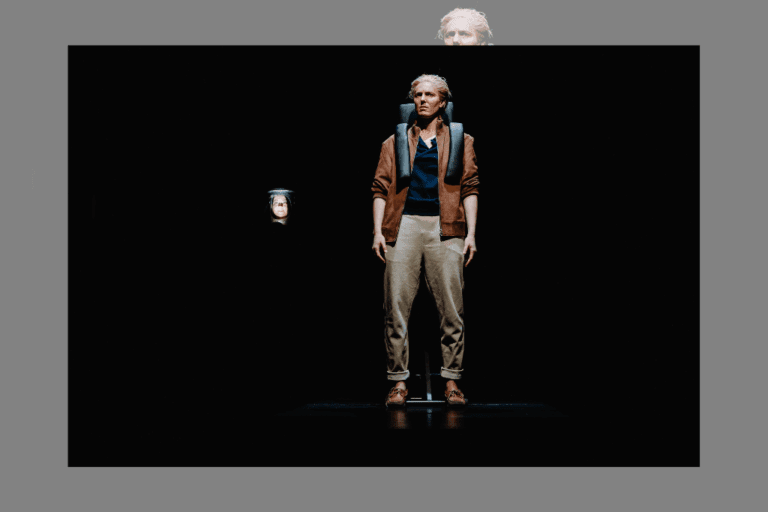 iPhoto caption: Lauren Gillis and Alaine Hutton in 'Public Consumption.' Photo by Eden Graham.
REVIEW: Lester Trips’ stylish Public Consumption captures the internet’s profound emptiness
Rather than directly representing online life, Public Consumption speculates — with virtuosity — about how the digital world affects our bodies. And the show's findings are by no means comfortable.
 iPhoto caption: Tony Ofori and Daren A. Herbert in 'Moonlight Schooner.' Photo by Dahlia Katz.
Kanika Ambrose’s Moonlight Schooner is animated and visually stunning, but its individual pieces don’t come together as neatly as I would've expected.
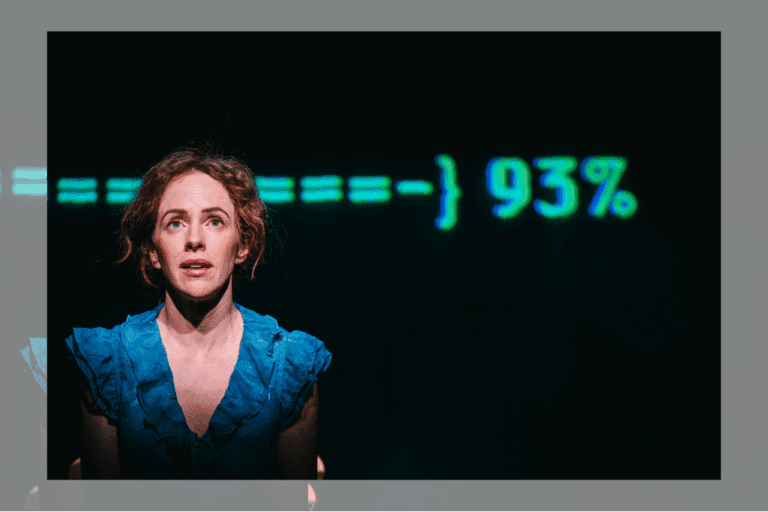 iPhoto caption: Fiona Mongillo in 'Reproduktion.' Photo by Ann Baggley.
REVIEW: Here For Now’s well-acted Reproduktion attempts to tackle too much
Amy Rutherford’s world premiere script is ambitious and the material it covers is complex — but the narrative feels disjointed.
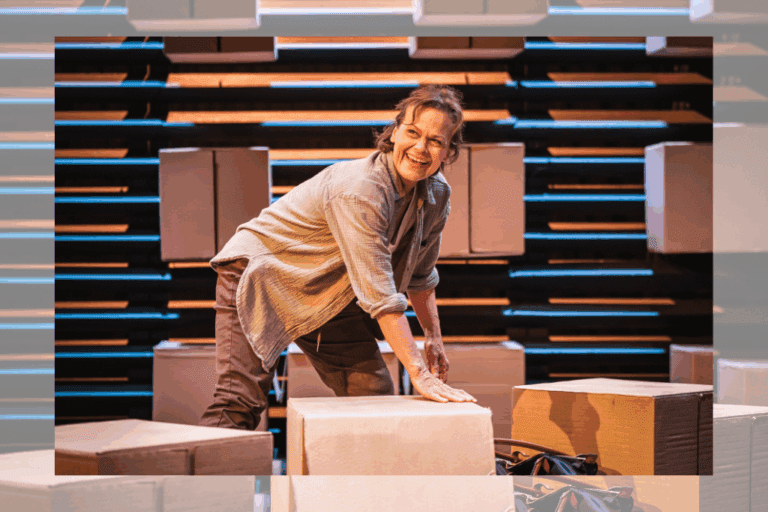 iPhoto caption: Kristen Thomson in 'Fulfillment Centre.' Photo by Elana Emer.
REVIEW: Coal Mine’s Fulfillment Centre asks how we end up alone, together
The production understands the play’s themes, yet feels limited by a script that delivers a package it never fully opens.
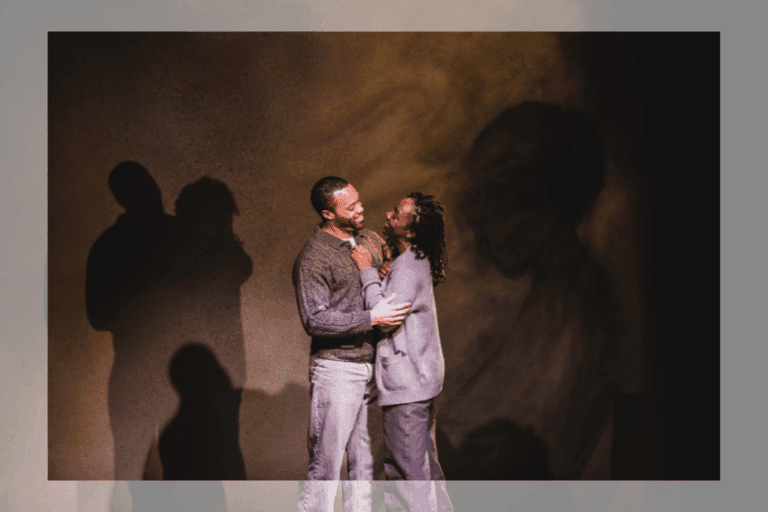 iPhoto caption: Dwain Murphy and Virgilia Griffith in 'a profoundly affectionate, passionate devotion to someone
(-noun).' Photo by Jae Yang.
iPhoto caption: Dwain Murphy and Virgilia Griffith in 'a profoundly affectionate, passionate devotion to someone
(-noun).' Photo by Jae Yang.
REVIEW: Obsidian and Tarragon co-production reflects on the inadequacy of language
a profoundly affectionate, passionate devotion to someone (-noun): the title says it all, offering a definition for an absent word. The thing is the thing unsaid. For the play’s three couples, language falls short: beautifully, tragically, sublimely.
 iPhoto caption: Photos by Dahlia Katz.
REVIEW: Two site-specific TIFT shows flirt with nonconformity
Screw the proscenium: a house kitchen and a warehouse take front and centre in Talk Is Free Theatre's productions of Cock and For Both Resting and Breeding.
 iPhoto caption: Dead Broke production still by Calvin Petersen.
REVIEW: Comedy-horror hybrid Dead Broke successfully spooks
While the non-horror aspects of the show lean towards the more amateur, the scares are incredibly successful. This show pulls off the theatrical horror with seeming ease: That’s reason enough to check it out for yourself.
 iPhoto caption: Sara Topham in Hedda Gabler at the Stratford Festival. Photo by David Hou.
Gatekeep, gaslight, girlboss: The delight of female rage in theatre
Personally, I support women’s rights and women’s wrongs — especially when it comes to my girl Hedda. And it seems that at least two Ontario directors share my viewpoint, with Hedda Gabler opening twice in the same month at Stratford and at Coal Mine Theatre in Toronto. What makes her story so appealing?
 iPhoto caption: Photo by David Hou.
Stratford Festival review: The Goat or, Who Is Sylvia? A review in five acts
The Goat, or Who Is Sylvia? delivers an off-kilter comedy and disturbing tragedy in a fashion that would make the Ancient Greeks proud.
 iPhoto caption: Photo by Dahlia Katz.
REVIEW: The Last Timbit is a surprisingly charming commercial gem
The Last Timbit, a show of snow and sweets, had a limited run at the Elgin Theatre in June and is getting a streaming release on Crave on August 12. I, for one, am more than curious to see how a wider audience will react.
REVIEW: ARC’s Rockabye glows but over-saturates
Rockabye, though a little longer than it should be, raises many timely questions. Should real lives be valued over ideologies or the other way around? Is it ethical to let someone die for a political cause?
Comments