
REVIEW: Hamilton Fringe Festival 2025
 iPhoto caption: Photo of Staircase Theatre by Aleena Faisal.
Summer in Hamilton is the season of arts festivals. With Open Streets, monthly Art Crawls, and a plethora of live music festivals, nearly every weekend offers a new way to engage with the industrial city’s vibrant arts scene.
Hamilton Fringe is the largest of those arts fests. Running July 16 to 27, this year’s event features over 50 shows in more than a dozen venues around the city. Beyond its theatrical offerings, the festival offers visual art displays, a pedestrian-friendly downtown hub, and collaborations with local artisans, restaurants, and businesses.
For this set of reviews, I’ve tried to capture the breadth of this year’s theatrical offerings, visiting nearly half of its venues to take in productions ranging from new dramas and musical comedies to experimental collaborations with technology.
Impatient Inpatient (The Staircase | Elaine May)
It’s been nearly a year since his near-fatal cycling accident, and Rikki Wright is OK.
In that time, he’s navigated physical recovery from a multitude of injuries, encountered a host of personalities in Hamilton and Oakville hospitals, and confronted the shortcomings of a healthcare system under stress. Writer-performer Wright’s solo show Impatient Inpatient recounts these experiences with tongue-in-cheek humour that pokes fun at the absurdities and indignities of an extended hospital stay without wholly making light of them.
Dressed in a hospital gown and moving between a medical exam table and a wheelchair, Wright simulates many of the in-hospital experiences he details (helped by a series of his own photos, projected onto the wall behind him). Wright’s honest delivery and the Elaine May Theatre’s intimate space make the performance feel like a story shared between friends (and the opening night audience was receptive, with sympathetic gasps and grumbles abounding).
While the piece’s ultimate message — that life is short and should be lived to the fullest — may be somewhat clichéd, the affability, openness, and genuine emotion behind Wright’s performance lend a tired phrase new weight.
Oh, and don’t forget to wear a helmet.
Crane Girl (Theatre Aquarius Studio)
What drives a person to climb a construction crane in the middle of the night?
Writer-director-performer Alexa Higgins’ Crane Girl (winner of the Fringe’s 2025 Best New Play Contest) speculates on the answer to that question, fictionalizing the story of Marisa Lazo, who in 2017 became known on social media as “Crane Girl” after being rescued from a downtown Toronto construction site.
In Higgins’ imagining, the “crane girl” is Jane Coleman (played by Higgins), a young woman disillusioned by her job and struggling in her marriage to Evan (Ian Ottis Goff). Staged on and around a central piece of scaffolding (production design by Goff), the play moves between Jane’s inner monologue on the night of her climb; the reflections both of a bystander (Katherine Cappellacci) and the firefighter who leads Jane’s rescue (Goff); as well as flashbacks to earlier conversations between Jane, Evan, and Evan’s sister Laura (Cappellacci).
As we slowly uncover the circumstances that have led Jane to make her climb, the dialogue is meaningfully opaque, hinting at traumas without naming them outright. This approach is subtle yet effective, combining emotive writing with movement-based physical theatre to deliver commentary on reproductive rights, patriarchy, mental health, and the resonances of American politics north of the border.
Waiting for* Godot. *Waiting for Waiting for (The Staircase | Studio Theatre)
In Breadbox Theatre’s Waiting for* Godot. *Waiting for Waiting for, a team of young actors and their stage manager wait, and the audience waits with them.
While drawing on some of the themes of its famous namesake (namely, you guessed it, waiting), this new play also pokes witty fun at the world of theatre-making and the people who live and work in it. Actors Seb (Liam Lockhart-Rush), Grace (Adelaide Dolha), and Tyler (Jonah Paroyan) anticipate the arrival of acclaimed-but-mysterious director Theodore M. Spence (Braden Henderson) under the eye of anxious and over-caffeinated stage manager Cam (Sarah Soares). As time goes on, tensions rise, and the characters begin to question why they’re doing this whole theatre thing anyway.
Some excellent dialogue aside (Tyler, in particular, feels natural and believable), the play is most notable as an occasionally cynical love letter to Ontario theatre. Pretentious Seb’s greatest aspiration is to land a role at the Stratford Festival, while overachieving-yet-unhappy Grace already has a laundry list of Stratford and Shaw credits to her name. Seb and Tyler both studied theatre at TMU (and Seb’s refusal to acknowledge its recent name change becomes shorthand for his overall obstinance), while Cam is a graduate of the program at York. For Fringe-goers immersed in the landscape of southern Ontario theatre, this Beckett reimagining’s best comedy will likely come from its familiarity.
A Canadian Explains Eurovision to Other Canadians (Mills Hardware)
Fresh from its recent runs at the Orlando and Toronto fringe festivals, this Matti McLean solo show feels like a cosy Powerpoint-party-meets-karaoke session.
In the hour-long performance, Eurovision superfan McLean takes the audience through the song contest’s history: its greatest hits and greatest failures, complicated voting systems, and not-so-apolitical performances. Sometimes lecturing, sometimes singing (or dancing), McLean’s stage presence is personable and charming.
Mixed in with this pop culture history lesson are sometimes comedic, often heartfelt reflections on McLean’s experience growing up queer and neurodivergent in North Bay, falling in and out of love, and navigating the beginnings and endings of a relationship that he would come to recognize as abusive.
The opening night performance ran into a snarl of tech issues (as in its Toronto run, this is a show that’s still ironing out some of its details), but McLean handled them with patience and self-deprecating humour. And while this slowed down an otherwise fast-paced and high-energy performance, the piece’s reflections on the transformative potential and occasional alienations of fandom — or, as McLean puts it, the joy of loving something from a distance — still resonated.
I’m admittedly more of a Eurovision newbie, and McLean’s explanation taught me a thing or two, about more than just the song contest.
Group Prompt (Fringe Mini Bar | Ringside)
Part of the Fringe’s Mini Bar series of short plays, where audiences can take in individual shows or watch the full series over the course of an evening, Amanda Tkaczyk’s Group Prompt is an experimental piece that explores the potentials and limitations of human-AI collaboration. Before and during the 20-minute performance, Tkaczyk invites audience members to suggest prompts to an AI, which then generates scripts and plays them to Tkaczyk through a headset for her to recite back to the audience.
At the performance I attended, this experiment resulted in a rapidfire series of short, more-or-less nonsensical fragments of everything from poetry and dramatic monologues to standup comedy routines delivered by an increasingly breathless Tkaczyk.
One of the most interesting — and concerning — potentials of this piece is its capacity for harm. As Tkaczyk explains in a program note, both the audience prompts themselves and what the AI does with them are unpredictable. As a result, the generated scripts may contain a range of potentially sensitive material, which Tkaczyk is essentially obligated to perform. It’s a possibility that raises important questions about the ethics of AI use and the responsibilities of individuals when technology modulates our actions toward others.
While the specific performance I attended didn’t feel particularly groundbreaking, the concept is thought-provoking and makes for an interesting experiment — I’d be curious to know what other results it yields as the festival goes on.
Men Love Horsies: The Musical (The Staircase | Bright Room)
What is this show: A mantra against toxic masculinity? A clever critique of car-centric urban design? Or just a love letter to horses and the men that love them?
Whatever it is, playwright, director, and performer Devin Bateson’s commitment is impressive. The musical doesn’t let up over its hour-long runtime, spoofing on power ballads, “I want” songs, and Dr. Seuss-esque rhymes to tell the story of Cool Horse City (where horses can play basketball and live with you in your one-bedroom apartment); villainous no-good-horse-hater Henry Ford; and the plight of soldiers in the Great Horse Wars who really want to spend their time petting horses, not fighting.
While the premise is unabashedly silly, Bateson’s skill is undeniable as he moves between musical styles and tropey character types with ease. He also encourages occasional audience participation (although not too much — this is, as he explains multiple times, his show).
At one point, he asks the audience to promise that if anyone asks for our opinion we would say it was the best darn show we’d ever seen (even if we were lying). So:
This is the best darn show I’ve ever seen.
Is that a lie?
I’m still not sure.
The 2025 Hamilton Fringe Festival runs until July 27. Tickets are available here.
Intermission reviews are independent and unrelated to Intermission’s partnered content. Learn more about Intermission’s partnership model here.
Charlotte Lilley
Charlotte Lilley (she/her) is a writer currently living in Hamilton, ON. She holds a BA from Western University, a Master of Applied Literary Arts from the Memorial University of Newfoundland (Grenfell), and currently studies at McMaster University. Her writing has appeared in Horseshoe Literary Magazine, Prelude (Calgary Phil), the Stratford Beacon Herald, and elsewhere. Charlotte’s writing and academic work explores speculative fiction, sustainability, and hope. www.charlottemlilley.com
LEARN MORE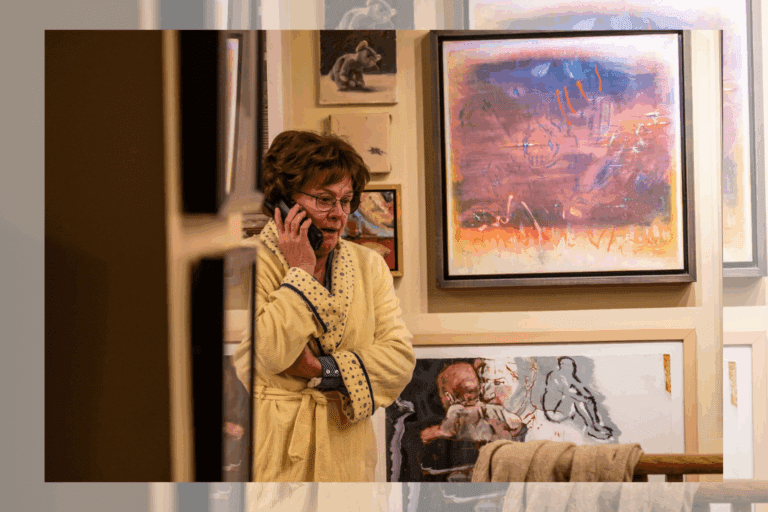 iPhoto caption: Jane Spidell in 'Twelve Dinners.' Photo by Dahlia Katz.
REVIEW: Family tensions run high in TIFT’s intimate Twelve Dinners
In the now-closed Twelve Dinners, an autobiographical play written and directed by Steve Ross, audiences received intimate access to an unvarnished version of a younger Ross through 12 evening meals with his parents.
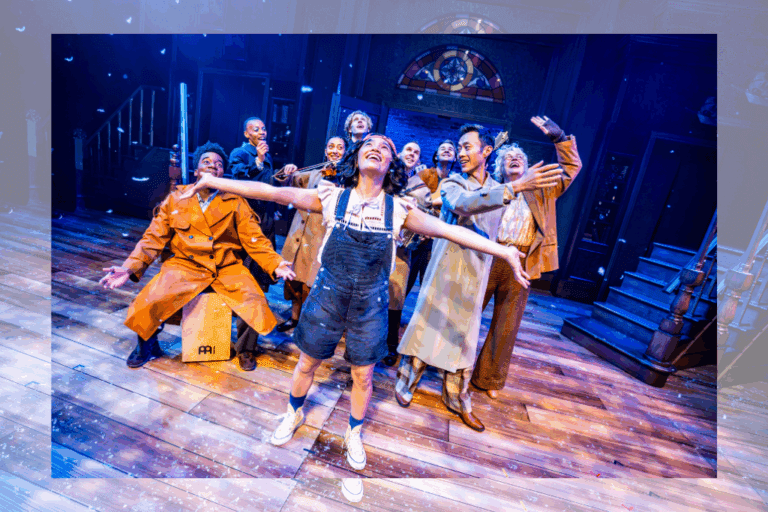 iPhoto caption: Members of the company of 'Narnia.' Photo by Dahlia Katz.
REVIEW: Bad Hats’ Narnia is a joyful, heartwarming escape
The spirit of openness and the joy of discovery rule over this Narnia. Open the wardrobe and see.
 iPhoto caption: Members of the company of 'Robin Hood.' Photo by Dahlia Katz.
REVIEW: Canadian Stage’s Robin Hood panto is anti-capitalist fun for the whole family
Following Ross Petty’s legacy of scene-stealing, Damien Atkins as the evil Prince John is easily the greatest delight of the show.
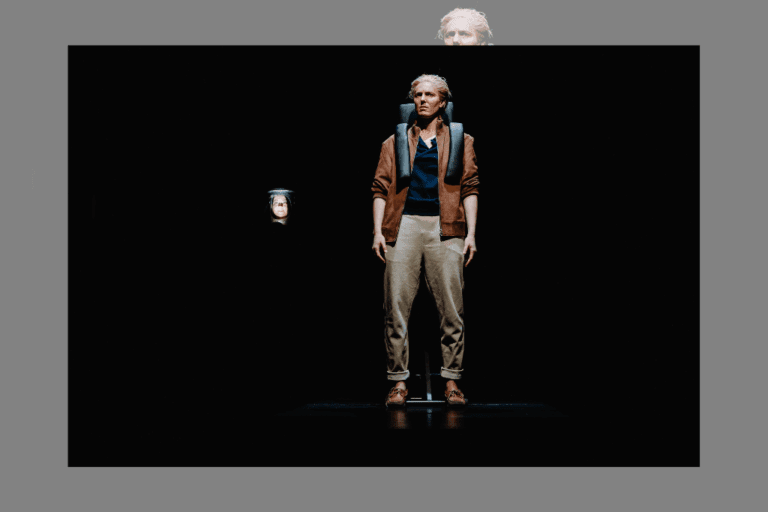 iPhoto caption: Lauren Gillis and Alaine Hutton in 'Public Consumption.' Photo by Eden Graham.
REVIEW: Lester Trips’ stylish Public Consumption captures the internet’s profound emptiness
Rather than directly representing online life, Public Consumption speculates — with virtuosity — about how the digital world affects our bodies. And the show's findings are by no means comfortable.
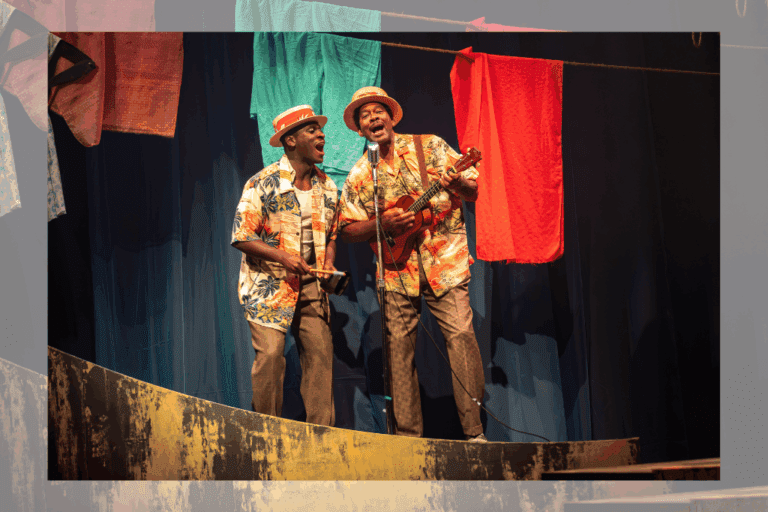 iPhoto caption: Tony Ofori and Daren A. Herbert in 'Moonlight Schooner.' Photo by Dahlia Katz.
Kanika Ambrose’s Moonlight Schooner is animated and visually stunning, but its individual pieces don’t come together as neatly as I would've expected.
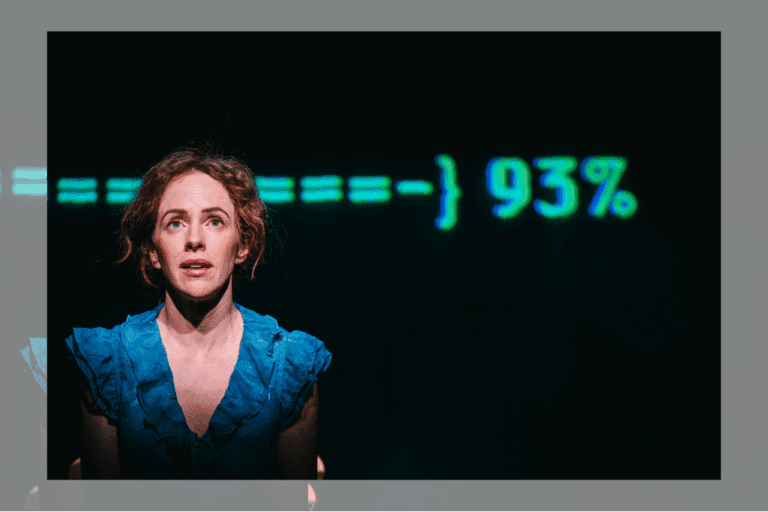 iPhoto caption: Fiona Mongillo in 'Reproduktion.' Photo by Ann Baggley.
REVIEW: Here For Now’s well-acted Reproduktion attempts to tackle too much
Amy Rutherford’s world premiere script is ambitious and the material it covers is complex — but the narrative feels disjointed.
iPhoto caption: Fiona Mongillo in 'Reproduktion.' Photo by Ann Baggley.
REVIEW: Here For Now’s well-acted Reproduktion attempts to tackle too much
Amy Rutherford’s world premiere script is ambitious and the material it covers is complex — but the narrative feels disjointed.
 iPhoto caption: Jessica B. Hill in 'Pandora.' Photo by Ann Baggley.
REVIEW: Jessica B. Hill’s Pandora thinks outside the box at Stratford’s Here For Now Theatre
With its assemblage of theatrical meta-commentary, mythical allusions, science facts, and weasels, at face value Pandora resembles random chaos. But weave those parts together and a story emerges that is equal parts moving and fascinating.
 iPhoto caption: Richard Alan Campbell and Mary Long in 'The Time Capsule.' Photo by Dahlia Katz.
REVIEW: Theatre Aquarius’ The Time Capsule pays lighthearted tribute to Hamilton, Ontario
As the evening progresses and the characters begin open up and butt heads, the play becomes a comedic yet heartfelt reflection on memory. We learn that the past is never as far away as we might think, that a moment forgettable for one person could be life-changing for another, and that it takes more than just a Hamilton Ticats pin or a Tim Hortons cup to memorialize a city and its people.
 iPhoto caption: Jeff Lillico as Ralph with Yoshie Bancroft as Mitsue in 'Forgiveness.' Photo by David Hou.
REVIEW: Stratford Festival’s Forgiveness tells a deeply personal story on a sprawling scale
Presented in an increasingly tense political moment, Forgiveness resonates on a level that is part reflection, part warning.
 iPhoto caption: Braeden Etienne in 'Believe In It Alive.' Photo courtesy of Treading Theatre Festival, taken by Phi Doan.
Running at the Schneider Haus National Historic Site in downtown Kitchener, the festival features five site-responsive productions in intimate and unconventional performance spaces.
 iPhoto caption: Photo by Jae Yang.
REVIEW: Tarragon’s wonderful Benevolence reflects on diaspora, community, and place
Playwright-performer Kevin Matthew Wong’s script is heartfelt, conversational, and at times poetic, moving effortlessly between heavier moments of grief and lighter moments of joy and humour.
Comments