
REVIEW: Razor-sharp and whip-fast, Operation Mincemeat is a killer musical
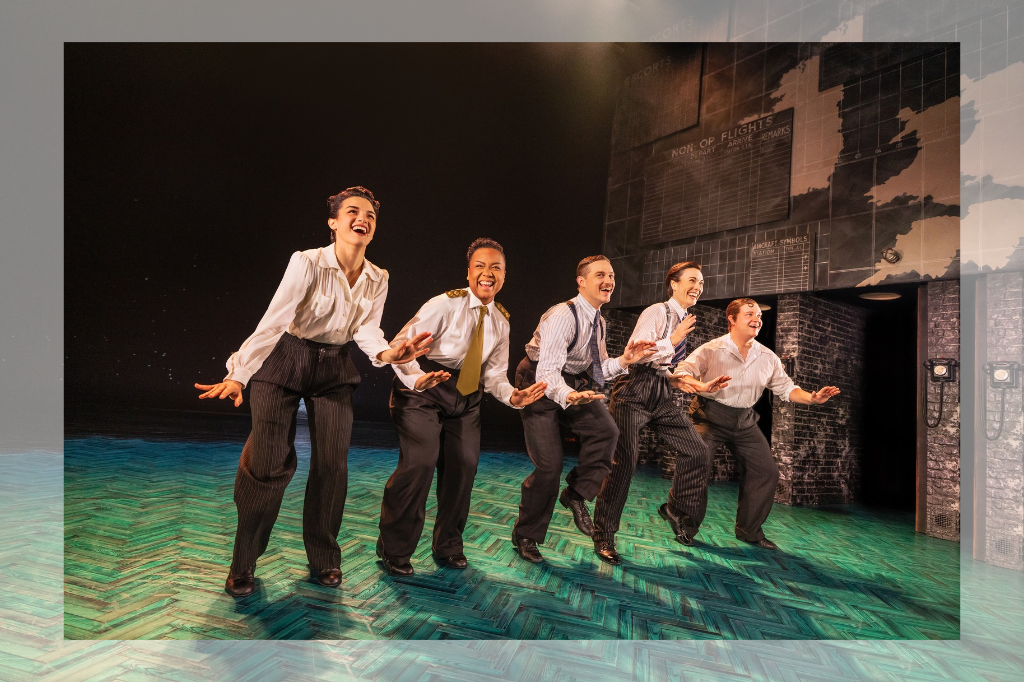 iPhoto caption: The North American tour company of 'Operation Mincemeat.' Photo by Matthew Murphy.
Stop. Before I even begin this review of Operation Mincemeat — before I tell you how witty the script is, how inventive the direction, how infectious the music — go to the Mirvish website. Buy yourself a ticket. Rush, before it sells out. Because, yes, this gloriously over-the-top frenzy is every bit as good as the hype. And it has teeth, too: it skewers the pompous men calling the shots in wartime.
Now, the report.
Lately, musical theatre has developed a hunger for history. We have Lin-Manuel Miranda’s Hamilton to blame: its rap-infused reimagining of America’s founding fathers upended Broadway conventions. Then came Six, recasting Henry VIII’s wives as pop divas in a feminist reclamation of their stories. Trading reverent reconstruction for brazen reinvention, these musicals have turned history books into period-bending blockbusters. Operation Mincemeat belongs to this tradition. Except it doesn’t. Not entirely.
Where those shows turn historical figures into stars, this one makes its supposed heroes the butt of the joke. As the daisy-yellow curtain rises, we’re introduced to Britain’s intelligence officers, a parade of telenovela caricatures with exaggerated gestures and comic tics.
It’s 1943, and the Allies are preparing to invade Sicily. To secure the invasion, Colonel Johnny Bevan (Mariah Copeland, in one of several gender-swapped roles) tasks his team with persuading the Germans that the Allies are headed elsewhere. The stakes couldn’t be higher. Yet the men entrusted with the mission seem more concerned with their own importance. Chief among them is the egotistical Ewen Montagu (a suave Katie Kleiger), whose ready-made grin and orotund delivery suggest a showman masquerading as a secret agent.
With slicked-back hair and bottlecap glasses, Charles Cholmondeley (a wonderfully hapless Jake Bentley Young) is a misfit among such inflated egos. “It’s part of my biology to start with an apology,” he sings — a confession that could almost qualify him for Canadian citizenship. Yet he’s the one who devises the audacious scheme: disguise a corpse as a British officer, plant classified documents on the body, and let the Germans take the bait. Together with Montagu, Charles invents Major Bill Martin, concocting an entire life for their fictitious officer.
And the spies aren’t the only ones making an art of make-believe. Onstage, just five actors play a dizzying parade of characters in a feat of gender-blind casting and theatrical sleight of hand. It’s a glorious holdover from the show’s shoestring beginnings in a 77-seat London, England theatre. Six years and a Broadway transfer later, scrappy inventiveness remains its trump card. Creators David Cumming, Felix Hagan, Natasha Hodgson, and Zoë Roberts have fashioned an intricate book and score, packed with rapid-fire rhymes and tongue-twisting patter songs.
Robert Hastie’s direction adds to the mayhem, demanding split-second transformations, aided by Ben Stones’ quick-changing set and costumes. A flat cap turns an intelligence officer into a shoeshiner; a lighting shift whisks us from a government office to a bar, a Tube station, or the middle of the Mediterranean. This syncopated rhythm makes the two-and-a-half-hour running time fly by. Watching it is a breeze. Performing it, however, is a theatrical high-wire act. One misplaced syllable, one mistimed gesture, and the whole enterprise could come tumbling down.
The North American touring cast navigates this whirlwind with chameleon-like precision. Consider Luke Antony Neville, for one. As Spilsbury, the forensic pathologist enlisted to find a suitable corpse, he’s all flamboyance, with powerhouse vocals that rank among the evening’s best. But as Hester Leggatt, the dutiful MI5 secretary, his hands are demurely clasped, his voice shrinking to a wispy falsetto.
All the while, the music splices historical parody with the intoxicating rhythms of modern pop. In “All the Ladies,” secretary Jean Leslie (Erin Ramirez) turns women’s place in the wartime workforce into a Beyoncé-style feminist anthem. By the delirious second-act opener, the collision has reached fever pitch: the military grid on Ben Stones’ backdrop erupts into psychedelic LED patterns, transforming a gathering of Nazi officers into something resembling Berlin’s notorious Berghain nightclub. Jenny Arnold’s choreography, elsewhere steeped in vaudevillian finesse, here kicks into high-voltage hip-hop.
Amid the musical’s exuberance, a more sobering distinction emerges: between those who plot wars behind desks and those whose lives hang on their decisions. In flashes, the uproar subsides. Illuminated only by handheld torches, the actors become submariners facing death at sea, singing “if it’s down, it’s down together” in a gentle, shanty-like rhythm.
In late-October Toronto, that quiet interlude carries an added weight. Outside the Royal Alexandra Theatre on opening night, uniformed service members handed out Remembrance Day poppies. Each year, those little red flowers appear on lapels across the city, reminders of the lives lost to war.
Laugh at the top brass. Tap your feet to the brassy cabaret rhythms. But behind Bill, the man who never was, lay a real body. And behind every military operation, victory or defeat, lie countless others.
Operation Mincemeat runs at the Royal Alexandra Theatre until December 13. More information is available here.
Intermission reviews are independent and unrelated to Intermission’s partnered content. Learn more about Intermission’s partnership model here.

Alessandro Stracuzzi
Alessandro Stracuzzi is a Toronto-based theatre critic and performance researcher from Italy. He holds an MA in Performance Studies from the University of Milan, and writes about contemporary theatre, performance, and experimental practices. His criticism has appeared in Stage Door, Our Theatre Voice, Stratagemmi, and Fermata Spettacolo.
LEARN MORE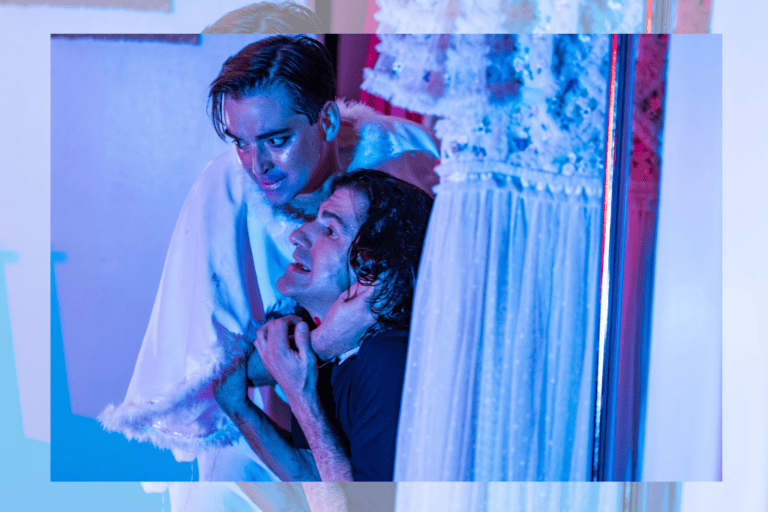 iPhoto caption: Billy Lake and Aidan de Salaiz in 'The Maids.' Photo by Dahlia Katz.
REVIEW: In Talk Is Free’s The Maids, reverence and rebellion share the same room
For all her impatience with the play, director Jillian Keiley chooses to stay rigorously within its terms, pushing its logic to an extreme and letting its contradictions show.
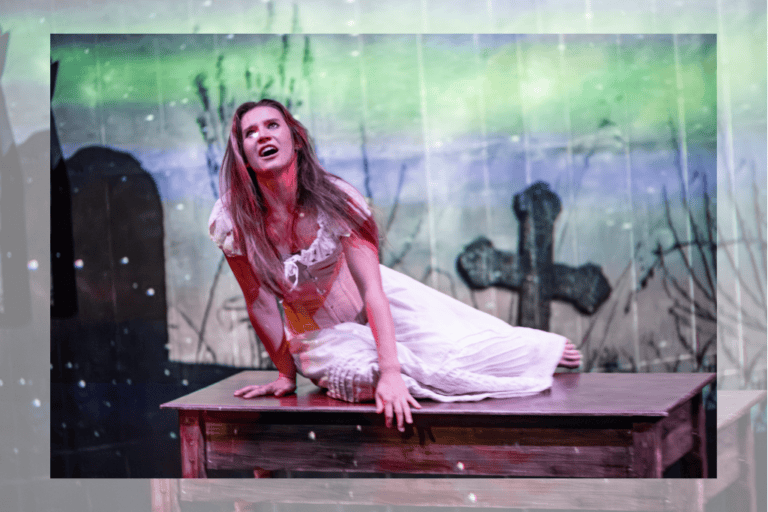 iPhoto caption: Juliana Monk in 'To a Flame.' Photo by Elana Emer.
REVIEW: To a Flame turns the deficit lens back on power
I left the theatre overstimulated, my attention stretched and my body still keyed up. For audiences willing to be swept up in that rush of sensation, that overload is part of the reward.
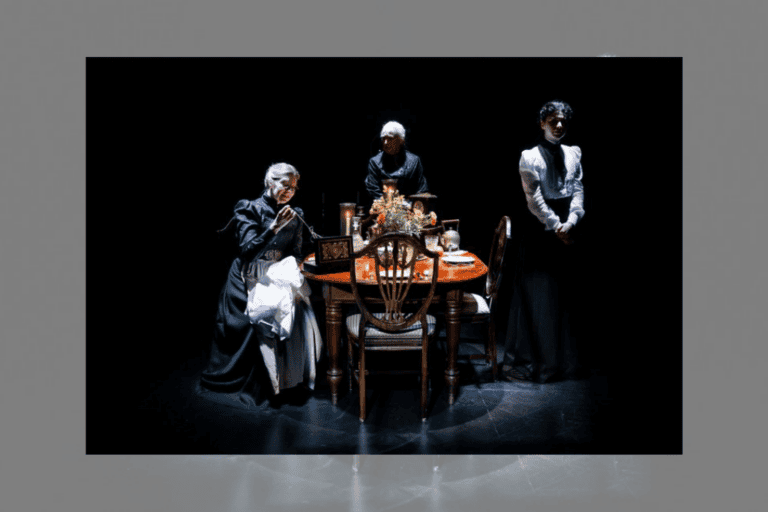 iPhoto caption: The cast of 'Suzannah.' Photo by Ann Baggley.
REVIEW: Jon Fosse’s Suzannah collapses temporal planes into an endless wait
Jon Fosse’s Suzannah fractures the life of Henrik Ibsen’s wife across three temporal planes, as fragments of biography, repetitions, memory, and grievance accumulate without ever coalescing into a stable portrait of Suzannah. The Here For Now Theatre production has closed, but this hypnotic, claustrophobic examination of a woman who struggles to imagine herself beyond her husband lingers.
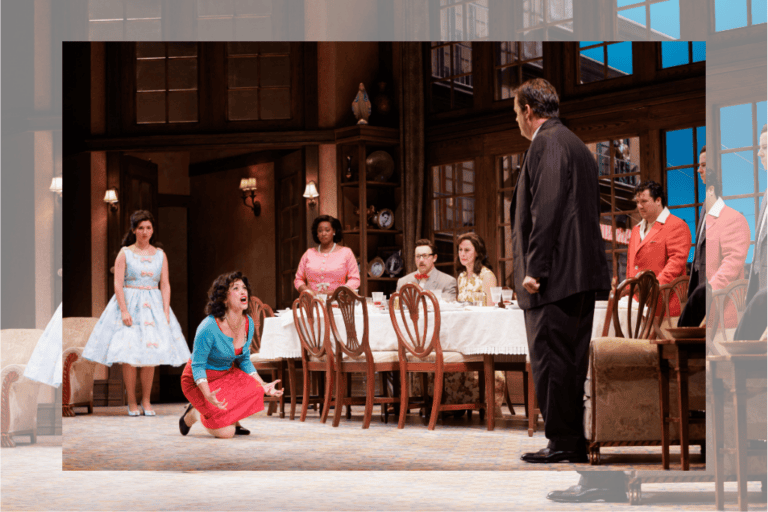 iPhoto caption: Rose Napoli as Rosa Priore (front left) and Graham Abbey as Giuseppe "Peppino" Priore (front right) with members of the company in 'Saturday, Sunday, Monday.' Stratford Festival 2026. Photo by David Hou.
REVIEW: Stratford’s Saturday, Sunday, Monday simmers into a rambunctious scenata napoletana
A pot of tomato sauce left unattended on the stove can only hold itself together for so long. So it is with the Priore family at the centre of Eduardo De Filippo's Saturday, Sunday, Monday. They bottle things up, turning every disappointment into a cordial grudge until resentment bubbles over in melodramatic eruptions.
 iPhoto caption: Photo by Jack Woolfe.
REVIEW: In Síofra at the Red Sandcastle, fairy lore curdles into communal dread
Spindle Collective’s unnerving Síofra takes us to 19th-century Ireland, where folklore gives a watchful community a language for the uncanny.
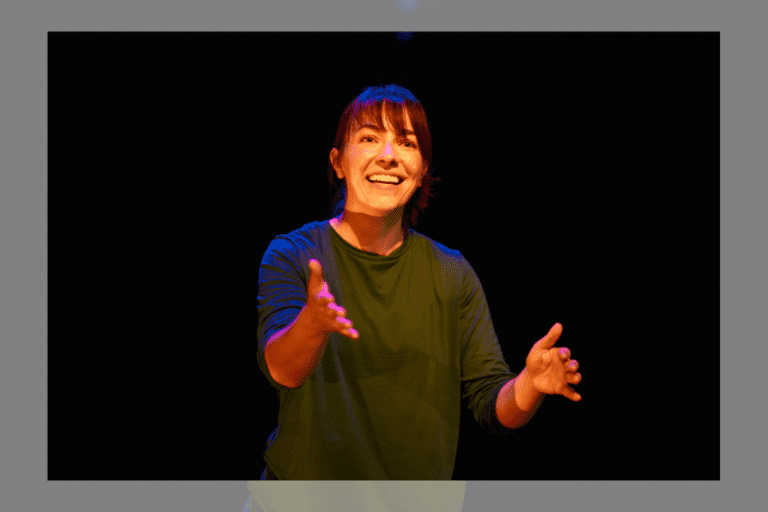 iPhoto caption: Janet McMordie in 'Vitals.' Photo by Nate Colitto.
REVIEW: In Rosamund Small’s Vitals, Toronto becomes a map of private catastrophes
The play cuts through the glossy image of health-care workers as haloed heroes, bringing us closer to people working through exhaustion, hypervigilance, and horror.
Comments