
REVIEW: Ophis dunks viewers into a gothic experience of Medusa’s psychic landscape
 iPhoto caption: Members of the 'Ophis' company. Photo courtesy of Transcen|Dance Project.
About an hour into Transcen|Dance Project’s Ophis — an immersive dance-theatre retelling of the Medusa myth, running at the Great Hall for a second time — I found myself tucked behind a mesh curtain on the venue’s top floor alone with three dancers. I’d been wandering around the capacious venue, watching the contemporary dance company coil through the story, when the performers dancing Graeae (Tyler Angell, Sophie Fillion, and Dana MacDonald) — the Greek mythology trio who share one prophetic eye — beckoned me to join them.
As they snaked around me, brushing my shoulders, staring into my soul through black contact lenses, they whispered breathy nothings in my ear and proffered their prop eye, instructing me to look into it and declare the fate of the plot. Little did they know I’d be typing it later online.
The moment sums up Ophis. It’s a woozy tragedy that courts both playfulness and eroticism, one that deliberately dissolves the boundaries of stage and audience with an immersive format that’s sometimes thrilling, sometimes terrifying, and sometimes — if you’re a people-pleaser like me — both simultaneously.
Upon arriving at the hall, we’re given a wax-sealed letter and a gold masquerade mask, a common convention of immersive theatre, which helps incorporate us into the show and provides a shield of anonymity.
We gather under the balcony of the venue’s main hall and the Mistress of Ceremonies (Marisa Ricci) gives a short preamble. We are told we’re in Medusa’s world now, and that her monstrosity is not her curse but rather her power. Silence is encouraged; participation is optional. Ricci, her velvety voice low and slow, to me recalls Isabella Rossellini’s character in the film Death Becomes Her — decadent and dangerous — and she leaves that energy hanging in the room like incense smoke.
Viewers scatter according to the letter they received, and the story unfolds primarily in movement. I’m assigned to stay put, which means encountering a pre-curse Medusa (Carleen Zouboules) and her immortal sisters Stheno (Martha Hart) and Eurydale (Jazzmin James) on the floor in front of the stage. Zouboules radiates innocence with light turns and a glued-on Disney princess smile, but her sisters move with far more weight: two tidal forces crashing around her.
The Graeae trio stay low in wide, dropped pliés and contemporary floorwork that includes sweeping tumbles across the floor and close-knit lifts that shift around each other like a Rubik’s cube. There’s something humorous about their exaggerated creepiness and devotion to the shared eye that they toss back and forth like a precious gem. Athena (Joey Arrigo) easily serves the highest melodrama in the show with a drag iteration of the reasonable goddess with dagger-sharp eye contact and sudden bursts of acrobatics that feel like divine temper tantrums.
Before moving down to the basement underworld to check out Zeus, Perseus, and the Oracle (whose storylines were murky after entering mid-scene), I see a shockingly erotic pas de deux between Medusa and Poseidon (Sam Darius). In an animalistic number where they face off like wild cats, they end up tangled, semi-nude, on the floor under a spotlight. Poseidon violates Medusa in the original myth; but here, the encounter reads closer to a feverish but consensual seduction laced with doom.
After discovering Medusa’s sexual misdoings, the enraged Athena returns behind a sheer white curtain for a violent shadow-puppet sequence with Medusa. Their looming silhouettes are a tactful way to portray Athena’s fury, but for all of the production’s contemporary sensibility, I was surprised to see it preserve the ancient gender duality: the woman, Medusa, is scorned, but the man, Poseidon, gets off scot-free — a choice that undercuts some of the show’s otherwise progressive framing of a liberated Medusa.
It’s worth noting that Ophis assumes at least a passing familiarity with the Medusa myth. If you don’t already know who betrays whom — or why Athena’s rage is so peak — you likely won’t learn by the end of the night. But emotional density and macabre novelty are in high supply.
Immersive theatre can be divisive and Ophis leans into the qualities that make it polarizing: relentless eye contact, sudden proximity, and performers who coax you into playing along, which can feel like inclusion or dare. But if you’re able to lean into the ride, Ophis will dunk you in its gothic rendering of Medusa’s psychic landscape, shown in a delirious rush of athletic bodies and mythic melodrama — plus a whole snake den’s worth of surprises that I won’t spoil.
Ophis runs at the Great Hall until January 18. More information is available here.
Intermission reviews are independent and unrelated to Intermission’s partnered content. Learn more about Intermission’s partnership model here.

Lindsey King
Lindsey King is a Toronto-based freelance writer and editor with bylines in Toronto Life, Maclean's, Canadian Business, Intermission, and The Creative Independent.
LEARN MORE iPhoto caption: Siphesihle November in 'Flight Pattern.' Photo by Karolina Kuras.
Serge Lifar’s Suite en Blanc came out of the Second World War; Crystal Pite’s Flight Pattern emerges from the world of wars we live in today. The double bill might be asking: What role, if any, should dance play in times of crisis?
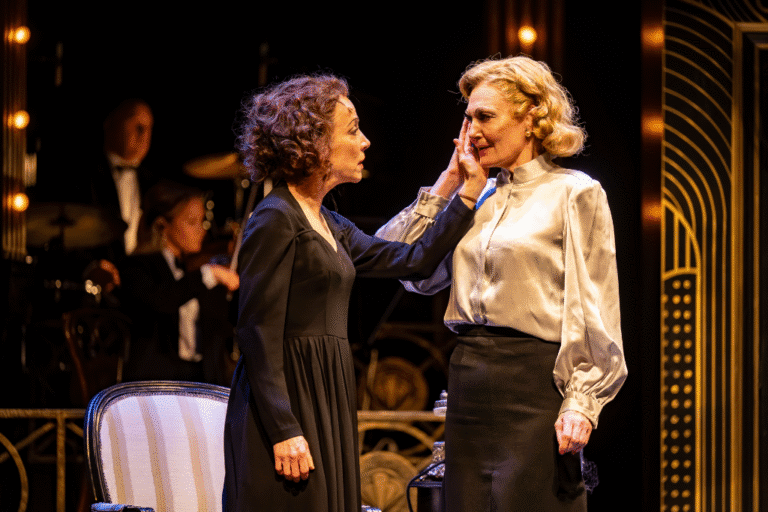 iPhoto caption: Deborah Hay and Terra C. MacLeod in 'Piaf/Dietrich.' Photo by Dahlia Katz.
The Grand Theatre’s music-infused Piaf/Dietrich considers fame, friendship, and desire
“The extremes of both characters gives us a lot to consider and experience for how to live," says director Rachel Peake. "Should we lead with passion or precision? It’s sort of a no-brainer that happiness lies somewhere in the middle."
 iPhoto caption: Akosua Amo-Adem in a promo photo for 'Table for Two' ahead of the show's 2025 premiere, a co-production between Soulpepper Theatre and Obsidian Theatre. Photo by Dahlia Katz.
“Many of the shows this year are about fitting in — being a fish out of water,” says co-creator Chris Tolley. “You can see that explicitly in new immigrant stories, but also in dating stories [about] searching for connection, or even in a piece about a young actor from Toronto trying to assimilate into life on a rural farm.”
 iPhoto caption: Isabella Kinch, Ben Rudisin and Christopher Gerty in 'The Nutcracker.' Photo by Bruce Zinger.
REVIEW: National Ballet’s scrumptious Nutcracker will melt every last Grinch-heart in town
James Kudelka’s Nutcracker treats children as imaginative equals and adults as worthy of a sprinkling of magic, too. It’s an unwavering, saturated dream of joy you never want to wake up from.
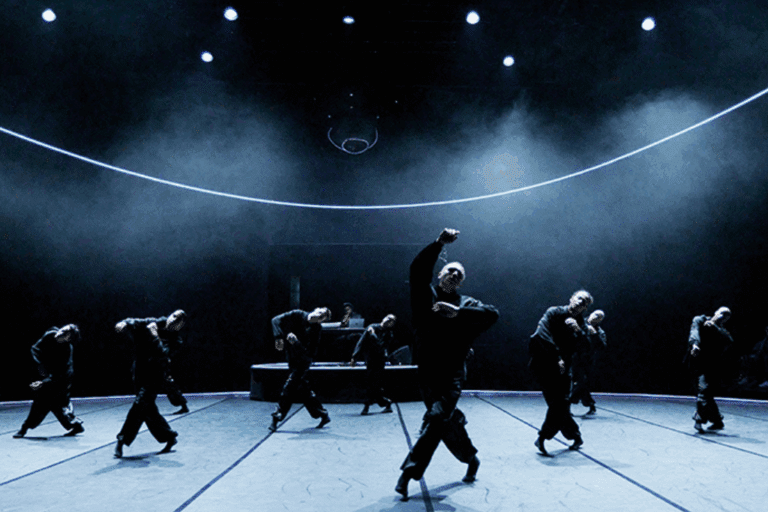 iPhoto caption: Photo by Fabian Hammerl.
In A a | a B : B E N D, choreographer Aszure Barton aims to rebuild dance from the inside out
“It’s so easy to over-intellectualize dance in general, but B E N D is about hearing and moving to cool-ass music together,” says Barton ahead of the show's run at the Bluma Appel Theatre.
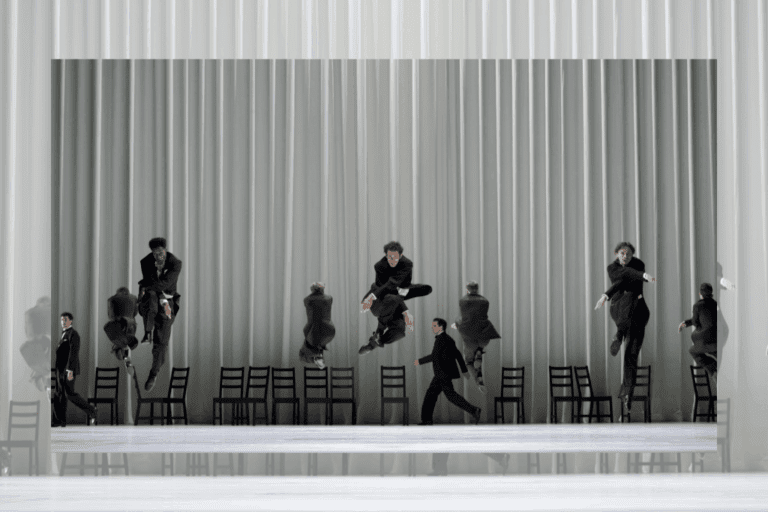
REVIEW: National Ballet’s Procession tangles the lines of sorrow and sensuality
Procession, the National Ballet of Canada’s brooding and stylized world premiere ballet, rushes to the stage with startling vitality — and does so at a funeral.
Comments