
REVIEW: Samca is a disturbing, unique production that explores folklore and womanhood
 iPhoto caption: Samca production still by Barry McCluskey.
When I attended Samca, the evening began with hot apple cider and a striking sunset; we soon moved onto a stage at the edge of the woods, and ended the night in a dark field with a guttural seance. The feminist folklore play, written by and starring Natalia Bushnik and Kathleen Welch, is an engrossing and sometimes frightening experience, perfect to kick off the scary season.
Produced by Riot King and Spindle Collective and directed by Brendan Kinnon, Samca explores patriarchal repression and the thorny bonds of family through traditional Romanian folk figures. In a brilliant use of setting, Black Creek Pioneer Village stands in for 19th-century rural Romania as two sisters, Miha (Bushnik) and Prava (Welch), navigate a dark forest and the spirits who live there.
Whether these spirits have altruistic or malevolent intent depends on which sister you ask. Prava is older, motherly and unafraid of the earthy aspects of life — namely sex. Miha, on the other hand, is anxious and religious, eager to live according to her Christian faith but terrified of the folk tales on which she was raised. This duality is represented by Samca, a threatening folk figure who lives in the woods and wreaks havoc on children and women about to give birth. In the sisters’ family folklore, Samca killed their mother when she was giving birth to her second daughter, and Miha is terrified she will meet the same fate. Prava respects Samca, who she believes only takes children from unworthy women.
No men appear in the play, but their actions are deeply consequential to the sisters’ lives. After surviving more than one traumatic encounter, the women are left to parse out the meaning of their suffering: Is it a punishment from god? Simply the way of the world? Or a test for women to pass or fail? The sisters’ dynamic, which is deeper and darker than it seems on the surface, complicates these questions. Both actors beautifully perform the challenging roles (the topics explored, including sexual violence and self-harm, may be challenging for some audience members). Welch is particularly effective as she switches from caring and reassuring to harsh and uncompromising.
Although the two sisters are alone in the world, they are never alone on stage: A chorus of woodland spirits follows their every move. Each given one of Samca’s alternate names, the eight spirits serve as musical accompaniment, narrator, empath, and trickster. Through Kinnon’s direction and Skye Rogers’ choreography, the spirits embody the twisted trees of the forest, the powerful figure of the goddess, and the violence of man. The music, written by Welch, is layered and evocative. Standouts among the chorus are Andra Zlatescu as Vestitia, who plays singing saw and banjo, and vocalizes with a low, atmospheric voice; and Madeline Elliott Kennedy, who plays Slalo with an urgent presence and haunted look.
But one of the most fruitful presences of the show is its setting. Most of the action takes place around a gnarled tree, used elegantly alongside two simple wood platforms. And if you can tune out the occasional airplane and generator noise, the show is immersive and often thrilling (there is a truly spine-tingling opening that I won’t spoil). Although the grim musical interludes and expressive dance start to feel a little repetitive by the one-hour mark, we are soon spirited off to a second location in an adjacent field. The use of place and lighting (designed by production manager Franco Pang) is inspired, and creates some of the most striking and eerie images I’ve seen in a long time.
Samca is ultimately about the way we create our own folklore — the stories we tell to cope with an often unfeeling world, to give meaning to our losses or to explain away our sinister longings. Don’t miss this unique and powerful show, and also, don’t skimp on extra layers and bug spray.
Samca runs at the North Property of Black Creek Pioneer Village until October 5. Tickets are available here.
Intermission reviews are independent and unrelated to Intermission’s partnered content. Learn more about Intermission’s partnership model here.
Gabrielle Marceau
Gabrielle Marceau is a writer, critic, and editor living in Toronto. She has contributed essays, criticism, and (occasionally) poetry to Sight and Sound, Geist, Mubi Notebook, Cinemascope, Reverse Shot, and Arc Poetry, among others. She is the founding editor of In The Mood, a triannual online journal about film and pop culture.
LEARN MORE iPhoto caption: Members of the company of 'Narnia.' Photo by Dahlia Katz.
REVIEW: Bad Hats’ Narnia is a joyful, heartwarming escape
The spirit of openness and the joy of discovery rule over this Narnia. Open the wardrobe and see.
 iPhoto caption: Members of the company of 'Robin Hood.' Photo by Dahlia Katz.
REVIEW: Canadian Stage’s Robin Hood panto is anti-capitalist fun for the whole family
Following Ross Petty’s legacy of scene-stealing, Damien Atkins as the evil Prince John is easily the greatest delight of the show.
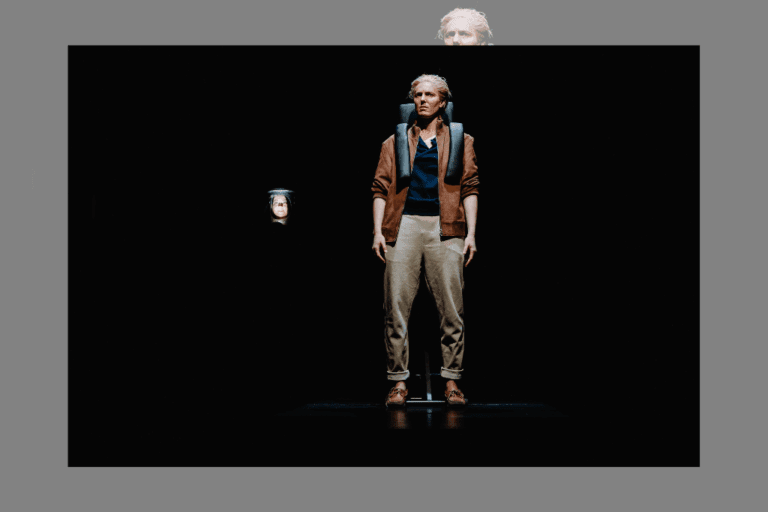 iPhoto caption: Lauren Gillis and Alaine Hutton in 'Public Consumption.' Photo by Eden Graham.
REVIEW: Lester Trips’ stylish Public Consumption captures the internet’s profound emptiness
Rather than directly representing online life, Public Consumption speculates — with virtuosity — about how the digital world affects our bodies. And the show's findings are by no means comfortable.
 iPhoto caption: Tony Ofori and Daren A. Herbert in 'Moonlight Schooner.' Photo by Dahlia Katz.
Kanika Ambrose’s Moonlight Schooner is animated and visually stunning, but its individual pieces don’t come together as neatly as I would've expected.
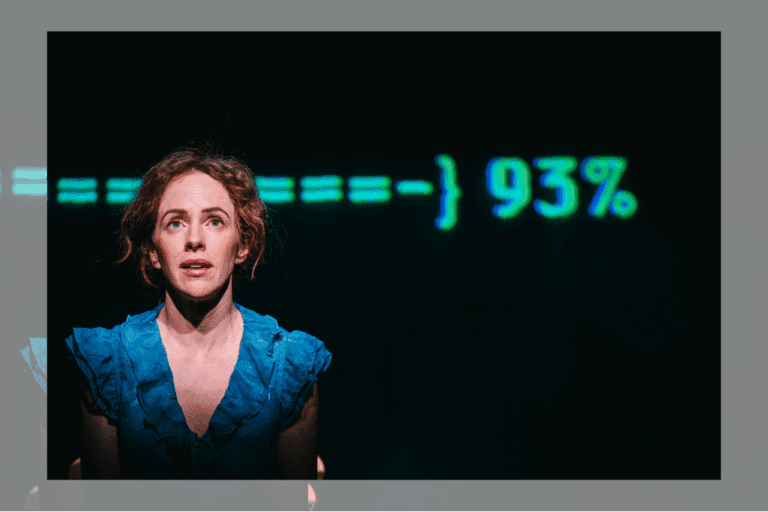 iPhoto caption: Fiona Mongillo in 'Reproduktion.' Photo by Ann Baggley.
REVIEW: Here For Now’s well-acted Reproduktion attempts to tackle too much
Amy Rutherford’s world premiere script is ambitious and the material it covers is complex — but the narrative feels disjointed.
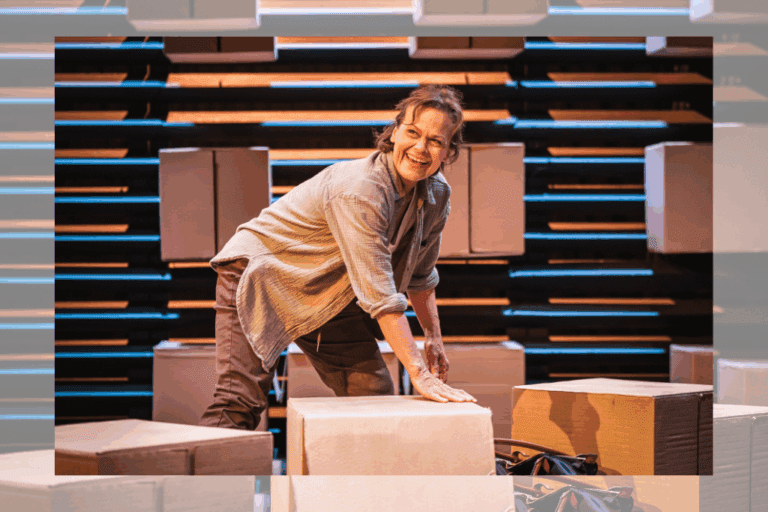 iPhoto caption: Kristen Thomson in 'Fulfillment Centre.' Photo by Elana Emer.
REVIEW: Coal Mine’s Fulfillment Centre asks how we end up alone, together
The production understands the play’s themes, yet feels limited by a script that delivers a package it never fully opens.
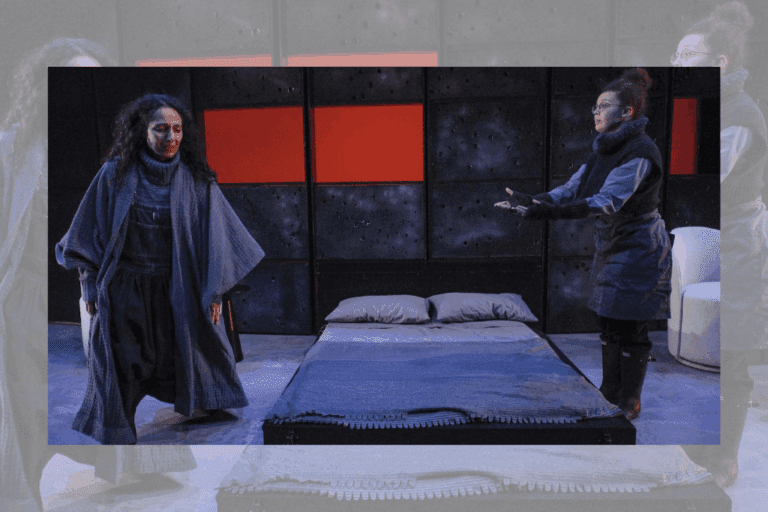 iPhoto caption: Christina Tannous and Béatrice René‑Décarie in 'Le Malentendu.' Photo by Mathieu Taillardas.
REVIEW: TfT delivers humour and cruelty in striking rendition of Camus’ Le Malentendu
Director Karine Ricard banishes all earthly joy from the scene, leaving behind an almost lunar coldness.
 iPhoto caption: Photo by Mathieu Taillardas.
REVIEW: Feu Mr. Feydeau! takes charming liberties with a famous playwright’s life
Feu Mr. Feydeau! is an effortlessly enjoyable historical fantasy that takes on death, the creative act, and life's bittersweet disappointments.
 iPhoto caption: Photo by Marie-Julie Garneau
This is a powerful, deeply-felt performance about the treacherous but necessary work of tracing personal and political histories.
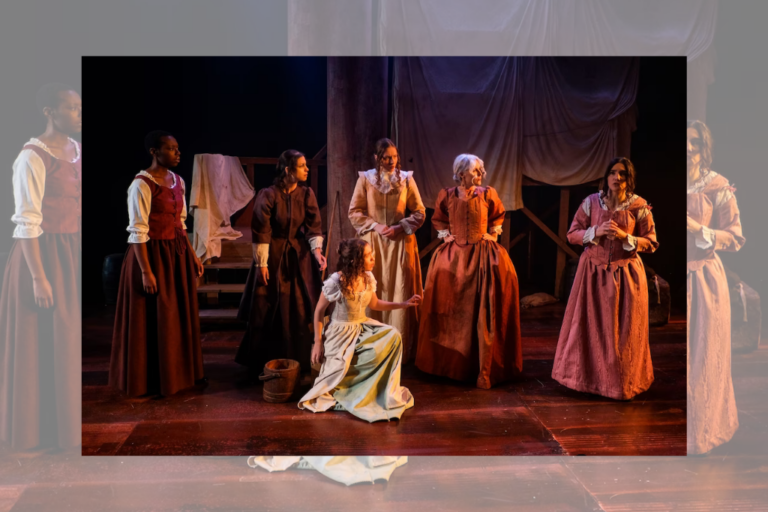 iPhoto caption: Photo by Mathieu Taillardas.
REVIEW: Filles du Roi is an entertaining, thoughtful reappraisal of French Canadian history
Sébastien Bertrand takes these women out of the symbolic realm, giving them fully formed identities.
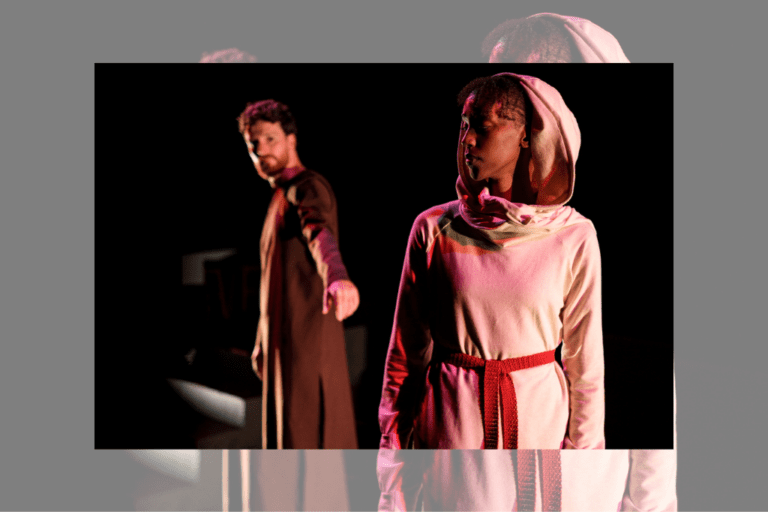 iPhoto caption: Photo by Mathieu Taillardas.
REVIEW: Convictions thoughtfully explores myth in the modern world
Lara Arabian and Théâtre français de Toronto have created a provocative, timely new work that intelligently explores the contradictions of immigration, family, and faith
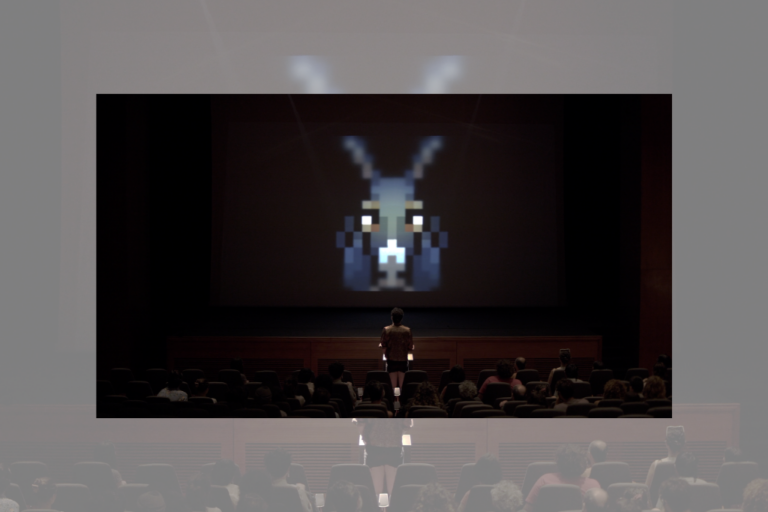 iPhoto caption: Photo by Francisco Castro Pizzo.
REVIEW: asses.masses is an endurance performance that takes boredom as its subject
By the sixth or seventh hour, I indeed felt like a worker at the factory of cultural production. I began to ask myself if the demands of the job were too high, if the compensation was fair, and if I felt fulfilled or alienated from working for the proverbial man.
Comments