
REVIEW: The Veil brings stripped-down psychological thrills to the Crow’s Theatre Studio
 iPhoto caption: Byron Abalos in 'The Veil.' Photo by Raph Nogal.
The characters of playwright Keith Barker often rub shoulders with the spirit world. Sometimes this means benevolent visitations: The Hours That Remain (2012) sees a woman mysteriously encounter her long-missing sister, while the Carol Bolt Award-winning This Is How We Got Here (2016) features a fox that can be understood as embodying an Indigenous couple’s dead son.
Barker and Thomas Morgan Jones’ The Veil — produced by Thought For Food Productions in association with Crow’s Theatre and Guild Festival Theatre — ventures to a supernatural place of a darker order, centring a protagonist not haunted by a loved one, but his own misdeeds. While the world premiere solo show’s attempts at societal critique sometimes lack precision, director Helen Juvonen’s subtle, atmospheric production makes for an unnerving horror theatre experience.
A jittery, unnamed lawyer (Byron Abalos) bounds into the Crow’s Studio with intention. “There’s more of you than I thought there would be,” he remarks, before shakily pouring a circle of salt around wooden furniture: a chair and a desk, the latter holding a small brown beat-up box with latches. He warns the coming tale will sound outlandish. But we must try to believe.
Abalos seems to direct each piece of narration at a different spectator. We hear how, late one night, the protagonist’s boss Ed promised that with the blow of a candle, the lawyer could clinch his dream promotion. The asterisk was that this action would also unleash a being — present for all humans, but usually hidden behind a veil — made up of “every terrible thing you’ve ever done.”
Avarice triumphed, and our Faustian protagonist did the unwise thing. He got the promotion, but the spirit began to inflict chaos, interfering with everything from his new BMW’s engine to the health of his six-year-old daughter. Pacing before us in a frantic state, the lawyer is sleepless, desperate, quivering with urgency.
One wonders why The Veil wasn’t programmed over Halloween, as the taut one-act is an effective paranormal thriller, though of a pared-down, campfire-story-adjacent variety. Barker and Jones generate narrative momentum by pointing toward a force that’s “just beyond the veil” (to quote the Crow’s website); we always seem to be on the verge of something, whether a twist, design trick, or confession. It’s a pulpy page-turner of a play.
Riffing on the fact that outside noise can bleed through the intimate space’s walls, sound designer Ashley Naomi often fades in sound effects, like a dog barking, at a volume that makes it difficult to tell whether they’re real — until they crescendo suggestively, enmeshing themselves in the narrative. And production/lighting designer Jareth Li flickers lights so quickly that I was sometimes unsure whether my eyes were playing tricks.
Metatheatricality is key to Juvonen’s directorial concept: The audience remains illuminated throughout, Crow’s Theatre prop carts line the upstage wall, and an opening image cleverly uses the space’s existing architecture. This work of implicating the audience primarily serves to justify a single climactic sequence, which I found both underwhelming in execution and a little predictable (though because it involves the crowd, its effectiveness will likely vary from night to night).
Abalos offers a high-stakes performance anchored in the need to overcome our likely disbelief. It is life or death that he convince us of his predicament’s dire nature. Abalos spends nearly the entire show within his medium-small circle of salt, but by his monologue’s end, it feels as if he’s run a marathon, Mephistopheles at his heels.
In my reading of the show’s central allegory, Abalos’ character becomes haunted because he sells his soul to his law firm, and therefore to capital. We learn, briefly, that the company has at least one shady corporate client, whom the protagonist feels iffy about defending. But for a play about confronting (or escaping, or embracing) your demons, there are surprisingly few details about these supposedly unethical goings-on; in a theatrical landscape packed with anti-capitalist work, The Veil could afford to get more specific.
What reverberates is the human side. Echoing a similar conflict in The Hours That Remain, the protagonist’s wife grows sick of her spouse’s haunted antics, and a rift widens between them. Regret soon sinks its pincers into our lawyer — and in Abalos’ hands, the emotional fireworks leave a considerable impression.
The Veil runs at Crow’s Theatre until October 12. More information is available here.
Intermission reviews are independent and unrelated to Intermission’s partnered content. Learn more about Intermission’s partnership model here.
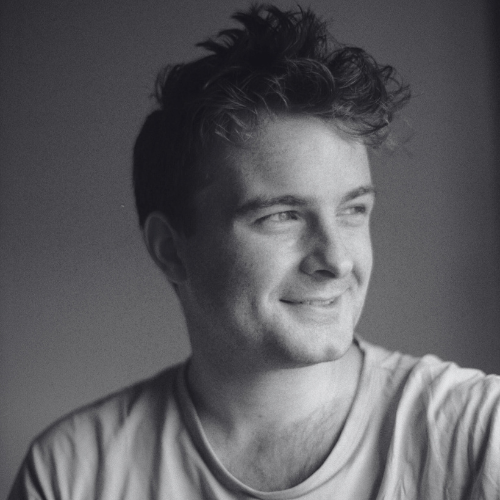
Liam Donovan
Liam is Intermission’s senior editor. He lives in Toronto. His Substack newsletter is available at loamdonovan.substack.com.
LEARN MORE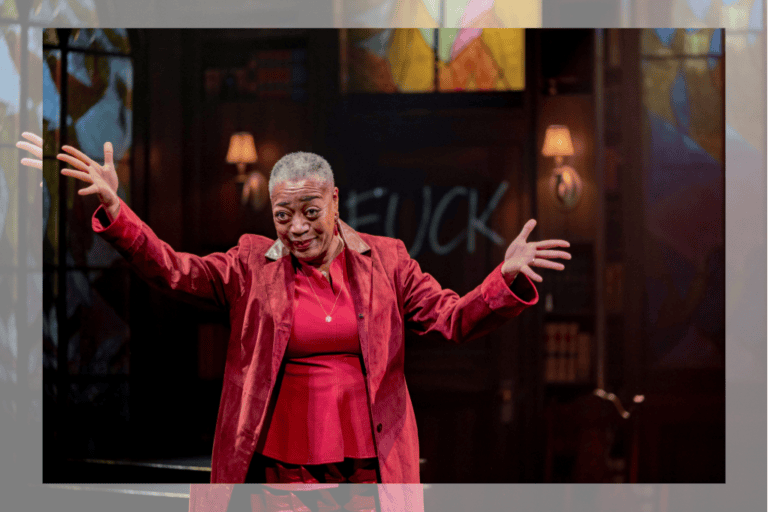 iPhoto caption: Karen Robinson in 'Prophetess.' Photo by Jae Yang.
REVIEW: In Tarragon’s outstanding Prophetess, language is both mighty and inadequate
Margaret’s facility with text helps her maneuver through an institution like York University, where words hold significant power. But the brilliant middle-aged scholar finds herself surprisingly unequipped to process the true sense of more elemental forces: love, grief, spiders.
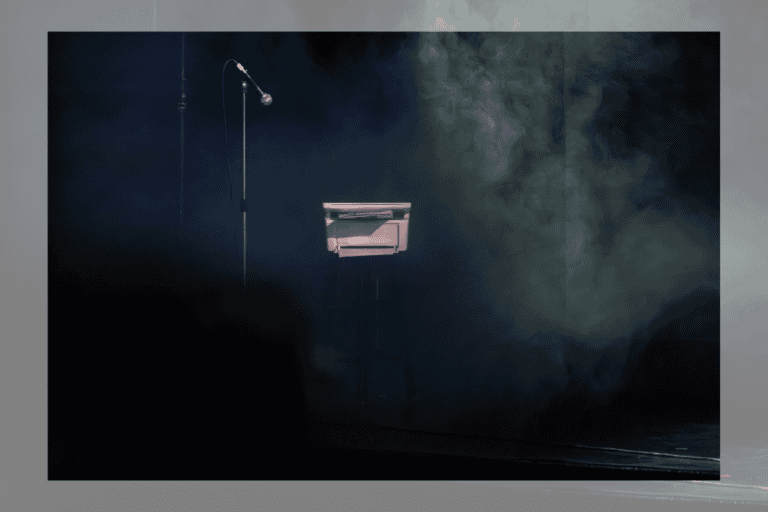 iPhoto caption: 'Documents Perform 3.' Photo by T Photo Factory.
Joining online from across the Americas, more than a dozen artists, artistic producers, cultural leaders, and policymakers add live suggestions to the document, together transforming stuffy bureaucratic language into a rowdy patchwork of compassionate imagining.
 iPhoto caption: Stratford's Tom Patterson Theatre. Photo by Ann Baggley.
2027 highlights include a new Canadian Jacob Two-Two musical and two of the Bard’s thornier plays: The Merchant of Venice and The Taming of the Shrew.
 iPhoto caption: Devon Michael Brown as Rusty Charlie with members of the 'Guys and Dolls' company.
“It's so exhausting, but it's really rewarding when you get to dance so full-out,” says Devon Michael Brown. “You get to use your technique and your training to the fullest extent.”
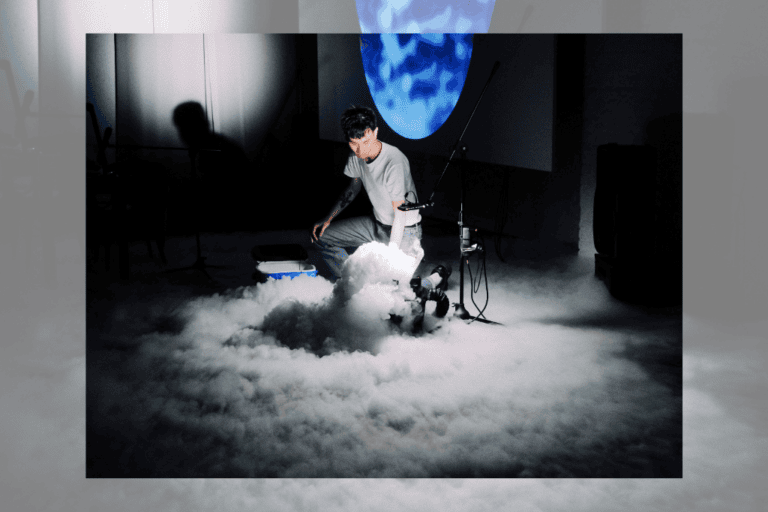 iPhoto caption: Ping-Hsiang Wang in 'Retina Maneuver.' Photo by Hang Su.
REVIEW: At this year’s SummerWorks Performance Festival, physical storytelling is central
From a dancer becoming a canine to a shy theatre director practicing his swordsmanship, the shows I’ve seen so far use performers’ bodies to dramatize defiance.
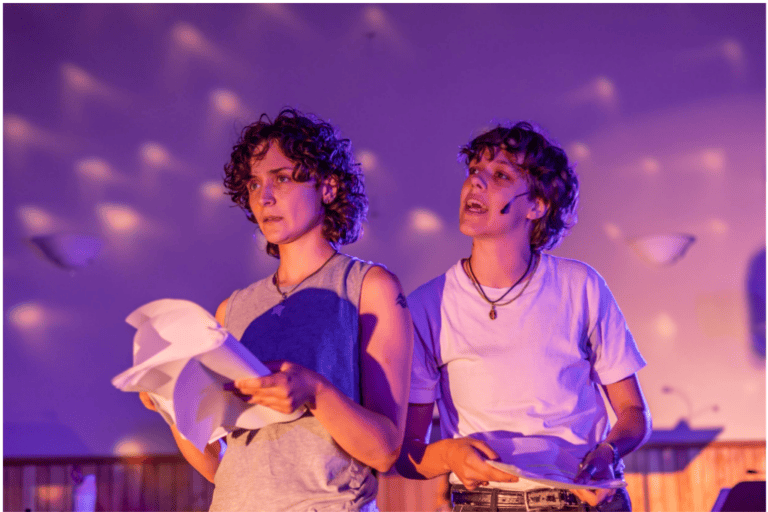 iPhoto caption: Anna Morreale and Luca McPhee perform in 'From Stardust' at the 2025 MADGEN Theatre Festival. Photo by Dave Klassen.
MADGEN Theatre Festival returns to the Danforth
Theatre of the Beat selected four producers under the age of 30 to receive paid mentorship from Toronto theatre-makers. From August 20 to 22, each member of the cohort mounts a new one-act Canadian play.
Comments