
REVIEW: Bad Hats’ Narnia is a joyful, heartwarming escape
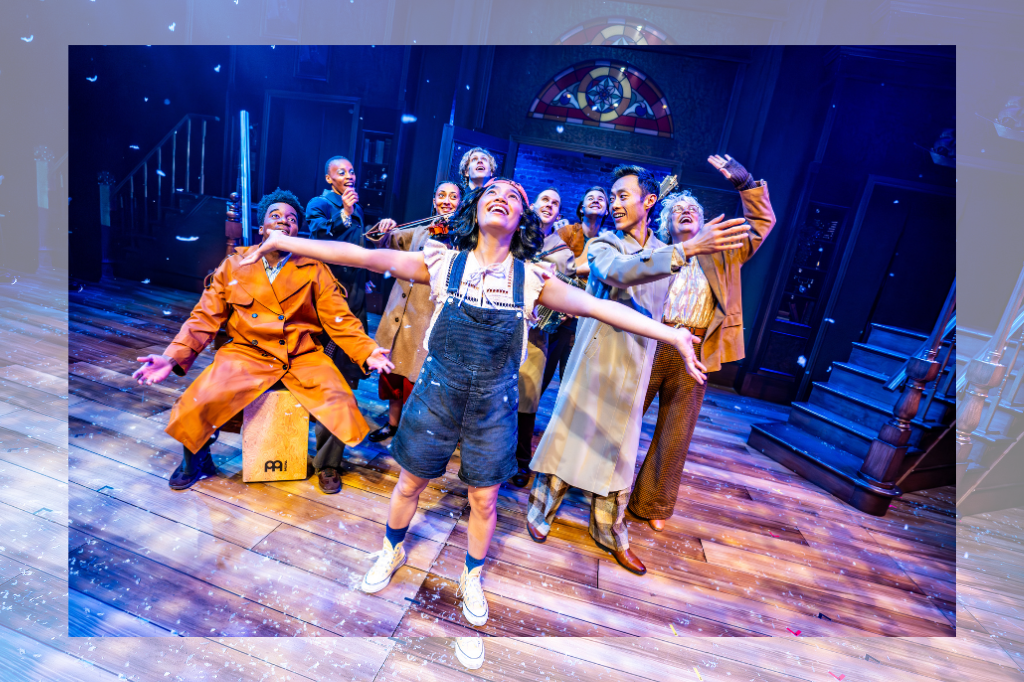 iPhoto caption: Members of the company of 'Narnia.' Photo by Dahlia Katz.
I’ve often thought that entering a theatre from the chaos of the outside world is the closest I’ll ever get to opening an ordinary wardrobe and finding a magical land inside. So it goes with Bad Hats’ Narnia, produced in association with Crow’s Theatre and Soulpepper Theatre and hosted in the latter’s Baillie Theatre during the height of the Distillery District’s holiday market.
If you can squeeze past the security stanchions and raucous crowd, you’ll be treated to a bright little gem of a show by director/adaptor/co-choreographer Fiona Sauder and composer/lyricist Landon Doak that’s more likely to warm your heart than an enchanted piece of Turkish Delight.
Primarily covering the C.S. Lewis novel The Lion, the Witch, and the Wardrobe, Narnia tells the found-family story of war orphans Lucy (Belinda Corpuz), Edmund (Doak), Susan (Sierra Haynes), and Peter (Matthew Novary Joseph), and their quest to save from an evil witch (Amaka Umeh) the wintry land they find tucked in the closet of their fostering Professor (Astrid van Wieren)’s manor home.
The orphans may initially find the house empty and cavernous, but when the audience enters, it’s anything but. Instead, you’re met with a pre-show kitchen party, with actors playing reels on their instruments and welcoming you inside. It’s a solid move to keep everyone entertained while allowing a few latecomers, and hints that joy will resume after a more sombre narrative opening.
This Narnia echos A Christmas Carol with its own ghostly framing device: the Professor, drifting in her empty home, relives the moment when the children arrived years before. Already feeling unmoored, she wonders whether they’ve really returned, or if this is just a flashback.
Initially scared and lonely, the orphans soon fill the Professor’s halls with wonder and imagination; seemingly grateful to have company once more, she narrates their journey in rhyme. Corpuz and Doak are strong foils for each other — youngest sibling Lucy the embodiment of trust who takes everything in with wide eyes, and Edmund a picture of cynicism who grows colder as his found family refuses to acknowledge him as one of their own. He’s easy prey for Umeh’s gleefully domineering Witch, who promises him candy and his heart’s desire of finally being special.
Hayes’ tough Susan seems ready to throw down at any moment, whether she’s wielding a fiddle or a stick. And while oldest child Peter gets the least characterization, Joseph captures his appreciation for science well when he sings to celebrate the regrowth of spring.
The show considers all ages. For children, Sauder’s script is gentle in tone but demands thought, asking kids to rise to meet its messages about treating others with warmth and kindness. While the show doesn’t shy away from mentioning the realities of war or death, the children in the audience seemed to find the spirited, stylized fighting more fun than scary, with death represented by the dropping of a costume piece.
Narnia weaves twin threads about mentorship into its tapestry, teaching kids how to tell an imperfect but trustworthy adult from a vicious and self-serving one, and asking grownups to think about when to take a child’s hand in guidance and when to watch from a distance. For adults, too, there are themes of the inevitability of aging and changing, and the suggestion that we must accept loss as a necessary part of life if we wish to watch the seasons change instead of languishing in stasis.
Even with all these themes, it’s not a heavy show; Doak’s warm, lush music and the story’s colourful characters, like the sprightly beaver couple (Matt Pilipiak and Jonathan Tan) that guide the children to their destiny and the bashful faun Mr. Tumnus (also Pilipiak), keep things humming along.
Set and costume designer Shannon Lea Doyle provides dashes of visual inventiveness, such as books representing birds in flight and a wardrobe door that seems to burst open with layers of coats, along with outfits that de-age the adult actors into children, a witch’s dress that shines like ice, and an ornate carpet that becomes the fur of the lion Aslan (Van Wieren).
Nearly stealing the show entirely, James Daly plays a couple of figures from later Chronicles of Narnia volumes; as the Witch’s advisor who speaks almost entirely in nonsensical, brain-twisting animal aphorisms, his Trumpkin (from Prince Caspian) is delightfully obsequious. Daly also pilots Aslan’s army captain Reepicheep (The Voyage of the Dawn Treader), an expressive rolling mouse puppet that he voices with a high-pitched squeak. He battles himself in a scene of hilarious chaos.
Van Wieren provides a contrastingly calming double act, exuding gravitas as the children’s two primary mentor figures, the eccentric Professor and the regal lion.
Lewis’ original novel includes much overtly religious imagery, such as Father Christmas as a character and the Christ allegory in Aslan’s sacrifice. Bad Hats’ version tones it down to invitingly focus on more inclusive notes of holiday cheer, the power of chosen family, and the promise of spring after a long winter. The show’s choice to reflect the diversity of its audience in the casting and presentation of roles such as Mr. and Mr. Beaver feel carefully considered yet very natural in the world the company creates.
The spirit of openness and the joy of discovery rule over this Narnia. Open the wardrobe and see.
Narnia runs at Soulpepper Theatre until December 28. More information is available here.
Intermission reviews are independent and unrelated to Intermission’s partnered content. Learn more about Intermission’s partnership model here.

Ilana Lucas
Ilana Lucas is a professor of English in Centennial College’s School of Advancement. She is the President of the Canadian Theatre Critics Association. She holds a BA in English and Theatre from Princeton University, an MFA in Dramaturgy and Script Development from Columbia University, and serves as Princeton’s Alumni Schools Committee Chair for Western Ontario. She has written for Brit+Co, Mooney on Theatre, and BroadwayWorld Toronto. Her most recent play, Let’s Talk, won the 2019 Toronto Fringe Festival’s 24-Hour Playwriting Contest. She has a deep and abiding love of musical theatre, and considers her year working for the estate of Tony winners Phyllis Newman and Adolph Green one of her most treasured memories.
LEARN MOREComments
Leave a Comment
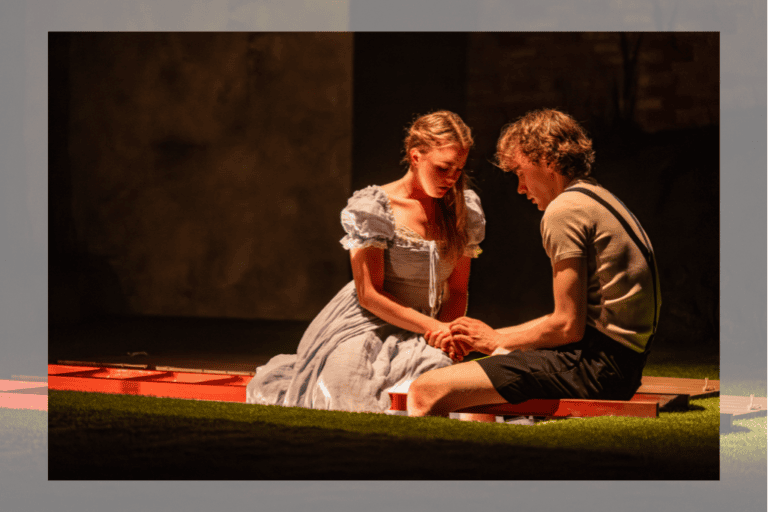 iPhoto caption: Olivia Neary-Hatton and Jake Bunyan in 'Spring Awakening.' Photo by Dahlia Katz.
REVIEW: A sparkling young cast buoys Soulpepper’s slick Spring Awakening
If knowledge is the best defence, the adults in Frank Wedekind’s 1906 play Spring Awakening hand their children suits of armour perforated with thousands of holes.
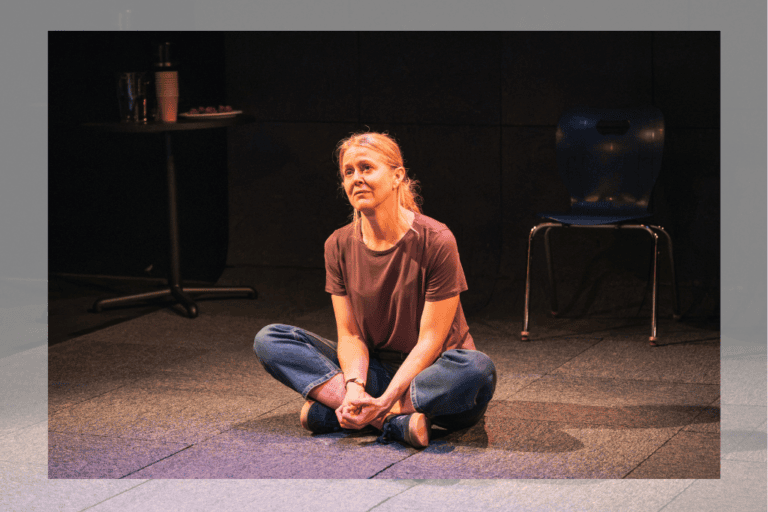 iPhoto caption: Amy Rutherford in 'Pre-Existing Condition.' Photo by Elana Emer.
In an attempt to create an issue-based work with a central everywoman, the play sends the message that we shouldn’t allow domestic violence to define a person while simultaneously staging that definition.
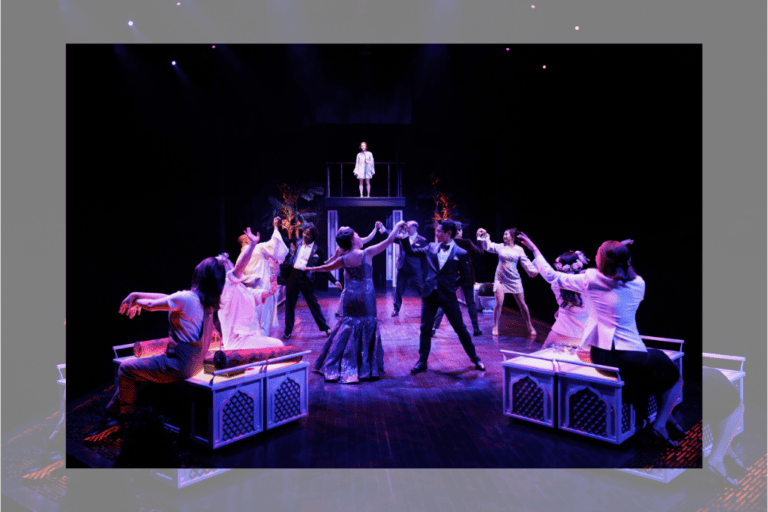 iPhoto caption: Members of the company in 'The Tao of the World.' Stratford Festival 2026. Photo by David Hou.
Set in an opulent world of Singaporean elites, writer-director Jovanni Sy 施崇梵’s world premiere work at the Tom Patterson Theatre is a bubbly, Crazy Rich Asians-style romcom that sweetens the palate before releasing a poignant pop of acidic social commentary, arguing that the concept of restoration is laughable to those who suffered most in the interim and returned to a status quo little better than the disruption.
 iPhoto caption: André Sills and Krystin Pellerin in 'Othello.' Photo by David Hou.
REVIEW: In The Tempest and Othello, the Stratford Festival gets vengeful — and it rocks
The two strong productions, seen as a double bill, make a compelling case against choosing vengeance, with director Haysam Kadri’s Othello an especially riveting and taut interpretation.
 iPhoto caption: Sara Farb and Qasim Khan in 'Funny Girl.' Photo by David Cooper.
REVIEW: Sara Farb shines in Funny Girl at the Shaw Festival
One theme of Funny Girl is acceptance of the self despite its flaws and inconsistencies. The musical, likewise, is full of flaws and inconsistencies, but compelling all the same. Luckily, Sara Farb as Fanny Brice in all her boastful vulnerability gives us that central figure who delights — an umbrella to ward off the rain.
 iPhoto caption: Raymond Strachan and Tom McCamus in 'Death of a Salesman.' Photo by David Hou.
REVIEW: Stratford Festival’s Death of a Salesman is stark and melancholy
The relatively straightforward production is aesthetically austere, but strong central performances of the family at its core keep it human.
Dear Producer’s/Artistic Director,
I am writing as a grandparent and paying patron to express my concern about the recent performance of Narnia on the 30th of December, 2025 at Soul Pepper Theatre, which I attended with my grandchildren.
I chose this production because Narnia is widely known as a family-friendly story, and I trusted it would be appropriate for young children. However, the opening sequence—a music-only scene featuring two women kissing—was not part of the original story and came as a complete surprise, especially in what was advertised as a children’s or family production.
My grandchildren were confused and began asking questions that I did not expect to have to address in this context. I do not bring my grandchildren to the theatre to have anyone else introduce sexual themes to them, in any form, without my consent. In my view, introducing romantic or sexual imagery of any kind—heterosexual or same-sex—in an unexpected opening scene of a children’s show is inappropriate.
I would like to understand:
• Why this scene was included in a production that many families reasonably assume will be faithful to the tone and spirit of the original Narnia story.
• What message you intended to send to young children by opening the show in this way.
• Why there was no clear content advisory so that parents and grandparents could make an informed decision before purchasing tickets.
As someone who cares deeply about what children are exposed to, I believe producers have a responsibility to respect the expectations that come with “family” programming and to provide full, accurate information about potentially sensitive content. You have the artistic freedom to make creative choices, but families also have the right to decide what their children are exposed to, and that requires transparency.
I am requesting a written response addressing my concerns and explaining how you plan to handle content advisories and age-appropriateness in future productions.
Sincerely,