
Copperbelt’s creative team crossed continents to do Natasha Mumba’s debut play justice
 iPhoto caption: Natasha Mumba and Eric Miracle in 'Copperbelt.' Photo by Dahlia Katz.
Copperbelt’s writer and lead performer are the same person, but one keeps surprising the other.
The continent-spanning story of a wealthy Zambian family is the debut play by Toronto-based theatre artist Natasha Mumba. Now onstage at Soulpepper’s Young Centre for the Performing Arts, it’s staged by Nina Lee Aquino, the artistic director of the National Arts Centre’s English Theatre, where Copperbelt premiered before its current Toronto run. Mumba stars as Eden Kasuba, the family’s eldest daughter and an operations manager at a Canadian mining company. When the Zambian government threatens to revoke the Kasubas’ mining license — the largest ever owned by an African business in the region — Eden finds herself torn between familial loyalty, and her aspirations to build an independent career abroad.
“I thought that [being the playwright] was going to give me some sort of a shorthand [as an actor],” Mumba explained in a Zoom interview. “I know this play. Therefore, when I build this character, it’s going to be so much easier. [But] it’s not the case at all, because the revelations that the playwright has are on such a macro level, [whereas] there’s so much detailed work to do in building character.”

When we spoke, Mumba was just beginning technical rehearsals for Copperbelt’s Toronto run. “I’ll [realize] ‘Oh my god, this play’s about love!’ or, ‘This play’s about power!’” she said. “Things the playwright knows in the back of my mind, but [as an actor] I need to comb through all the bits and pieces to get to that point.”
Some of the surprises playwright-Mumba has left for actor-Mumba are less profound and more technical. “In the first 30 pages of the play, I have six costume changes. I was like, ‘Who did this?’” she joked.
Mumba grew up in Kitwe, a city in the Zambian Copperbelt region, so called for its massive reserves of that metal. Though performer and playwright might have different perspectives, they share a desire to demolish stereotypes about Africa and Africans, and to show Canadian audiences Zambia in its full complexity.
One avenue to find that nuance has been through characters’ dialects.
“Everybody sounds different,” Mumba explained. “That’s intentional. It’s about breaking this idea of a single African sound, a single Zambian sound. Depending on what [societal] class you’re in, or if you went to South Africa, or the United States, or Botswana for university and then came back, everybody has so many different influences.”
“What I wanted to mimic was my family,” she continued. “When we get home, we are speaking in four different dialects depending on the memory we’re talking about or the flavour of the joke we’re telling. It all lives in our body.”

Copperbelt’s creative team has crossed continents in their quest to accurately represent Mumba’s birthplace. The production features two actors based in Zambia: Kapembwa Wanjelani and Kondwani Elliott Zulu. “They sit as cultural pillars for us, [especially] in language,” Mumba said. Zambian dialect coach Chiluba Katongo Nosfu worked with the cast, and also provided translation support for Mumba’s script: Copperbelt’s characters regularly interject words and phrases from Bemba — one of over 70 languages spoken in Zambia — into their English dialogue.
The play’s core creative team visited Zambia in January 2025 for two weeks of cultural immersion. The group consisted of Mumba, Aquino, movement director Tawiah M’Carthy, and dramaturg Ric Knowles.
“A key part [of the development process] for Nina was the trip to Zambia,” Mumba explained. “There are a lot of [elements in] the design that are pulled from our time there. There’s a great satisfaction I get from knowing that [members of the team] have built their own relationship with Zambia.”
For Mumba, authentic representation also meant confronting some of the messier — and all too human — parts of life in the place where she grew up.
“There’s a culture of infidelity in Zambia,” she reflected. “It’s really intense, and everyone sort of accepts it. [In my play, Eden’s] father is, for lack of a better word, a philanderer.” Wanjelani plays patriarch Chimfwembe Kasuba in the production, while Warona Setshwaelo plays his wife Harriet. Co-founder and board chair of the Kasubas’ company Rising Sun, she takes a pragmatic view of her husband’s wanderings.
“I wanted to explore the real cost of that [behaviour] for women, because I think that’s deeply underplayed, especially back home,” Mumba said.
Eden, along with her siblings Musolo and Lombe, bring diasporic perspectives to the family dynamic. All three attended prestigious schools abroad. Now Musolo, played by Eric Miracle, lives in Australia, while Lombe, portrayed by Makambe K. Simamba, is a jetsetting influencer. Mumba has ensured that the younger Kasubas have as many foibles as their elders.
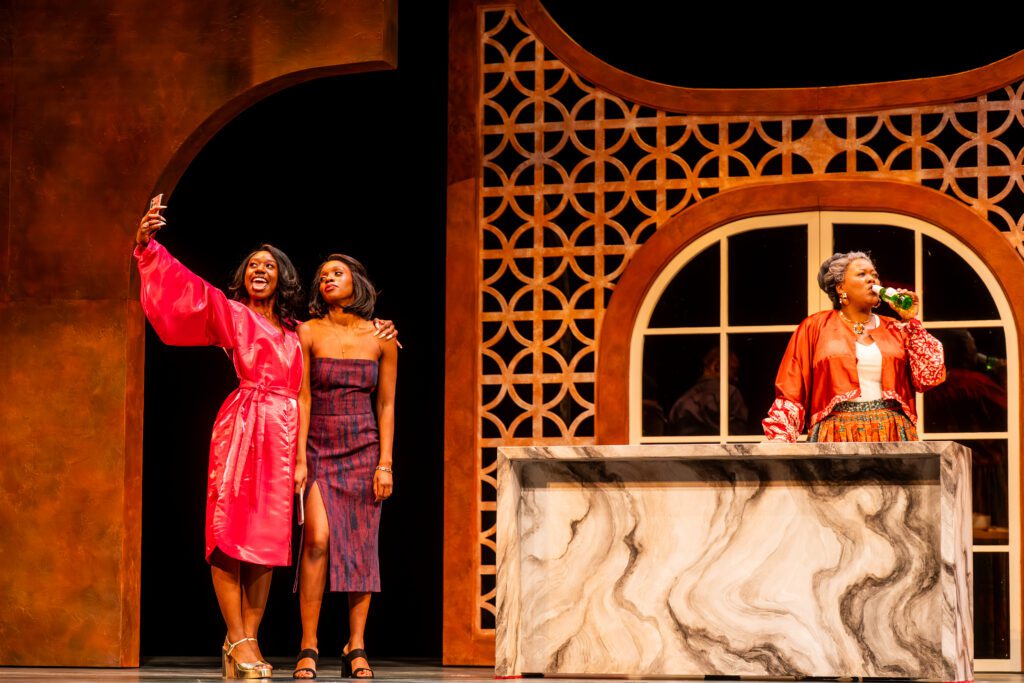
“They interpret their Blackness globally,” said Mumba, “but [they’re also] wealthy, and they experience the world through that lens. I wanted to see little assholes on stage: rude, problematic African kids disrespecting their parents, and their parents disrespecting them. [When Africans are portrayed as] just victims, it’s easy to put [them] in a category that makes them less human. To [put] the messiness of our humanity into this family [is to] make them vast, because they are vast: They’re people.”
Mumba said that reactions to the NAC premiere have shown her just how hungry audiences are for stories that honour that vastness, especially when it comes to underrepresented experiences.
“Ottawa was such a gift,” she said. “There’s such a massive African community there, and they really came out. It’s made me respect new play development [even more], and what Nina’s fighting for [in her role at the NAC]. There’s something so unique about people, for lack of a better phrase, being catered to [in a way they haven’t been before. This play] speaks to being an immigrant, specifically in Canada, specifically in relationship to an African country and their resources. Also, [the story’s not] about trauma. It’s easy to come back to. There’s a woman I met who watched it six times, and brought someone every time.”
Copperbelt’s Blackout Night at the NAC — a performance reserved for Black audiences members to hear stories by and for them, in community with each other — brought particularly strong responses.
“After [the show], the actors all had glasses of wine, and they couldn’t drink,” said Mumba. “Everybody kept bum-rushing them to talk about the show.”
Copperbelt runs at Soulpepper until March 1. Tickets are available here.
Soulpepper is an Intermission partner. Learn more about Intermission’s partnership model here.

Nathaniel Hanula-James
Nathaniel Hanula-James is a multidisciplinary theatre artist who has worked across Canada as a dramaturg, playwright, performer, and administrator.
LEARN MORE iPhoto caption: 'C'est la vida!' production photo by Julie Cherki.
C’est la vida! uses mime, dance, and electro beats to remix classic rom-com tropes
“Having endless talks with David about love, and our respective relationships, while creating and touring this show has definitely helped me grow,” says dancer Liesbeth Kiebooms. “It’s given me a more subtle understanding of love.”
 iPhoto caption: Headshots of Sophie Gee, Ray Hogg, Margot Greve, Leora Morris, and Jessica Carmichael.
Five theatre directors offer advice to the next generation — and the programs training it
The artists on this call were candid and vulnerable. They spoke openly about their professional frustrations and challenges — and they weren’t shy about pinpointing the ways that mainstream anglophone Canadian theatre practices fail directors and artists more broadly. That said, I didn’t leave our chat feeling hopeless or cynical.
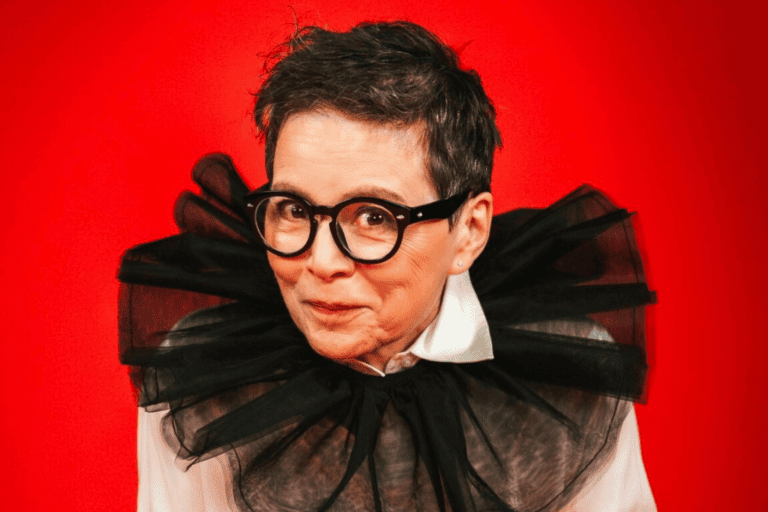 iPhoto caption: Ann-Marie MacDonald in 'Goodnight Desdemona (Good Morning Juliet).' Photo by Elana Emer.
“Sexism kept me out of hockey as a kid,” says Ann-Marie MacDonald. “But sexism also shut me out of Shakespeare."
 iPhoto caption: Headshots of Sophie Gee, Ray Hogg, Margot Greve, Leora Morris, and Jessica Carmichael.
How can theatre directors forge a sustainable career in Canada?
It’s increasingly unlikely that directors will hone their craft through formal training. Relatively few post-secondary programs devoted to directing exist, and it seems to me that directing-specific mentorship programs are less common than similar initiatives for actors or playwrights. To convene a roundtable about director training, I reached out to five very different artists on a continuum of early- to mid-career.
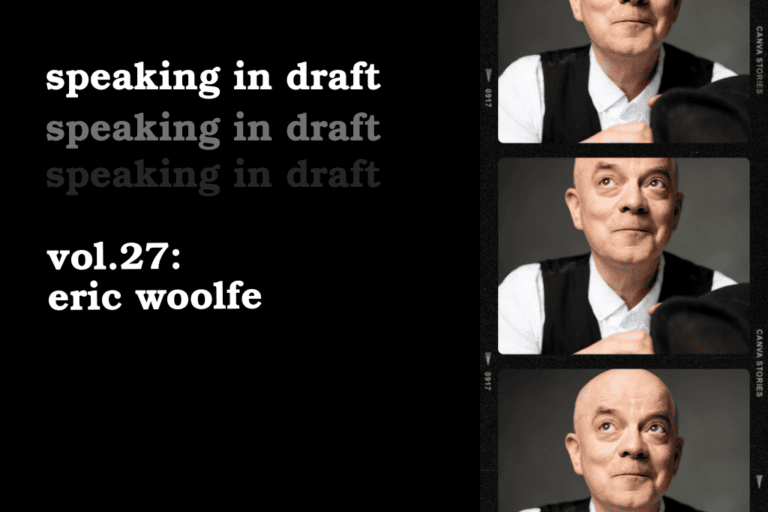 iPhoto caption: Portrait of Eric Woolfe. Photo by Dahlia Katz.
Eric Woolfe’s inventive horror theatre is a monster mash of artistic influences
For the past 26 years, Eldritch Theatre’s director of the uncanny has given ghoulies, ghosties, and long-legged beasties of all kinds a spot in the limelight, in productions that serve up puppets, magic, and a crumbling castle’s-worth of uncanny influences, including schlock-horror B-movies, Shakespeare at his bloodiest, and the fiction of H.P. Lovecraft.
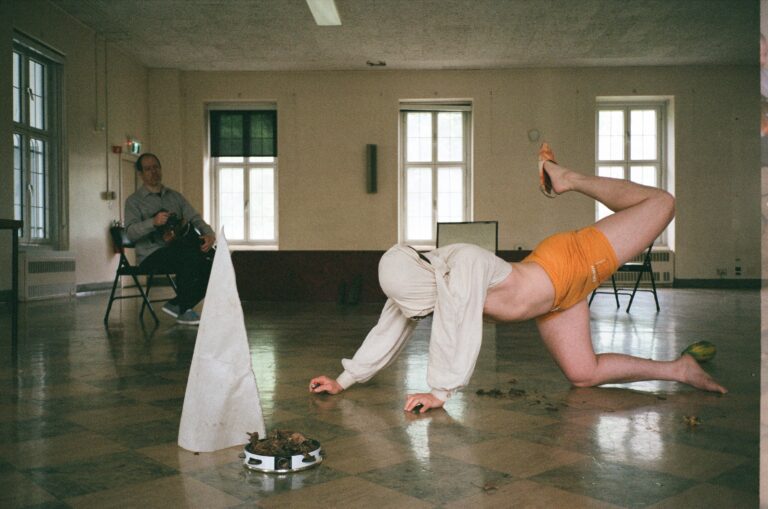 iPhoto caption: Nate Yaffe in 'Rot Hat.' Photo by Kinga Michalska.
This year’s SummerWorks Performance Festival strives to make accessibility intrinsic
The curated festival’s 36th edition features a range of works by Disabled and neurodivergent artists where the medium is very much the message.
Comments