
Canadian Stage’s A Doll’s House marks the second entry in a trilogy of productions about marriage
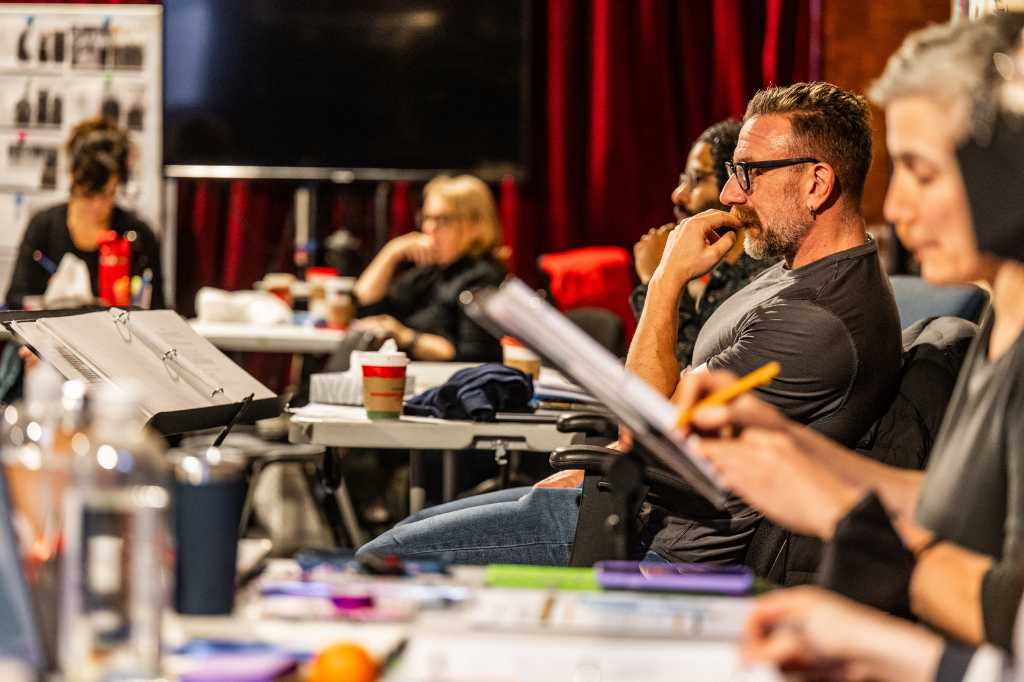 iPhoto caption: Brendan Healy in rehearsal for 'A Doll's House.' Photo by Dahlia Katz.
Canadian Stage’s latest production is giving #relationshipgoals — just not in the way you might think.
Marital bliss isn’t exactly on the menu in A Doll’s House, Ibsen’s classic play, now playing at the Bluma Appel Theatre. Canadian Stage’s artistic director Brendan Healy helms the production, which uses Amy Herzog’s 2023 adaptation from the Norwegian.
The play’s central pair, Nora and Torvald Helmer, initially seem to be the perfect middle-class couple in their 19th-century Norwegian milieu. Soon, however, Nora finds herself threatened by scandal, and awakens to the constraints of her roles as wife and mother. At the play’s finale (146-year-old spoiler alert!), she leaves her family, a decision that scandalized 19th-century audiences.
A Doll’s House is the second instalment in a trilogy of Canadian Stage productions directed by Healy, all examining marriage. It began last winter with Edward Albee’s Who’s Afraid of Virginia Woolf?, in a production led by Martha Burns and Paul Gross as the sparring central couple.
In a Zoom interview, Healy discussed the ways that these two plays speak to each other, and to him.

“At 50, thinking about marriage and love, and [their] place in my life, I wanted to do an artistic deep-dive into the idea of partnership,” he said. “Albee and Ibsen were both radical thinkers [who] offer a critical perspective [on] what a marriage is. Both plays look at the individual inside the relationship.
“‘How does one maintain one’s own individuality while also cultivating the other [partner, and] what’s created between the two people?’” he asked. “‘How do you have your own desires, your own needs, but also answer the needs of the couple?’”
Healy said that he hadn’t always planned to follow Albee with Ibsen. Nonetheless, he identified a thread from one show to the next. “George and Martha end committed to each other,” he said of Albee’s play. “It’s a great love story, really. Whereas [in A Doll’s House], Nora in particular makes the decision that the only way forward is through ending the relationship. Those are two very different conclusions, both of which are valid.”
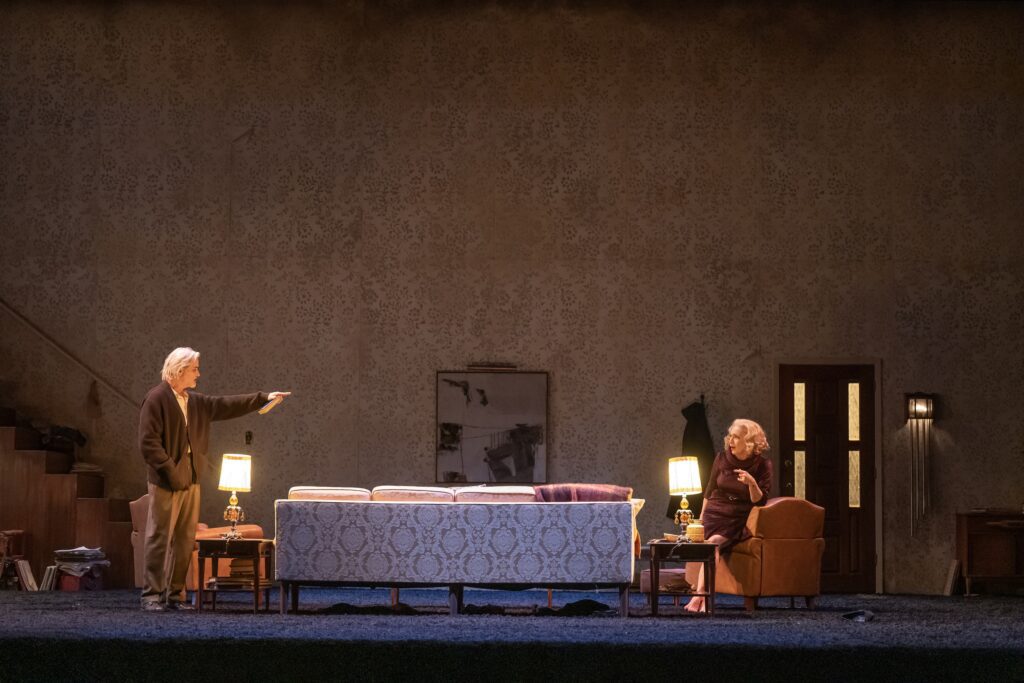
The director was also intrigued by the ways A Doll’s House uses the Helmers’ marriage to ask broader questions about personal agency.
“What’s fascinating about A Doll’s House, and [what] I think complicates its legacy, is that Nora is a willing participant in the cage that she’s in,” Healy said. “I think Ibsen makes the argument that we are [often] complicit in [our] cages… We lock the door, but we’re the only ones that have the key.”
Healy’s drive to dig into marriage onstage is more than intellectual. In the interview, he shared that his own marriage — five years of a partnership that spanned twelve — had recently ended.
“As a gay man, I feel like an outsider,” he reflected. “But I’ve also been married, so I’ve participated in that institution. I bring my experience of being married [to these plays], and I bring my experience of that marriage disintegrating.”
Even when Healy’s not directing a play about partnership, all his work has an element of the personal. “For me, the choice of play becomes really important,” he said. “I have to feel that the play is expressing something that is true to me at the moment, and that I want to help make alive.”
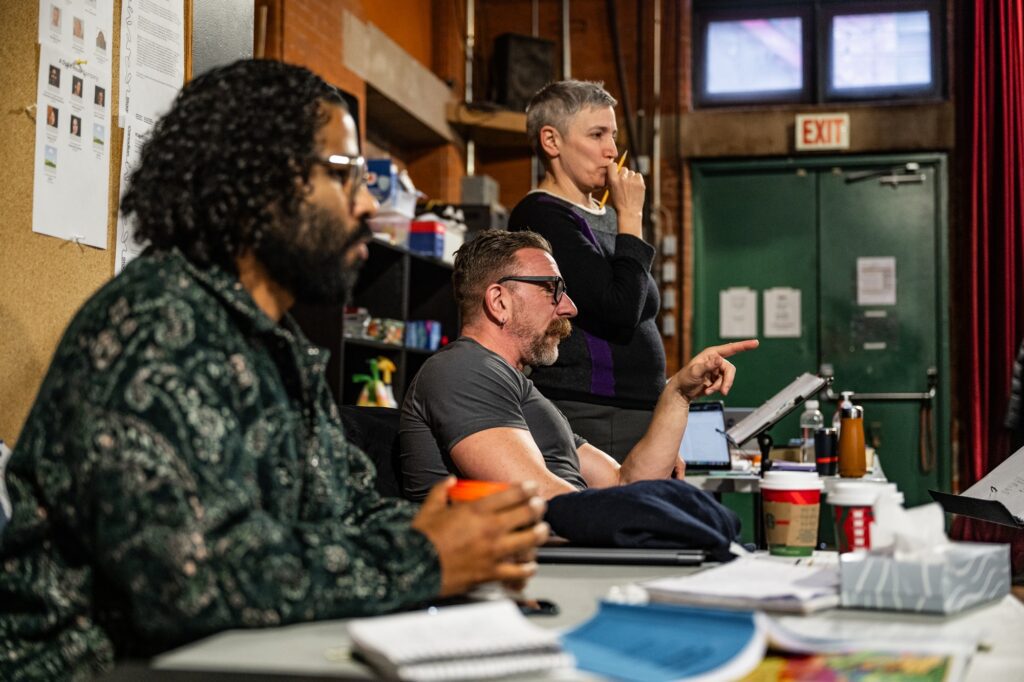
Healy distinguishes his process of alive-making from a more concept-heavy approach to directing. Although early in his career he studied with auteur theatre-makers like Richard Maxwell, he’s not interested in reshaping a classic to suit his own narrative or aesthetic priorities. (German director Thomas Ostermeier added a climactic murder to his 2002 take on A Doll’s House, for instance.)
“I don’t come at it like, ‘This is what I want to say with this play.’” Healy explained. “I don’t approach things intellectually. I’m very visceral and more intuitive as an artist.
“The way into [A Doll’s House], for me, is the decision that Nora makes,” he continued. “She decides to leave her family, her children, and her husband, and really just step into the great unknown. So the question is: ‘Why and how does she come to that conclusion?’ The play has to somehow push Nora to a place where that’s the only possible decision for her to make. Directorially, it’s been about, ‘How do I set up the conditions for that to be the only option for her, psychologically and emotionally?’”
Although Healy has set his production in the original period, he’s adamant that he doesn’t want this Doll’s House to be a museum piece. “‘How do I somehow create a play where those [characters] are tangible and real to an audience today?’” he asked himself. “Not [as in], ‘Oh, look how hard it was for women back then.’ But [more], ‘Look how hard it is just to fucking be a human.’”
If that’s his goal, it’s a good thing Healy is so curious about people — performers, especially.
“I have a great passion for actors,” he said. “They have a capacity to channel emotion and energy, and [a] power of transformation, [that] I find quite awe-inspiring. Directing is a real privilege, to work with that energy. It’s a gift.”
It makes sense that a director who adores actors would relish the casting process. “I was once told that directing is 90 per cent casting,” said Healy. “I don’t think that’s totally true, but a big part of a director’s job is to match the spirit of a character with the spirit of an actor.
“I think that’s one of the skills that I have,” he added, with a mix of pride and caution. “This [production has] great actors, but it’s [also] really good casting. They’re all bringing a lot of truth to the play.”

Truth-teller in chief is Hailey Gillis, who portrays Nora in A Doll’s House, and who also appeared in Healy’s Woolf. In that production she played Honey, one half of the younger — but no less dysfunctional — couple that completes the play’s quartet.
Gillis followed up Woolf with the Mirvish transfer of Natasha, Pierre & the Great Comet of 1812, and the Canadian premiere of Octet this past fall. Healy spoke admiringly of her openness as a performer.
“Hailey is so sincere,” he said. “I don’t mean that pejoratively. As an actor, she’s emotionally available and honest. In Woolf and A Doll’s House, [Honey’s and Nora’s] emotional availability gets exploited, gets mocked, but ultimately it’s their source of strength.”
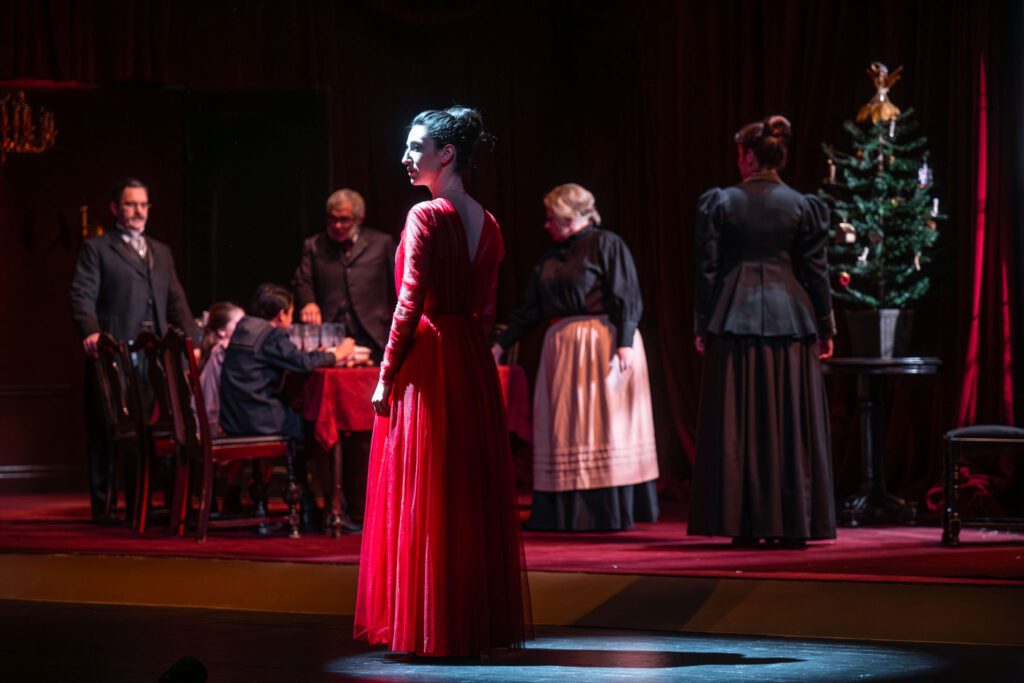
Perhaps if this production of A Doll’s House is #relationshipgoals, it’s in the potential for the vulnerabilities of all the artists involved to mingle and become something bigger than themselves.
“[In A Doll’s House], Ibsen is expressing something personal to him and his worldview,” Healy explained. “I feel like I’m expressing something personal to me and my worldview through the directing of his work, and each actor inside the piece [is] revealing something true about themselves inside of it. I think that’s what I love the most about the theatre, and that’s where relationship comes in.
“You’re with a bunch of strangers, really, and you’re given this fiction,” he mused. “Somehow we find communal truth through that act of trying to make this fiction alive… There’s an opening that happens, by going so deep into a story. [As a director, I] have to live [as] everybody in the play. It just breaks something open in me, and gives me more empathy. It’s a transformative experience, for sure.”
Healy wasn’t at liberty to reveal the third installment in his marriage trilogy, but gave a hint as to the subject matter.
“I think it’s the after — after the marriage,” he said. “’What is there, what lasts, what is a marriage after it ends?’”
A Doll’s House runs at the Bluma Appel Theatre until February 1. More information is available here.
Canadian Stage is an Intermission partner. Learn more about Intermission’s partnership model here.

Nathaniel Hanula-James
Nathaniel Hanula-James is a multidisciplinary theatre artist who has worked across Canada as a dramaturg, playwright, performer, and administrator.
LEARN MORE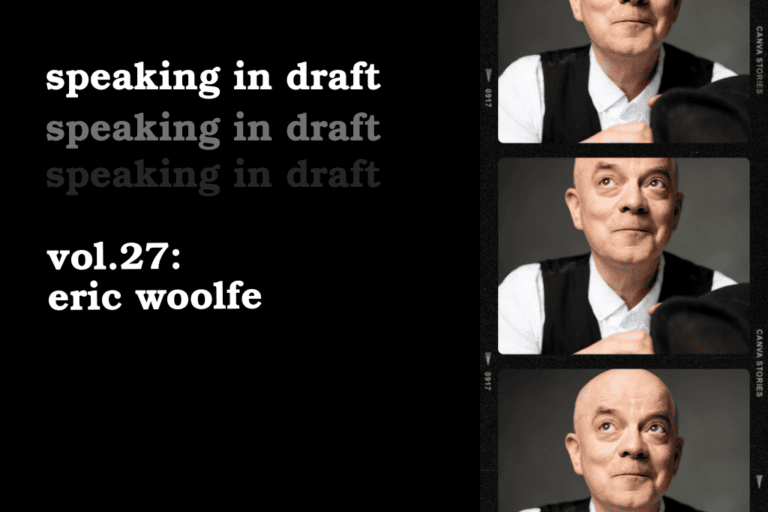 iPhoto caption: Portrait of Eric Woolfe. Photo by Dahlia Katz.
Eric Woolfe’s inventive horror theatre is a monster mash of artistic influences
For the past 26 years, Eldritch Theatre’s director of the uncanny has given ghoulies, ghosties, and long-legged beasties of all kinds a spot in the limelight, in productions that serve up puppets, magic, and a crumbling castle’s-worth of uncanny influences, including schlock-horror B-movies, Shakespeare at his bloodiest, and the fiction of H.P. Lovecraft.
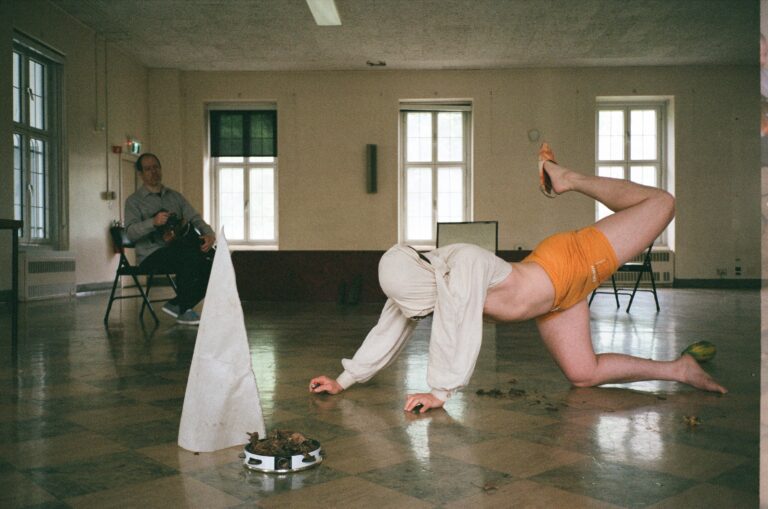 iPhoto caption: Nate Yaffe in 'Rot Hat.' Photo by Kinga Michalska.
This year’s SummerWorks Performance Festival strives to make accessibility intrinsic
The curated festival’s 36th edition features a range of works by Disabled and neurodivergent artists where the medium is very much the message.
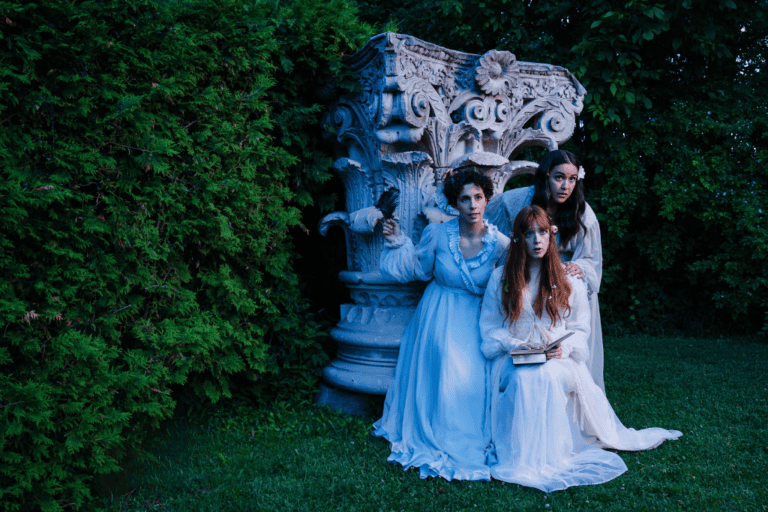 iPhoto caption: Laura Del Papa, Hilary Scott, and Lara Lucia in 'Brontë: The World Without.' Photo by Raph Nogal.
GFT’s Brontë: The World Without is a window into the ordinary lives of literary icons
Directed by Helen Juvonen in Guild Park and Gardens’ Greek Amphitheatre, The World Without follows sisters Emily, Charlotte, and Anne Brontë — the authors of Wuthering Heights, Jane Eyre, and The Tenant of Wildfell Hall, respectively.
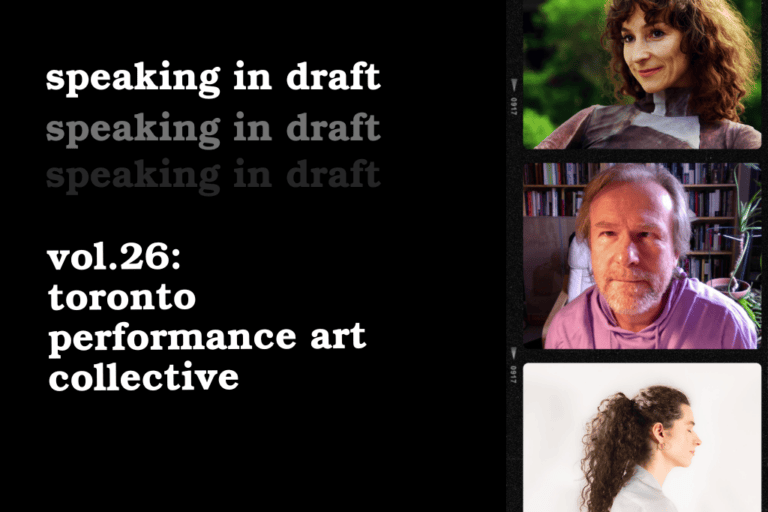 iPhoto caption: Photos of Shalon T. Webber-Heffernan, Paul Couillard, and James Knott courtesy of 7a*11d.
The organizers of the 7a*11d festival want you to know that performance art is still ‘punk as hell’
"There’s something about being live, with a sweaty, stinking, gross, dirty body, that’s just — you’re in it," says collective member Shalon T. Webber-Heffernan. "There’s some kind of alchemy going on that’s addictive to me. I think 7a*11d is sort of the dealer, if you will! It’s keeping us all hooked onto this weird obsession."
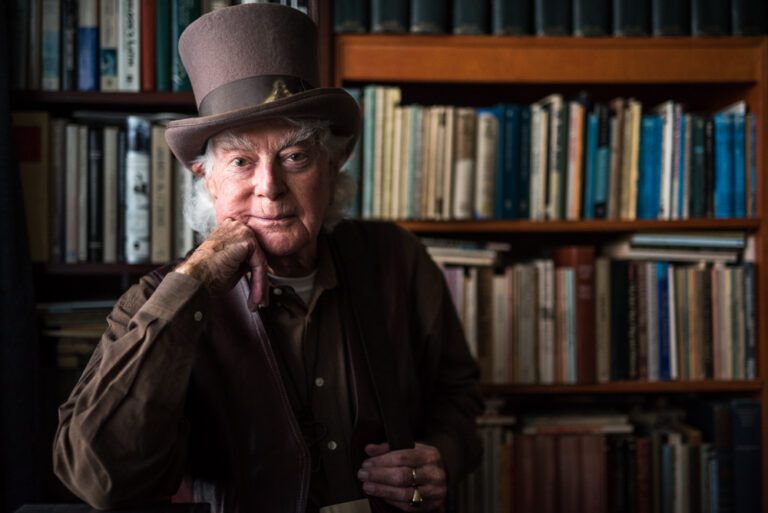 iPhoto caption: Peter Wylde for Intermission Magazine. Photo by Dahlia Katz.
In memory of Peter Wylde, the time-travelling acting teacher
What follows is an edited and condensed collage, loosely organized by theme, that only scratches the surface of Wylde’s life and impact.
 iPhoto caption: Dance Macabre cast. In photo: Keira Marie Forde (front). Back: [L to R] Uche Ama, King Cosmos, Theresa Gomes and Thomas Fournier. Photo by Tiku Romello Fisher (TRF Media).
At the 2026 Toronto Fringe, Caribbean artists stage collisions of identity, power, and desire
In separate video conversations, the lead artists behind Danse Macabre, Ex-Change of Words, and Momme Domme spoke about approaching themes of Blackness, diaspora, power, and desire.
Comments