
REVIEW: Bad Hats’ Narnia is a joyful, heartwarming escape
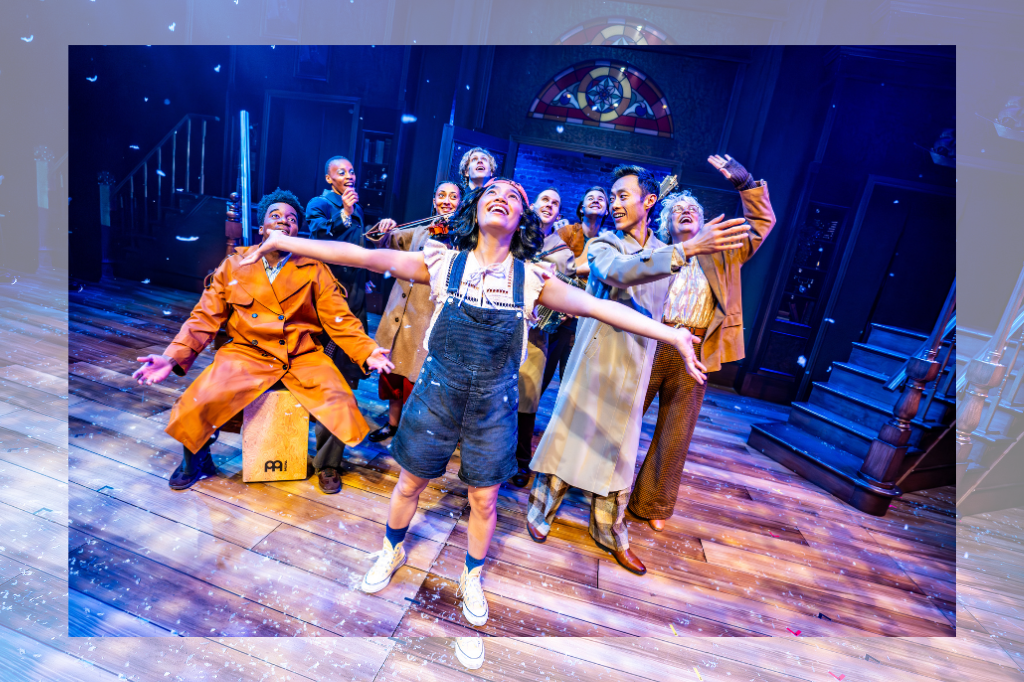 iPhoto caption: Members of the company of 'Narnia.' Photo by Dahlia Katz.
I’ve often thought that entering a theatre from the chaos of the outside world is the closest I’ll ever get to opening an ordinary wardrobe and finding a magical land inside. So it goes with Bad Hats’ Narnia, produced in association with Crow’s Theatre and Soulpepper Theatre and hosted in the latter’s Baillie Theatre during the height of the Distillery District’s holiday market.
If you can squeeze past the security stanchions and raucous crowd, you’ll be treated to a bright little gem of a show by director/adaptor/co-choreographer Fiona Sauder and composer/lyricist Landon Doak that’s more likely to warm your heart than an enchanted piece of Turkish Delight.
Primarily covering the C.S. Lewis novel The Lion, the Witch, and the Wardrobe, Narnia tells the found-family story of war orphans Lucy (Belinda Corpuz), Edmund (Doak), Susan (Sierra Haynes), and Peter (Matthew Novary Joseph), and their quest to save from an evil witch (Amaka Umeh) the wintry land they find tucked in the closet of their fostering Professor (Astrid van Wieren)’s manor home.
The orphans may initially find the house empty and cavernous, but when the audience enters, it’s anything but. Instead, you’re met with a pre-show kitchen party, with actors playing reels on their instruments and welcoming you inside. It’s a solid move to keep everyone entertained while allowing a few latecomers, and hints that joy will resume after a more sombre narrative opening.
This Narnia echos A Christmas Carol with its own ghostly framing device: the Professor, drifting in her empty home, relives the moment when the children arrived years before. Already feeling unmoored, she wonders whether they’ve really returned, or if this is just a flashback.
Initially scared and lonely, the orphans soon fill the Professor’s halls with wonder and imagination; seemingly grateful to have company once more, she narrates their journey in rhyme. Corpuz and Doak are strong foils for each other — youngest sibling Lucy the embodiment of trust who takes everything in with wide eyes, and Edmund a picture of cynicism who grows colder as his found family refuses to acknowledge him as one of their own. He’s easy prey for Umeh’s gleefully domineering Witch, who promises him candy and his heart’s desire of finally being special.
Hayes’ tough Susan seems ready to throw down at any moment, whether she’s wielding a fiddle or a stick. And while oldest child Peter gets the least characterization, Joseph captures his appreciation for science well when he sings to celebrate the regrowth of spring.
The show considers all ages. For children, Sauder’s script is gentle in tone but demands thought, asking kids to rise to meet its messages about treating others with warmth and kindness. While the show doesn’t shy away from mentioning the realities of war or death, the children in the audience seemed to find the spirited, stylized fighting more fun than scary, with death represented by the dropping of a costume piece.
Narnia weaves twin threads about mentorship into its tapestry, teaching kids how to tell an imperfect but trustworthy adult from a vicious and self-serving one, and asking grownups to think about when to take a child’s hand in guidance and when to watch from a distance. For adults, too, there are themes of the inevitability of aging and changing, and the suggestion that we must accept loss as a necessary part of life if we wish to watch the seasons change instead of languishing in stasis.
Even with all these themes, it’s not a heavy show; Doak’s warm, lush music and the story’s colourful characters, like the sprightly beaver couple (Matt Pilipiak and Jonathan Tan) that guide the children to their destiny and the bashful faun Mr. Tumnus (also Pilipiak) keep things humming along.
Set and costume designer Shannon Lea Doyle provides dashes of visual inventiveness, such as books representing birds in flight and a wardrobe door that seems to burst open with layers of coats, along with outfits that de-age the adult actors into children, a witch’s dress that shines like ice, and an ornate carpet that becomes the fur of the lion Aslan (Van Wieren).
Nearly stealing the show entirely, James Daly plays a couple of figures from later Chronicles of Narnia volumes; as the Witch’s advisor who speaks almost entirely in nonsensical, brain-twisting animal aphorisms, his Trumpkin (from Prince Caspian) is delightfully obsequious. Daly also pilots Aslan’s army captain Reepicheep (The Voyage of the Dawn Treader), an expressive rolling mouse puppet that he voices with a high-pitched squeak. He battles himself in a scene of hilarious chaos.
Van Wieren provides a contrastingly calming double act, exuding gravitas as the children’s two primary mentor figures, the eccentric Professor and the regal lion.
Lewis’ original novel includes much overtly religious imagery, such as Father Christmas as a character and the Christ allegory in Aslan’s sacrifice. Bad Hats’ version tones it down to invitingly focus on more inclusive notes of holiday cheer, the power of chosen family, and the promise of spring after a long winter. The show’s choice to reflect the diversity of its audience in the casting and presentation of roles such as Mr. and Mr. Beaver feel carefully considered yet very natural in the world the company creates.
The spirit of openness and the joy of discovery rule over this Narnia. Open the wardrobe and see.
Narnia runs at Soulpepper Theatre until December 28. More information is available here.
Intermission reviews are independent and unrelated to Intermission’s partnered content. Learn more about Intermission’s partnership model here.

Ilana Lucas
Ilana Lucas is a professor of English in Centennial College’s School of Advancement. She is the President of the Canadian Theatre Critics Association. She holds a BA in English and Theatre from Princeton University, an MFA in Dramaturgy and Script Development from Columbia University, and serves as Princeton’s Alumni Schools Committee Chair for Western Ontario. She has written for Brit+Co, Mooney on Theatre, and BroadwayWorld Toronto. Her most recent play, Let’s Talk, won the 2019 Toronto Fringe Festival’s 24-Hour Playwriting Contest. She has a deep and abiding love of musical theatre, and considers her year working for the estate of Tony winners Phyllis Newman and Adolph Green one of her most treasured memories.
LEARN MORE iPhoto caption: Members of the company of 'Robin Hood.' Photo by Dahlia Katz.
REVIEW: Canadian Stage’s Robin Hood panto is anti-capitalist fun for the whole family
Following Ross Petty’s legacy of scene-stealing, Damien Atkins as the evil Prince John is easily the greatest delight of the show.
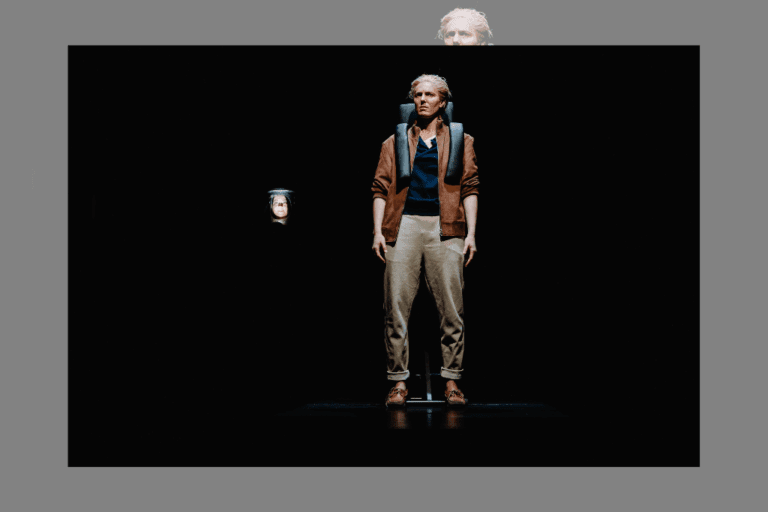 iPhoto caption: Lauren Gillis and Alaine Hutton in 'Public Consumption.' Photo by Eden Graham.
REVIEW: Lester Trips’ stylish Public Consumption captures the internet’s profound emptiness
Rather than directly representing online life, Public Consumption speculates — with virtuosity — about how the digital world affects our bodies. And the show's findings are by no means comfortable.
 iPhoto caption: Tony Ofori and Daren A. Herbert in 'Moonlight Schooner.' Photo by Dahlia Katz.
Kanika Ambrose’s Moonlight Schooner is animated and visually stunning, but its individual pieces don’t come together as neatly as I would've expected.
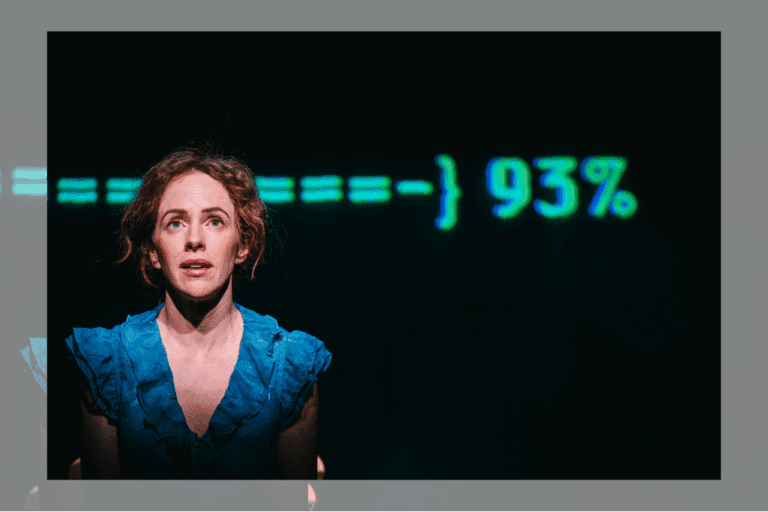 iPhoto caption: Fiona Mongillo in 'Reproduktion.' Photo by Ann Baggley.
REVIEW: Here For Now’s well-acted Reproduktion attempts to tackle too much
Amy Rutherford’s world premiere script is ambitious and the material it covers is complex — but the narrative feels disjointed.
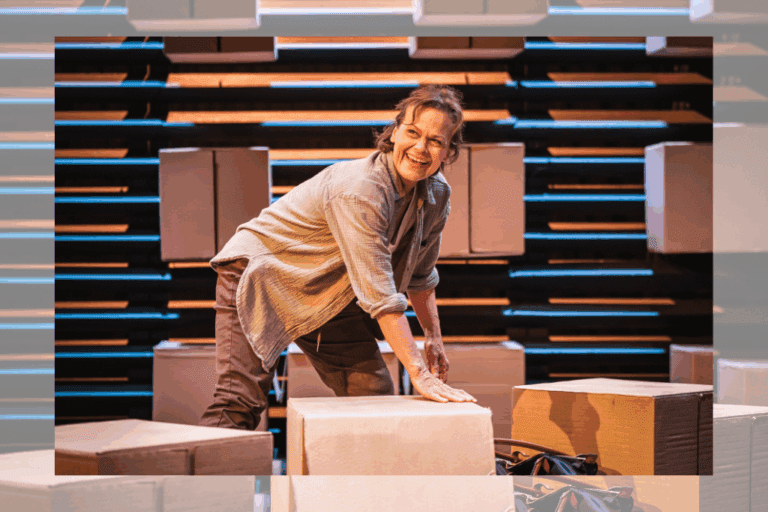 iPhoto caption: Kristen Thomson in 'Fulfillment Centre.' Photo by Elana Emer.
REVIEW: Coal Mine’s Fulfillment Centre asks how we end up alone, together
The production understands the play’s themes, yet feels limited by a script that delivers a package it never fully opens.
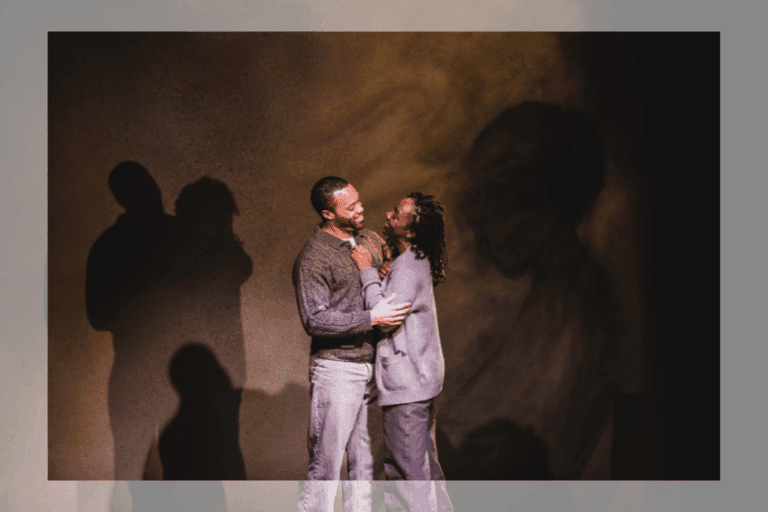 iPhoto caption: Dwain Murphy and Virgilia Griffith in 'a profoundly affectionate, passionate devotion to someone
(-noun).' Photo by Jae Yang.
iPhoto caption: Dwain Murphy and Virgilia Griffith in 'a profoundly affectionate, passionate devotion to someone
(-noun).' Photo by Jae Yang.
REVIEW: Obsidian and Tarragon co-production reflects on the inadequacy of language
a profoundly affectionate, passionate devotion to someone (-noun): the title says it all, offering a definition for an absent word. The thing is the thing unsaid. For the play’s three couples, language falls short: beautifully, tragically, sublimely.
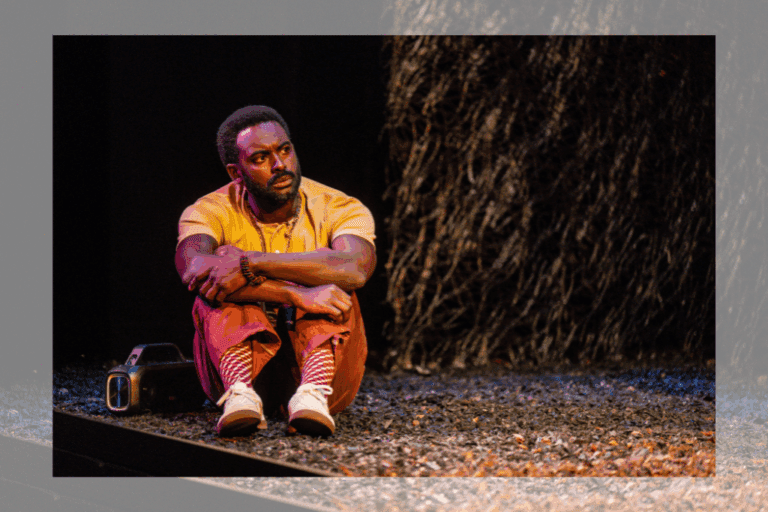 iPhoto caption: Mazin Elsadig in 'The Comeuppance.' Photo by Dahlia Katz. Set design by Shannon Lea Doyle, costume design by Ming Wong, lighting design by Jason Hand.
Macabre and drama-filled yet surprisingly gentle, The Comeuppance will probably be most compelling to the around-40 crowd who share its specific touchstones and millennial angst from a high-school experience bookended by Columbine and 9/11.
 iPhoto caption: Kaylee Harwood with members of the 'Bright Star' ensemble. Photo by Dahlia Katz.
REVIEW: Garner Theatre Productions’ Bright Star coasts on charm and likability
Bright Star covers it all: thwarted love, coming of age, family drama, the power of art, the importance of remaining true to oneself. Yet co-writer Steve Martin’s wit, which blazes in plays like Picasso at the Lapin Agile, merely twinkles here.
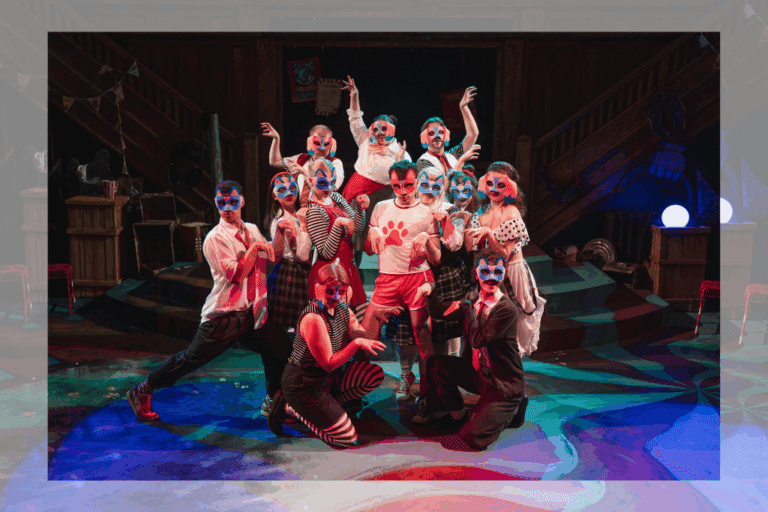 iPhoto caption: The company of 'Ride the Cyclone.' Photo by Taylor Long.
REVIEW: Shifting Ground Collective delivers heartfelt, overloaded Ride the Cyclone
Director 郝邦宇 Steven Hao hits the carnival bullseye when it comes to heart and fun, but just misses the top prize by expanding the cast and reducing the original’s compelling creepiness.
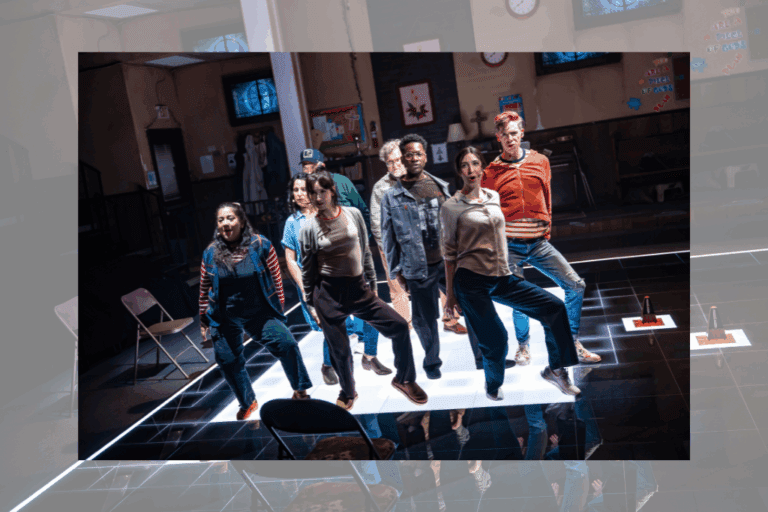 iPhoto caption: Photo by Dahlia Katz.
REVIEW: Dave Malloy’s Octet vibrates with sublime vocal beauty at Crow’s Theatre
Malloy’s intricate a cappella compositions, rich with complex harmonies, are the hymns and confessionals in a show about a support group for internet addiction. Regardless of what form their ego-feeding or doomscrolling compulsions take, the characters know it’s actually about appeasing what they call “the monster” inside — that gaping maw of emptiness that begs for shiny treats in the absence of real connection.
 iPhoto caption: The company of 'The Welkin.' Photo by Dahlia Katz.
REVIEW: The Welkin careens from raucous comedy to crushing tragedy
The problem with human rights is that, if you believe in them, you have to apply them to everyone. Political opponents. Murderers. Your ex. People whose phones go off at the theatre. Women. The character of Sally puts this theory to a stress test; in bahia watson’s assured hands, she’s gleefully unlikeable, glorying in a storm of suspiciously modern swearing, lacking any flicker of conscience, and biting the hands that are trying to help her.
 iPhoto caption: Heeyun Park 박희윤 in 'The Great Comet.' Photo by Dahlia Katz.
REVIEW: Natasha, Pierre & The Great Comet of 1812 dazzles in Mirvish transfer
The upscaled edition is slightly different, but it’s still a rave in multiple ways, with lived-in performances making it seem at times even more immediate than at Crow’s. The show feels more like a vibe than anything cohesive, but what a vibe it is.
Comments