
REVIEW: A Case for the Existence of God makes meaning of platonic intimacy
 iPhoto caption: A Case for the Existence of God production still by Cylla von Tiedemann.
There are no miracles in Samuel D. Hunter’s A Case For the Existence of God, the 2022 two-hander about male friendship and single fatherhood currently playing at Coal Mine Theatre. Nor is there a great deal of theology, or more than a passing nod to religion.
What there is, instead, is a breathtaking amount of quiet understanding and decency in its characters’ mix of naked dread for and fervent faith in the future. By finding the grace notes in a sharing of similar sadness, Hunter creates a hopeful harmony in a minor key.
When Ryan (Noah Reid) meets mortgage broker Keith (Mazin Elsadig) at daycare pickup in their home town of Twin Falls, Idaho, he sees the other man as a lifeline, asking him to help secure a loan to purchase a plot of land where his ancestors once lived. Freshly divorced, dairy factory worker Ryan is fighting to retain partial custody of his toddler. His friendly, garrulous veneer, battered by life, cracks surprisingly easily and often. The fissures reveal stories about his family’s consuming battle with depression-fuelled addiction and his hope that his daughter’s inheritance will be their land, rather than their struggles with mental illness.
Tattooed on his arms, the outlines of Ryan’s home state and his daughter’s name (courtesy of costume designer Des’ree Gray) signify his desperate attempt to hang on to the last features of stability in his life, along with the wedding ring that he never mentions, but also never removes.
While Keith’s life seems more stable, his grasp on fatherhood is even more tenuous; as a gay Black single dad, he’s been through years of cancelled adoptions, and his foster-to-adopt daughter’s biological family may still successfully petition for her return. Keith latches on to Ryan’s difficult case, which distracts him from his own anxieties; never fully contained, they manifest in a Pavlovian response to every phone alert, Elsadig anticipatorily tensing with Keith’s fear for the worst.
The men form an odd-couple friendship, slipping briskly into a life-changing platonic intimacy. Elsadig and Reid also fully slip into their characters, making them feel real and sympathetic in their quirks and imperfections. Reid’s Ryan has a goofy affability to him as he admits his financial illiteracy or offers his lonely friend well-meaning but awkward dating suggestions.
Ryan’s confidence of getting a loan on strength of character alone would be insufferable if he radiated even a hint of guile; instead, Reid leans into the character’s sweetness and willingness to step outside his comfort zone. Keith’s easy use of university-level vocabulary leaves Ryan baffled but intrigued, repeating the unfamiliar words like he’s savouring a new taste; he similarly samples his more worldly friend’s whiskey as they watch television with a collective ear towards Keith’s baby monitor.
Where Reid languidly sprawls outward, Elsadig is coiled, drawn inward in self-protection with the guardedness of a man whose identity makes him a target. It’s gratifying to watch him occasionally leave his shell; when Keith talks about his childhood travels or his degree in Early Music, his nervous intensity becomes wonderment. As he teaches Ryan about the origins of polyphony, the metaphor rings clear: We used to sing a single melody, but once we began to harmonize, there was no turning back.
Director Ted Dykstra’s equally harmonious transitions occur seamlessly during moments of dialogue, making the evolving relationship fly by. Even though Nick Blais’ deliberately generic brokerage set always remains in the background, it’s clear whether we’re at work or on the playground. Strangely, the only moment that feels static is during the emotionally moving but slightly detached ending. Seen over the flowing sands of an abstracted hourglass, it’s a daring temporal departure that works more conceptually than as staged.
A Case For the Existence of God briefly examines questions of privilege, the hardships of growing up gay and Black but in a loving, middle-class household contrasted with a childhood of straightness and whiteness, but also poverty and addiction. It’s not a full-fledged analysis, just a reminder that, like a bank’s mortgage calculations, “running the numbers” on a person’s identity doesn’t fully encapsulate who that person is. Mostly, the play’s urgency and strength come from the gentle way it presents male vulnerability and platonic intimacy — for lack of which men may burn themselves, or the rest of us, to the ground.
Keith and Ryan gaze at their daughters sharing space on a playground made much safer since their own childhoods. As Keith fumbles with his phone, trying to snap the perfect shot, Ryan crows that their children are, for the first time, holding hands “like persons.” It’s in the simple act of reaching out to another, Hunter’s play says, that we become whole.
A Case for the Existence of God runs at Coal Mine Theatre until December 1. Tickets are available here.
Intermission reviews are independent and unrelated to Intermission’s partnered content. Learn more about Intermission’s partnership model here.

Ilana Lucas
Ilana Lucas is a professor of English in Centennial College’s School of Advancement. She is the President of the Canadian Theatre Critics Association. She holds a BA in English and Theatre from Princeton University, an MFA in Dramaturgy and Script Development from Columbia University, and serves as Princeton’s Alumni Schools Committee Chair for Western Ontario. She has written for Brit+Co, Mooney on Theatre, and BroadwayWorld Toronto. Her most recent play, Let’s Talk, won the 2019 Toronto Fringe Festival’s 24-Hour Playwriting Contest. She has a deep and abiding love of musical theatre, and considers her year working for the estate of Tony winners Phyllis Newman and Adolph Green one of her most treasured memories.
LEARN MORE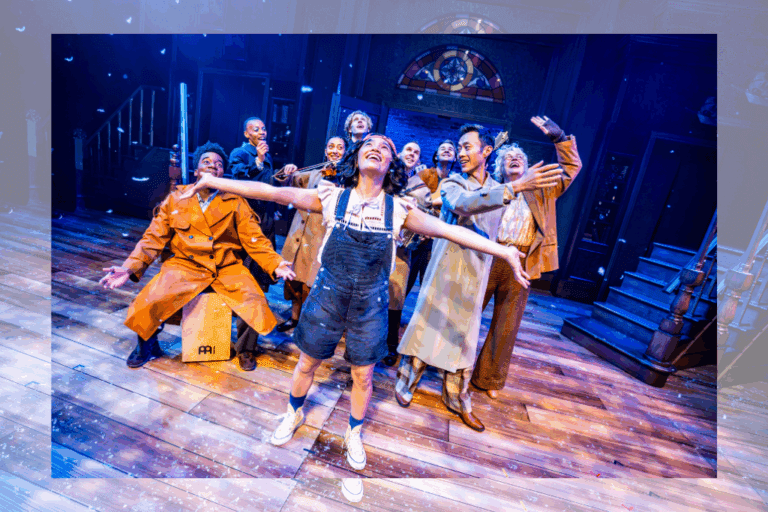 iPhoto caption: Members of the company of 'Narnia.' Photo by Dahlia Katz.
REVIEW: Bad Hats’ Narnia is a joyful, heartwarming escape
The spirit of openness and the joy of discovery rule over this Narnia. Open the wardrobe and see.
 iPhoto caption: Members of the company of 'Robin Hood.' Photo by Dahlia Katz.
REVIEW: Canadian Stage’s Robin Hood panto is anti-capitalist fun for the whole family
Following Ross Petty’s legacy of scene-stealing, Damien Atkins as the evil Prince John is easily the greatest delight of the show.
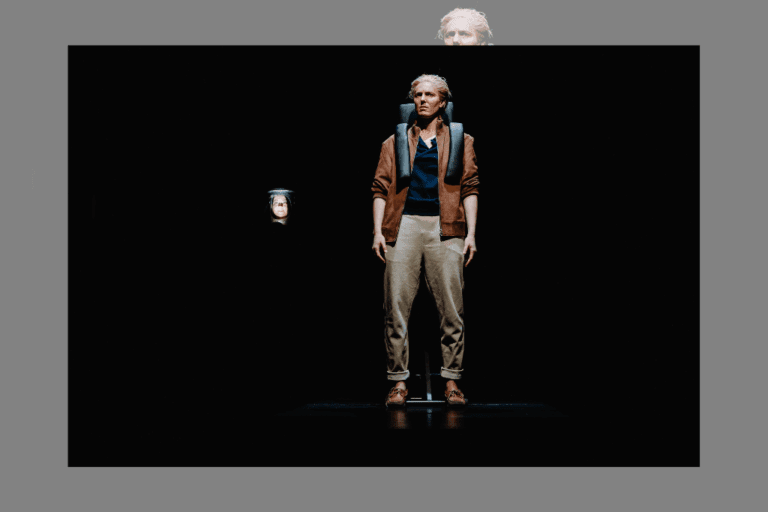 iPhoto caption: Lauren Gillis and Alaine Hutton in 'Public Consumption.' Photo by Eden Graham.
REVIEW: Lester Trips’ stylish Public Consumption captures the internet’s profound emptiness
Rather than directly representing online life, Public Consumption speculates — with virtuosity — about how the digital world affects our bodies. And the show's findings are by no means comfortable.
 iPhoto caption: Tony Ofori and Daren A. Herbert in 'Moonlight Schooner.' Photo by Dahlia Katz.
Kanika Ambrose’s Moonlight Schooner is animated and visually stunning, but its individual pieces don’t come together as neatly as I would've expected.
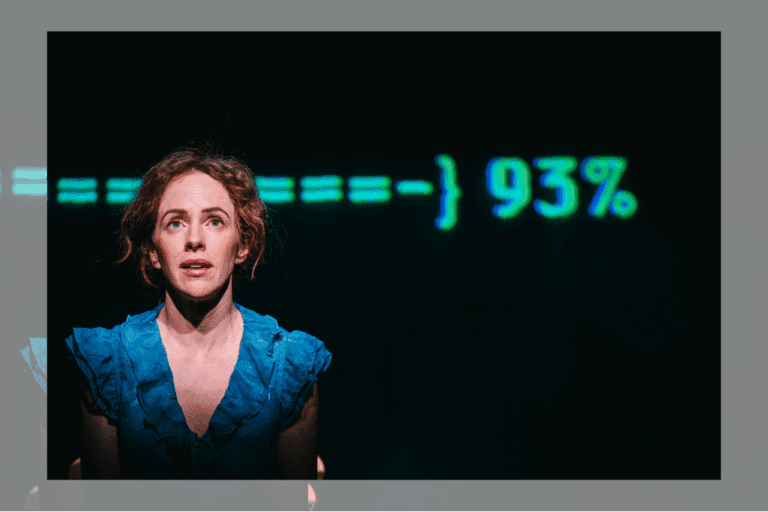 iPhoto caption: Fiona Mongillo in 'Reproduktion.' Photo by Ann Baggley.
REVIEW: Here For Now’s well-acted Reproduktion attempts to tackle too much
Amy Rutherford’s world premiere script is ambitious and the material it covers is complex — but the narrative feels disjointed.
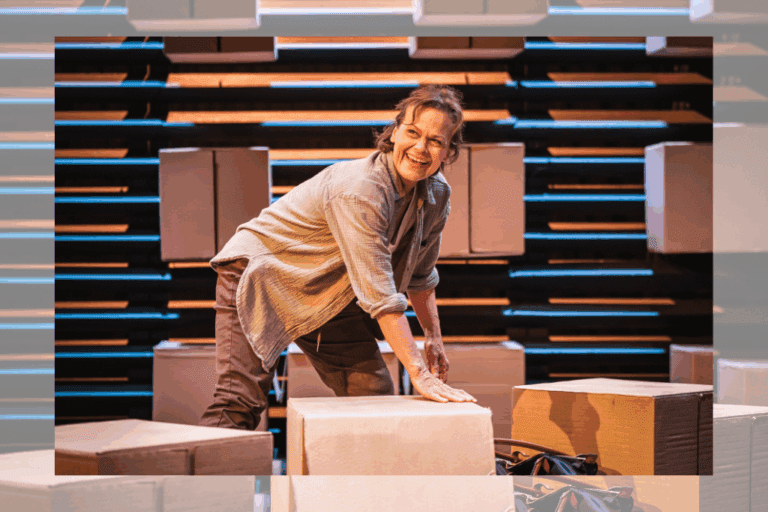 iPhoto caption: Kristen Thomson in 'Fulfillment Centre.' Photo by Elana Emer.
REVIEW: Coal Mine’s Fulfillment Centre asks how we end up alone, together
The production understands the play’s themes, yet feels limited by a script that delivers a package it never fully opens.
iPhoto caption: Members of the company of 'Narnia.' Photo by Dahlia Katz.
REVIEW: Bad Hats’ Narnia is a joyful, heartwarming escape
The spirit of openness and the joy of discovery rule over this Narnia. Open the wardrobe and see.
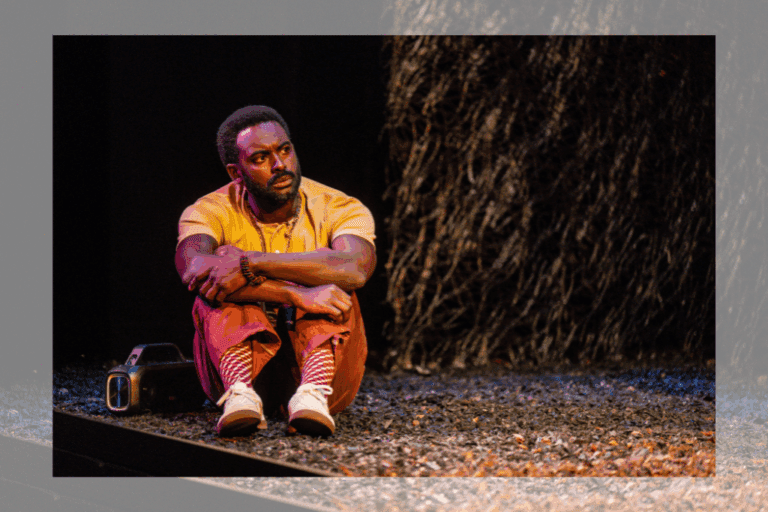 iPhoto caption: Mazin Elsadig in 'The Comeuppance.' Photo by Dahlia Katz. Set design by Shannon Lea Doyle, costume design by Ming Wong, lighting design by Jason Hand.
Macabre and drama-filled yet surprisingly gentle, The Comeuppance will probably be most compelling to the around-40 crowd who share its specific touchstones and millennial angst from a high-school experience bookended by Columbine and 9/11.
 iPhoto caption: Kaylee Harwood with members of the 'Bright Star' ensemble. Photo by Dahlia Katz.
REVIEW: Garner Theatre Productions’ Bright Star coasts on charm and likability
Bright Star covers it all: thwarted love, coming of age, family drama, the power of art, the importance of remaining true to oneself. Yet co-writer Steve Martin’s wit, which blazes in plays like Picasso at the Lapin Agile, merely twinkles here.
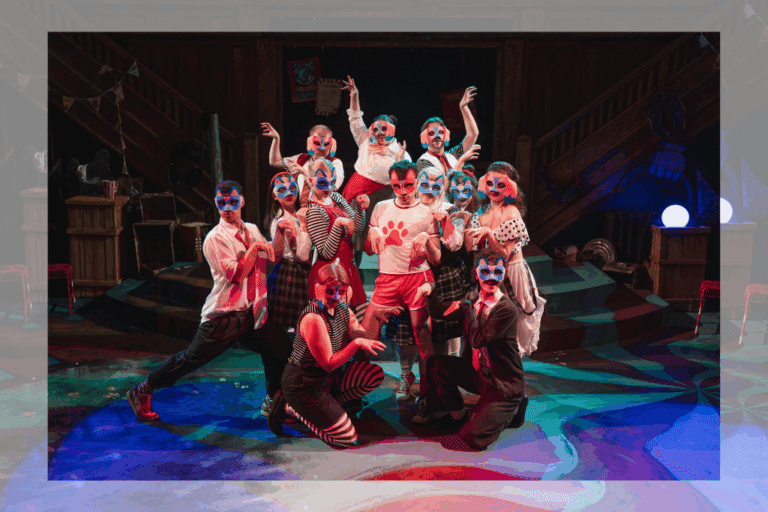 iPhoto caption: The company of 'Ride the Cyclone.' Photo by Taylor Long.
REVIEW: Shifting Ground Collective delivers heartfelt, overloaded Ride the Cyclone
Director 郝邦宇 Steven Hao hits the carnival bullseye when it comes to heart and fun, but just misses the top prize by expanding the cast and reducing the original’s compelling creepiness.
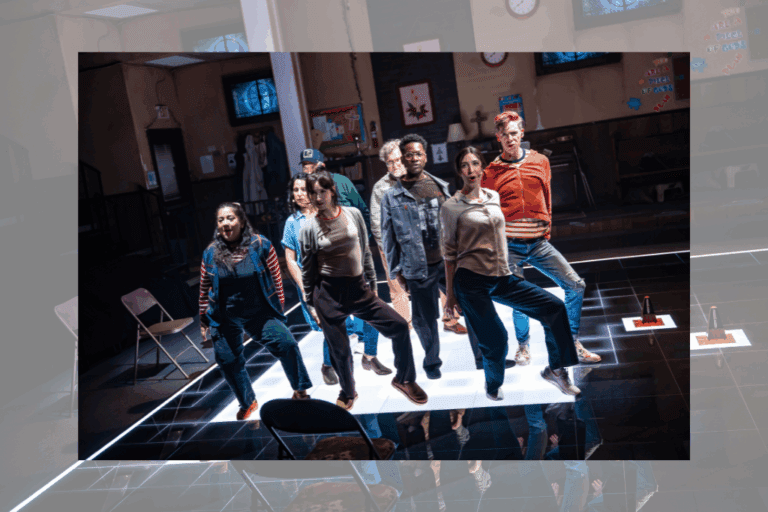 iPhoto caption: Photo by Dahlia Katz.
REVIEW: Dave Malloy’s Octet vibrates with sublime vocal beauty at Crow’s Theatre
Malloy’s intricate a cappella compositions, rich with complex harmonies, are the hymns and confessionals in a show about a support group for internet addiction. Regardless of what form their ego-feeding or doomscrolling compulsions take, the characters know it’s actually about appeasing what they call “the monster” inside — that gaping maw of emptiness that begs for shiny treats in the absence of real connection.
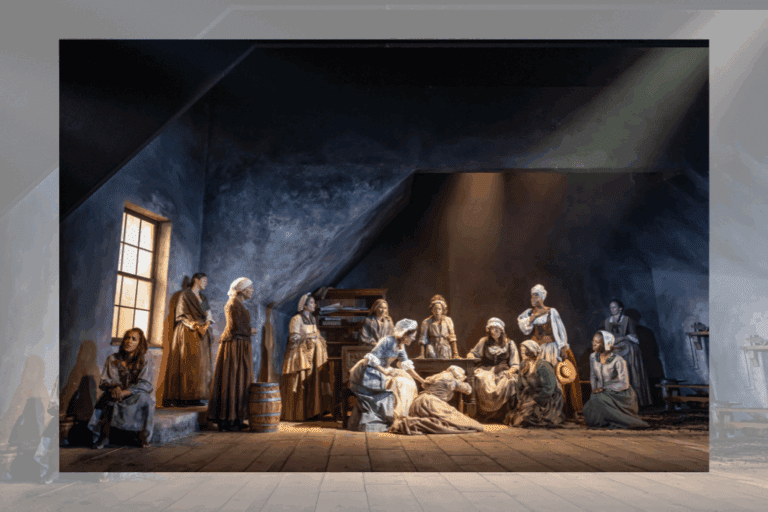 iPhoto caption: The company of 'The Welkin.' Photo by Dahlia Katz.
REVIEW: The Welkin careens from raucous comedy to crushing tragedy
The problem with human rights is that, if you believe in them, you have to apply them to everyone. Political opponents. Murderers. Your ex. People whose phones go off at the theatre. Women. The character of Sally puts this theory to a stress test; in bahia watson’s assured hands, she’s gleefully unlikeable, glorying in a storm of suspiciously modern swearing, lacking any flicker of conscience, and biting the hands that are trying to help her.
Comments