
REVIEW: YPT’s Charlie and the Chocolate Factory is appropriately sweet
 iPhoto caption: Charlie and the Chocolate Factory production still by Dahlia Katz.
A spoonful of sugar helps the medicine go down.
Okay, wrong musical; the show at Young People’s Theatre is Charlie and the Chocolate Factory, not Mary Poppins. But Roald Dahl’s candy-coated morality tale similarly blends bitter and sweet to deliver a message about the importance of generosity and imagination over greed and self-centrism.
Like a sour Warheads candy, there’s something bracingly acid about Dahl’s story, with monstrous characters and violent comeuppances inside a brightly coloured tale for children. Hairspray’s Marc Shaiman (music and lyrics) and Scott Wittman (lyrics), and playwright David Greig (book) have adapted the 1964 novel, this version pared down to a lean 75-minute one act for younger audiences. Director Thom Allison’s production embraces Charlie’s many incarnations and tones in a slick rendition that’s both fun sugar high and queasy candy overload.
As Willy Wonka, Michael Therriault’s performance is reminiscent of a manic Gene Wilder, snapping at children as he whips out an extendable pink cane that doubles as a reverberating microphone. Wonka has recently emerged from a lengthy self-imposed exile after locking down his factory from spies. Hiding five Golden Tickets in chocolate bar wrappers, he offers the lucky finders a tour of his factory, promising one a lifetime’s supply of candy.
Kind, impoverished Charlie Bucket (the wide-eyed and winsome Breton Lalama) lives with his mother (Zorana Sadiq) and four elderly grandparents who all sleep in set designer Brandon Kleiman’s comically oversized bed. Characteristic of Shaiman and Wittman’s sour-sweet lyrics, the grandparents sing that their only hope is to survive their sleep, but Grandpa Joe (Larry Mannell) is a feisty 90-something who wills his legs forward, accompanying Charlie when the boy miraculously finds a ticket after his yearly birthday bar pays no dividends.
Charlie’s desire to help his family, and his imaginative drawings of new sweets to make others happy, make him a winning hero, while his tendency to get distracted by his interests allows him to be imperfect, rather than sanctimonious.
Because of the production’s streamlined nature, there’s not much time to do more than set the other contestants up, then knock them down. In the first half, the winning children perform bouncy numbers before projections by Laura Warren that lie somewhere in the uncanny valley between realism and stylization.
The German Augustus Gloop (David Lopez) gets a riotous Bavarian parade of giant pretzels and lederhosen. Critics of Dahl’s work have highlighted his unsavoury depictions of fat, disabled, female, Jewish and racialized characters; in the vein of the controversial 2023 Puffin Books’ expurgation of many of these descriptions, this production neatly sidesteps the novel’s fatphobia by casting the gluttonous Gloop as tall rather than wide. This flies in the face of Shaiman and Wittman’s lyrics, but certainly makes for a less cringeworthy experience.
Veruca Salt (Caitlyn MacInnis), outfitted like a cupcake in a fluffy white tutu, is a tiny terror, rhythmically shrieking her demands to her browbeaten Russian oligarch father (David Webb), who entertainingly cowers as his child intimidates him. Violet Beauregarde (Ruth Acheampong) is a bubblegum-chewing Californian pop princess whose enterprising mother (Tiffany Deriveau) films videos of her daughter’s marathon mastication.
Inside the factory, inventive scenic elements are complex enough to suggest a massive operation without completely blowing the budget, charmingly blending high-tech wizardry and low-tech practical effects. Costume designer Ming Wong’s Oompa Loompas look like a cross between singer Sia and a Yayoi Kusama art installation, dressed in oversized polka-dotted blonde wigs and garments as they croon the moral of each child’s grisly fate.
Deliberately disorienting, the show stays unstuck in time, with young Charlie buying cabbages for five cents from a delightfully deranged Victorian-style cart seller (Deann Degruijter, a comic highlight throughout) touting her “liquefying vegetables” in front of a silhouette of the current CN Tower; while the household of electronics-obsessed Mike Teavee (Nick Boegel), blends 50s-era television-worshipping kitsch with the deranged hacker’s 2000s boy-band hairstyle and internet obsession that could change his name to Mike WiFi.
The production thus nods to the novel, 1971 and 2005 films, and 2023 spinoff Wonka, seemingly trying to appeal to the different cultural touchstones of children, parents, and grandparents alike. Similarly, Shaiman and Wittman’s modern-sounding score trades off with slower 1971 movie numbers “Pure Imagination” and “The Candy Man.”
No incarnation of Dahl’s work has ever completely balanced its wildly disparate flavours, and this bite-sized adaptation is no exception — particularly since, unlike other versions, we don’t see the other children exit the factory, leaving their ultimate fate to pure imagination. However, a unique opening, featuring a disguised Wonka as chocolate shop worker who engineers Charlie’s good luck upon seeing his good character, helps to mitigate the magnate’s later acerbities and gives some necessary extra shape and sweetness to Charlie’s journey.
But don’t worry. If you still need something even sweeter, they’re selling Wonka bars at concessions.
Roald Dahl’s Charlie and the Chocolate Factory plays at Young People’s Theatre through December 30. Tickets are available here.
Intermission reviews are independent and unrelated to Intermission’s partnered content. Learn more about Intermission’s partnership model here.

Ilana Lucas
Ilana Lucas is a professor of English in Centennial College’s School of Advancement. She is the President of the Canadian Theatre Critics Association. She holds a BA in English and Theatre from Princeton University, an MFA in Dramaturgy and Script Development from Columbia University, and serves as Princeton’s Alumni Schools Committee Chair for Western Ontario. She has written for Brit+Co, Mooney on Theatre, and BroadwayWorld Toronto. Her most recent play, Let’s Talk, won the 2019 Toronto Fringe Festival’s 24-Hour Playwriting Contest. She has a deep and abiding love of musical theatre, and considers her year working for the estate of Tony winners Phyllis Newman and Adolph Green one of her most treasured memories.
LEARN MORE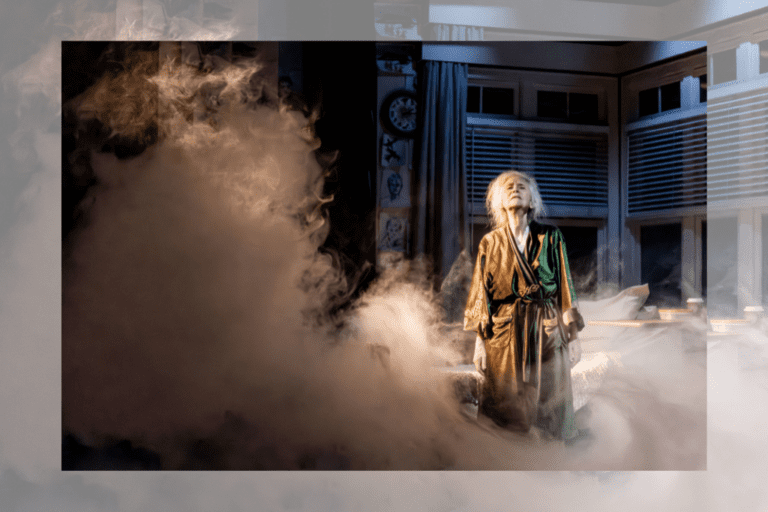 iPhoto caption: Clare Coulter in 'Queen Maeve.' Photo by Jae Yang.
REVIEW: Tarragon’s Queen Maeve packs one hell of an emotional wallop
The astonishing Clare Coulter manages to appear one moment as if she’d blow away in a faint breeze, another as though she’d easily cleave you in twain with a broadsword.
 iPhoto caption: Dan Mousseau and bahia watson in 'Summer and Smoke.' Photo by Dahlia Katz.
REVIEW: Tennessee Williams deep cut Summer and Smoke warms up Crow’s Theatre
I wondered if further following the directive to push upward instead of outward, balancing the corporeal dark with a little more spiritual lightness, might have made this ambitious and heartfelt production spark just a little bit hotter.
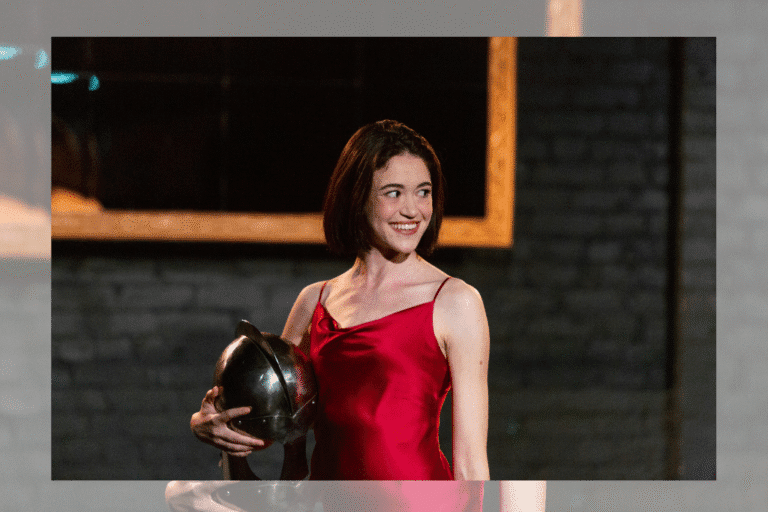 iPhoto caption: Kate Martin in 'Troilus and Cressida.' Photo by Kyle Purcell.
REVIEW: Shakespeare BASH’d brings focus to the mystifying Troilus and Cressida
This spare, thoughtful staging prioritizes a clarity of text that comes through even when the script’s overall trajectory is less than clear.
 iPhoto caption: Aidan deSalaiz and the cast of 'Company.' Photo by Dahlia Katz.
REVIEW: Talk Is Free’s Company is valiant but imperfect
Playing at The Theatre Centre, it’s an entertaining staging that, like its central character, is still waiting to completely connect.
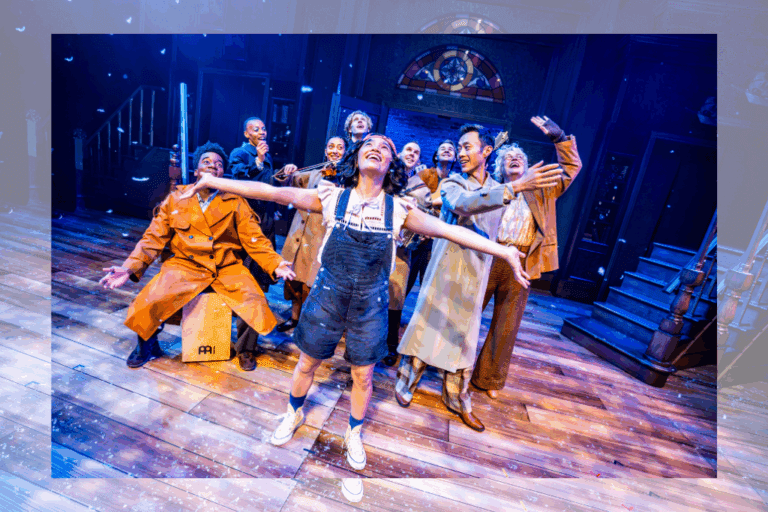 iPhoto caption: Members of the company of 'Narnia.' Photo by Dahlia Katz.
REVIEW: Bad Hats’ Narnia is a joyful, heartwarming escape
The spirit of openness and the joy of discovery rule over this Narnia. Open the wardrobe and see.
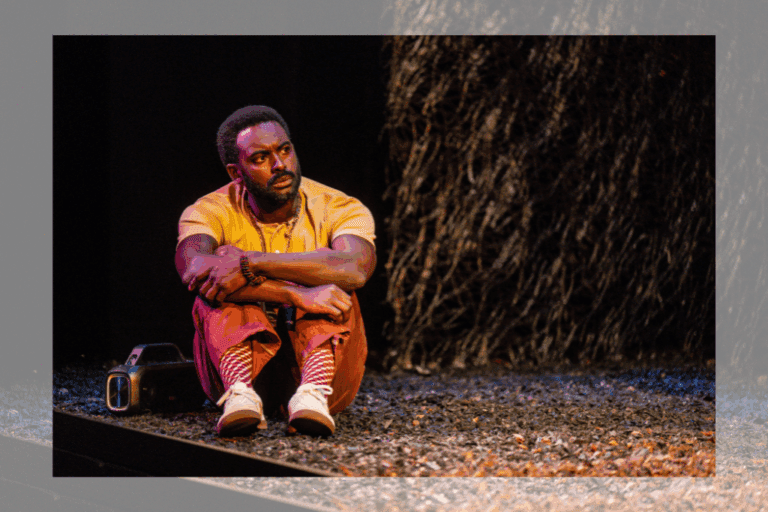 iPhoto caption: Mazin Elsadig in 'The Comeuppance.' Photo by Dahlia Katz. Set design by Shannon Lea Doyle, costume design by Ming Wong, lighting design by Jason Hand.
Macabre and drama-filled yet surprisingly gentle, The Comeuppance will probably be most compelling to the around-40 crowd who share its specific touchstones and millennial angst from a high-school experience bookended by Columbine and 9/11.
Comments