
REVIEW: Shaw Festival’s metatheatrical Major Barbara is sharp and subversive
 iPhoto caption: The cast of 'Major Barbara.' Photo by David Cooper.
In director Peter Hinton-Davis’ latest Shaw Festival production, metatheatricality enters the conversation before the lights go down. A parchment-coloured curtain displays text in Times New Roman: “Major Barbara. In Three Acts. By Bernard Shaw.” As this three-hour social satire unfolds, Hinton-Davis draws on a light smattering of similarly Brechtian techniques — acknowledgements of artifice that enrich and vivify Major Barbara’s clash of morals.
The 1905 play concerns the titular Barbara Undershaft (Gabriella Sundar Singh), an idealistic Salvation Army officer engaged to a matter-of-fact scholar of Ancient Greek literature (André Morin). When her wealthy, secularist father Andrew (Patrick Galligan) arrives in London for a rare visit, she agrees to tour his notorious munitions factory if he’ll first come to the shelter where Barbara works. While there, he offers to donate an enormous £5,000; despite this sum having roots in the weapons trade, the charity unhesitatingly accepts it, disheartening Barbara.
Before each of the play’s three acts (here presented with a single intermission), the production makes brief additions to the script. The modest-sized company sings Christian hymns, mostly pulled from 18th-19th-century Wesleyan and Methodist songbooks, in shimmering, concertina-filled arrangements by Allen Cole. They also repeat the aforementioned curtain text before speaking the date of the act to come (sequentially January 5, 6, and 7, 1906), quietly underlining that in this production Act One takes place on Twelfth Night, Act Two on the Epiphany, and Act Three on Plough Monday.
The production’s engagement with faith extends to Gillian Gallow’s set design. In the play’s first location, the home of dignified matriarch Lady Britomart Undershaft (Fiona Byrne), there hangs a nearly stage-width painted tapestry displaying flowers and the face of the goddess Persephone, in a rendering inspired by Kate Elizabeth Bunce’s pre-Raphaelite painting Musica. When the action moves to the Salvation Army, this cloth ascends, revealing a glowing cross.
This iconography shines with extra force because there’s little else on stage. The azure set’s only other furniture is a matching trio of short round modern chairs. Two rest all the way downstage, on the far left and right; the other, sitting upstage centre, faces almost to the back. They glow in small pools of soft white light designed by Bonnie Beecher. (She, Gallow, and Hinton-Davis are frequent collaborators).
While Gallow’s sparse scenic approach diverges from the script’s detailed stage directions, Major Barbara is a play of arguments, and they ring through particularly clearly without set dressings to distract. Whenever two characters sit in the downstage chairs to verbally spar, it’s as if we’re encountering Shaw’s rhetoric in its purest form. (It helps that they wear period-appropriate costumes, also by Gallow.) I find Hinton-Davis’ conceptual interventions quite stimulating, but ultimately the text is still monarch — to that end, the show somewhat reminds me of this year’s Stratford Festival As You Like It, which is also conceptually complex, but unobtrusive.
As I watched the show’s first two acts, I sometimes struggled to resolve the rapturous nature of the religious imagery with the play’s heady intellectuality. But the drama intensifies when the characters visit Andrew’s weapons facility (where there’s no religious paraphernalia). Reacting to the events of the previous two days, Barbara says it’s as if an earthquake has crumbled her worldview. In tandem, Sundar Singh’s performance takes on an almost geologic tenor. Byrne, Galligan, and Morin match her on that ecstatic level — intensifying in physicality, volume, and feeling — as the conflict smoulders with volcanic heat.
A cunning staging choice heightens the stakes of these late eruptions. (Ahead are some spoilers about the production’s approach to Act Three.) As the Undershaft family arrives at the factory and remarks on the surrounding town’s delights, many of the actors occupy the audience, on both levels of the Royal George Theatre, with the house lights up.
While Babara bulwarked her arguments with the power of religion, Andrew pulls on the world of theatre — this theatre. When he claims to be employing people who’d otherwise be seeking charity at the Salvation Army, he defends the point to the audience, implying we’re the ones he’s assisting. Considering the play references poverty throughout, this gesture of implicating the production’s audience is canny, and gently subversive. (Though cheaper options exist, prime seats to Major Barbara will run you over $150.)
None of these production elements do much to advance a viewpoint on the play’s moral dilemmas; rather, they further complicate matters — a welcome, Shavian move.
The final scene’s metatheatrics certainly had me rethinking my own presumptions. Although Major Barbara’s first two acts called to mind the tense, ongoing discourse around what funding non-profit arts organizations should or shouldn’t accept, the production ends up challenging the appropriateness of that comparison by framing theatre not as the charity, but the weapon.
Major Barbara runs at the Shaw Festival’s Royal George Theatre until October 5. Tickets are available here.
Intermission reviews are independent and unrelated to Intermission’s partnered content. Learn more about Intermission’s partnership model here.
Liam Donovan
Liam is Intermission’s senior editor. He lives in Toronto. His Substack newsletter is available at loamdonovan.substack.com.
LEARN MORE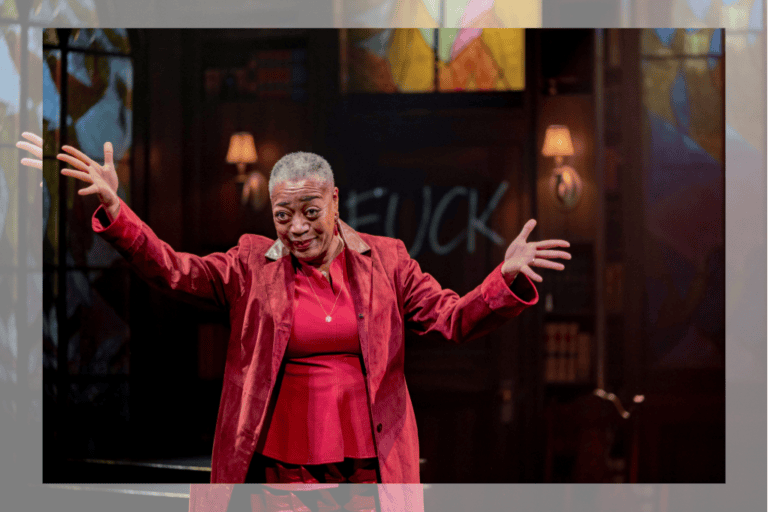 iPhoto caption: Karen Robinson in 'Prophetess.' Photo by Jae Yang.
REVIEW: In Tarragon’s outstanding Prophetess, language is both mighty and inadequate
Margaret’s facility with text helps her maneuver through an institution like York University, where words hold significant power. But the brilliant middle-aged scholar finds herself surprisingly unequipped to process the true sense of more elemental forces: love, grief, spiders.
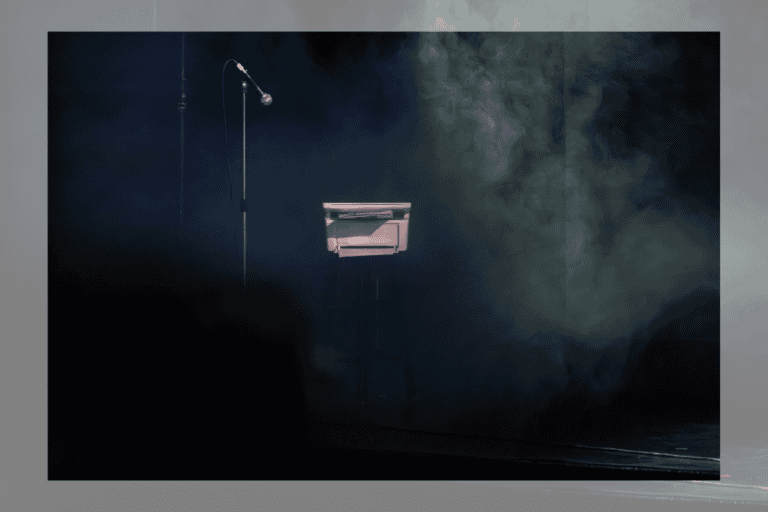 iPhoto caption: 'Documents Perform 3.' Photo by T Photo Factory.
Joining online from across the Americas, more than a dozen artists, artistic producers, cultural leaders, and policymakers add live suggestions to the document, together transforming stuffy bureaucratic language into a rowdy patchwork of compassionate imagining.
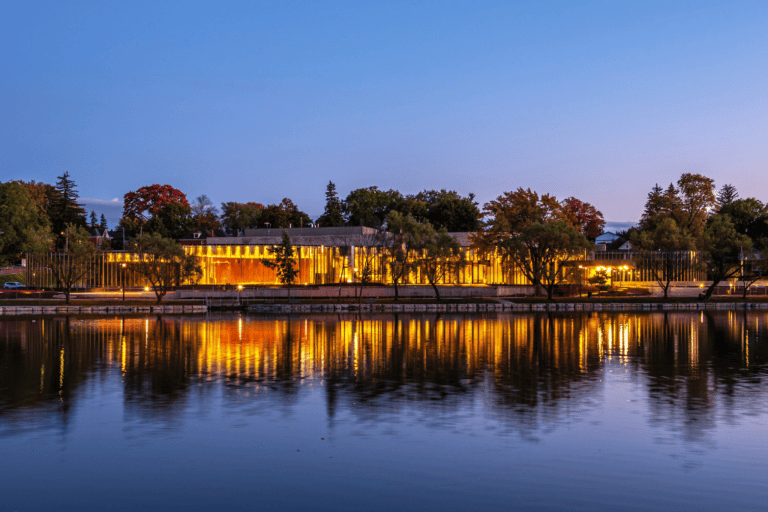 iPhoto caption: Stratford's Tom Patterson Theatre. Photo by Ann Baggley.
2027 highlights include a new Canadian Jacob Two-Two musical and two of the Bard’s thornier plays: The Merchant of Venice and The Taming of the Shrew.
 iPhoto caption: Devon Michael Brown as Rusty Charlie with members of the 'Guys and Dolls' company.
“It's so exhausting, but it's really rewarding when you get to dance so full-out,” says Devon Michael Brown. “You get to use your technique and your training to the fullest extent.”
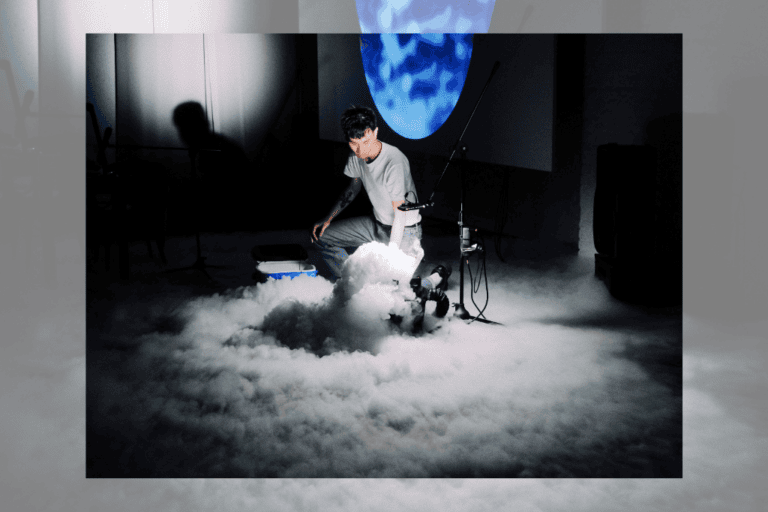 iPhoto caption: Ping-Hsiang Wang in 'Retina Maneuver.' Photo by Hang Su.
REVIEW: At this year’s SummerWorks Performance Festival, physical storytelling is central
From a dancer becoming a canine to a shy theatre director practicing his swordsmanship, the shows I’ve seen so far use performers’ bodies to dramatize defiance.
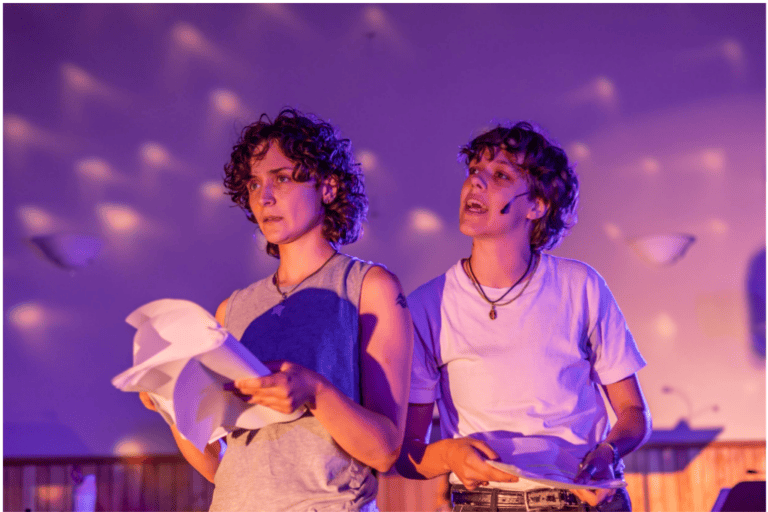 iPhoto caption: Anna Morreale and Luca McPhee perform in 'From Stardust' at the 2025 MADGEN Theatre Festival. Photo by Dave Klassen.
MADGEN Theatre Festival returns to the Danforth
Theatre of the Beat selected four producers under the age of 30 to receive paid mentorship from Toronto theatre-makers. From August 20 to 22, each member of the cohort mounts a new one-act Canadian play.
Comments