
REVIEW: Buddies’ superb Roberto Zucco journeys through a violent, fragmented metropolis
 iPhoto caption: Photo by Jeremy Mimnagh.
“I can’t stand theatre. We get fucking bored in the theatre 99 per cent of the time.” The front-of-house staff at Buddies in Bad Times Theatre hands out stickers emblazoned with those words to audiences entering artistic director ted witzel’s production of Bernard-Marie Koltès’ Roberto Zucco. For a Buddies inaugurating a new phase of life, it’s a cheeky move, seeming to claim that the coming art will fall into the not-boring 1 per cent.
And you know what? I think the confidence paid off.
Born in Metz, France, Koltès wrote Roberto Zucco in 1988 while dying of AIDS. His postmodernist credentials are on full display in Martin Crimp’s 1997 translation of the digressive work, loosely inspired by the life of late-20th-century Italian serial killer Roberto Succo.
In a lighthearted riff on Hamlet’s opening, Roberto escapes prison by sneaking past a chatty pair of security guards on night watch. He then roams through an unnamed city, bumping into dozens of monologue-prone stock figures with names like “elegant lady,” “impatient pimp,” and “old gentleman” (Jakob Ehman plays Roberto, while the other five performers take up the rest of the roles). Wanted signs plaster the streets and the police are ostensibly searching for the criminal, but, in typical neo-noir fashion, the detectives turn out to be more concerned with their own melancholy than the investigation.
A richly ambiguous tonal collage, Roberto Zucco plays like a desperate search for meaning: As Roberto stumbles through different settings, he crashes into opposing aesthetics, ways of seeing the world. But none of these philosophies click with his particular circumstances; for him, prison has flattened everything into a blur of monotonous grey.
Not recommended for haze machine haters, witzel’s extraordinary 95-minute production sports resplendent, cohesive design. Window blinds imprinted with a mugshot of Roberto anchor Michelle Tracey’s gritty set of abstractly painted walls that spin, open, and crash to the ground of the Buddies Chamber on demand. Logan Raju Cracknell’s tactile lighting pokes through the gaps, stylishly isolating characters and set pieces both. And Dasha Plett’s sound design, stuffed with original music, proves key to the piece’s aching emotional centre; during transitions, a distorted robot voice often repeats the previous scene’s final line, imbuing the production with an eerie, disembodied aura. (A narrow LED screen spells out scene titles in English and French, though on opening night it seemed to stop after number five of 15.)
As Roberto, Ehman is understated — so much so that I’m reminded of the films of Bresson, where criminals in high-stakes situations lock their turmoil inside, away from the viewer’s greedy eyes. (Because it begins with a prison breakout, we might even say the show functions as a spiritual sequel to A Man Escaped.) Hand microphones on stands occasionally magnify Ehman’s voice, adding explosiveness to this otherwise low-key approach.
The side players, meanwhile, live in a heightened, clownish register. The disjunction between Ehman’s acting style and that of the rest of the cast — Samantha Brown, Fiona Highet, Daniel MacIvor, Kwaku Okyere, and Oyin Oladejo — seems an intentional dramatization of Roberto’s inability to connect with others. How can he dream of anything but the long goodbye when the actions of everyone around him are so jarring? Police officers hunch like storks, detectives monologue longingly as they lean against brothel reception desks, panic-stricken sex workers bellow in the cadence of newsboys, and onlookers jeer as Zucco threatens a child with a gun. Fragments clash, refusing to add up.
Within this chaos, the character of “girl,” played by Brown, acts as an emotional lighthouse. We don’t discover much about her beyond that she recently lost her virginity to Roberto. But she soon finds herself teary-eyed and deserted in a cruel police interrogation. This intelligent, childlike figure is perhaps the one person Roberto meets who hasn’t yet been corrupted by their abyssal surroundings. But even she can’t inspire an end to the carnage.
Though I won’t spoil the feat of design that facilitates the production’s ascendant final image, here’s the stage direction it’s based on: “The sun rises higher, with the blinding brilliance of an atomic explosion. Nothing else can be seen.” It might be possible to read Roberto Zucco as nihilistic, but I found it difficult to look at this torrent of light and feel anything but hope — if not for Roberto, then for Buddies’ new dawn.
Roberto Zucco runs until October 5 at Buddies in Bad Times Theatre. Tickets are available here.
Intermission reviews are independent and unrelated to Intermission’s partnered content. Learn more about Intermission’s partnership model here.
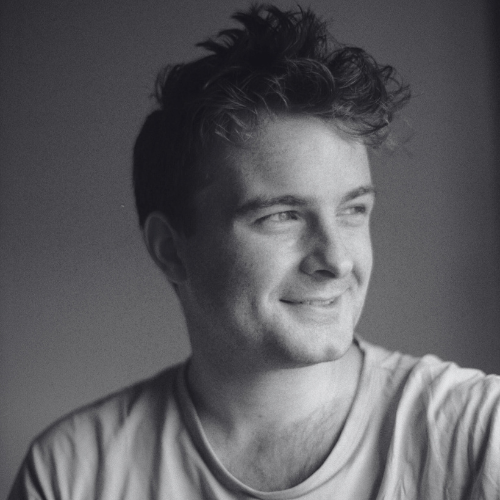
Liam Donovan
Liam is Intermission’s senior editor. He lives in Toronto. His Substack newsletter is available at loamdonovan.substack.com.
LEARN MOREComments
Leave a Comment
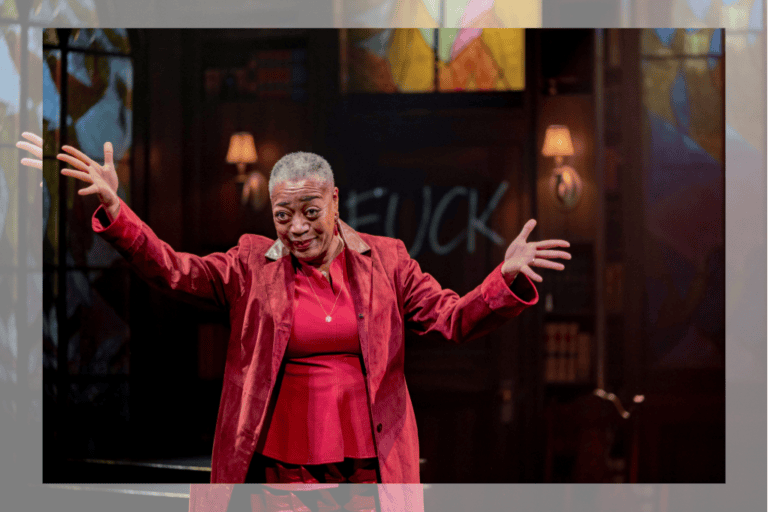 iPhoto caption: Karen Robinson in 'Prophetess.' Photo by Jae Yang.
REVIEW: In Tarragon’s outstanding Prophetess, language is both mighty and inadequate
Margaret’s facility with text helps her maneuver through an institution like York University, where words hold significant power. But the brilliant middle-aged scholar finds herself surprisingly unequipped to process the true sense of more elemental forces: love, grief, spiders.
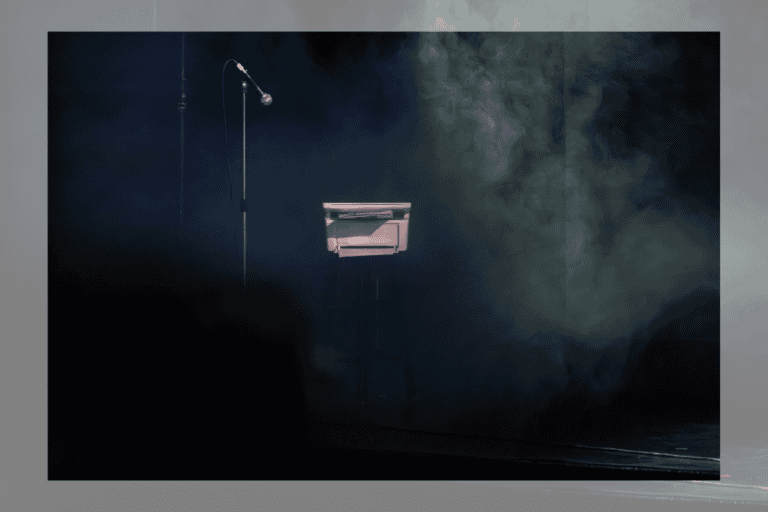 iPhoto caption: 'Documents Perform 3.' Photo by T Photo Factory.
Joining online from across the Americas, more than a dozen artists, artistic producers, cultural leaders, and policymakers add live suggestions to the document, together transforming stuffy bureaucratic language into a rowdy patchwork of compassionate imagining.
 iPhoto caption: Stratford's Tom Patterson Theatre. Photo by Ann Baggley.
2027 highlights include a new Canadian Jacob Two-Two musical and two of the Bard’s thornier plays: The Merchant of Venice and The Taming of the Shrew.
 iPhoto caption: Devon Michael Brown as Rusty Charlie with members of the 'Guys and Dolls' company.
“It's so exhausting, but it's really rewarding when you get to dance so full-out,” says Devon Michael Brown. “You get to use your technique and your training to the fullest extent.”
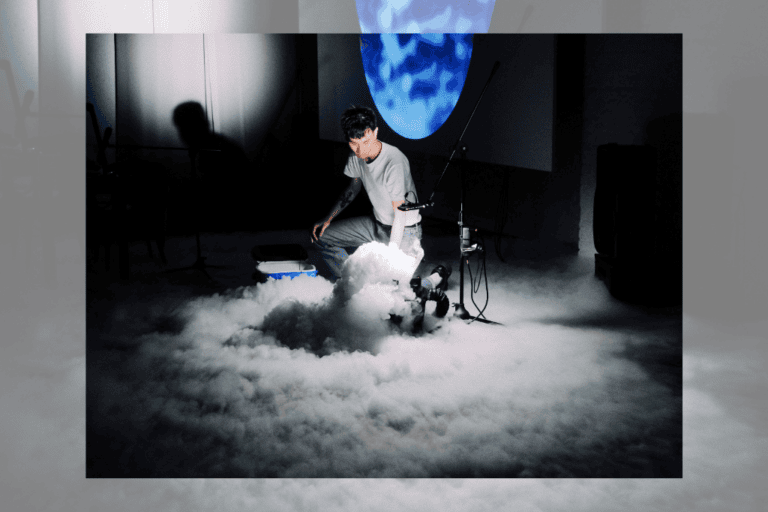 iPhoto caption: Ping-Hsiang Wang in 'Retina Maneuver.' Photo by Hang Su.
REVIEW: At this year’s SummerWorks Performance Festival, physical storytelling is central
From a dancer becoming a canine to a shy theatre director practicing his swordsmanship, the shows I’ve seen so far use performers’ bodies to dramatize defiance.
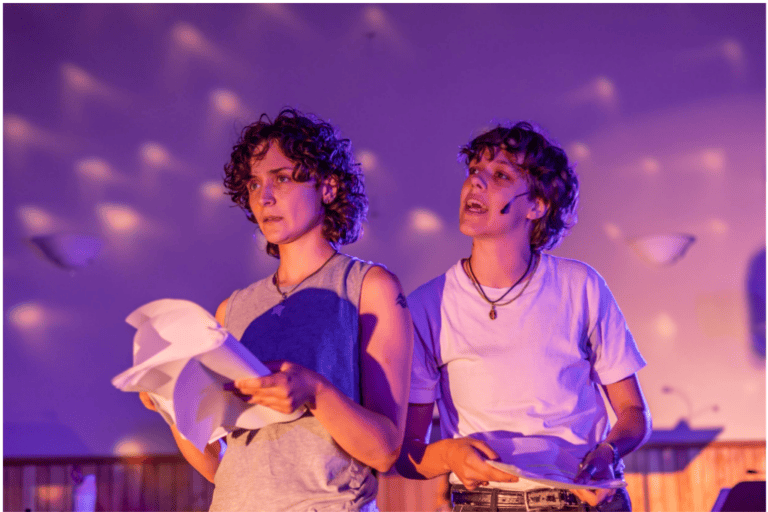 iPhoto caption: Anna Morreale and Luca McPhee perform in 'From Stardust' at the 2025 MADGEN Theatre Festival. Photo by Dave Klassen.
MADGEN Theatre Festival returns to the Danforth
Theatre of the Beat selected four producers under the age of 30 to receive paid mentorship from Toronto theatre-makers. From August 20 to 22, each member of the cohort mounts a new one-act Canadian play.
It was definitely not boring.