
REVIEW: Two site-specific Luminato concerts explore the significance of daily ritual
 iPhoto caption: 'Queen of the Night' promo photo courtesy of Luminato Festival.
At the 2025 Luminato Festival, two site-specific concerts explored the beauty and monotony of daily ritual.
Themed DAY:NIGHT, Luminato runs until June 22 and features 28 presentations that span music, theatre, dance, and installation. Immersive choir performance Dawn Chorus (directed by Krystian Lada) opened the festival by serenading an audience of early morning commuters at Union Station. In contrast, Queen of the Night Communion (directed by Michael Hidetoshi Mori and co-produced by Tapestry Opera) cultivated a haunting operatic soundscape at Metropolitan United Church. Grounded in a heightened sense of time and place, both world premieres express curiosity about how art can disrupt patterns of living.
You may have encountered Dawn Chorus as a hum beneath the shuffle of morning foot traffic at Union Station on June 4 and 5. Participating local choirs (Amadeus Choir, Babel, The One Group, Ot Izvora, Forte, and Penthelia Singers) were arranged throughout the terminal, some tucked into alcoves and others clustered in the spacious Great Hall. For folks on their way to work, the sonorous pull of harmonized voices perhaps invigorated a well-worn route — that seemed to be the idea, anyway.
By design, Dawn Chorus was largely appreciated in passing, each experience shaped by the listener’s movements through space. Musical stylings ranged from upbeat pop to traditional choral, depending on the choir’s preferred genre. At certain distances, voices from multiple groups overlapped, although the effect was less cohesive than the “living breathing symphony” described on the Luminato website. Still, every choir in Dawn Chorus delivered moving performances that made creative use of the unconventional venue.
For instance, the Ot Izvora Bulgarian Folk Music Choir, located in the highly trafficked lower concourse but sheltered from the crowd by a set of columns, resembled a stone in a stream. Rather than being submerged, however, their voices rose to the occasion, matching the rush with joyous intensity.
Interplay between movement and stillness was key to the thematic resonance of Dawn Chorus. An artist statement displayed in the Great Hall asked commuters to “pause your train of thoughts for a moment. Here and now, at this station of your day, you can still adjust and change the direction or decide to follow your path.” As passersby moved through their morning routine, Dawn Chorus prompted a return to the body as escape from repetition.
Dawn Chorus heralded the optimism of daybreak. But Queen of the Night Communion taught me that great lighting can cast impressive shadows. Performed for a limited run in Metropolitan United Church, Night Communion was brimming with atmosphere. Melancholic opera and flickering stained glass? A match made in heaven.
The repertoire of Night Communion celebrated darkness, offering collective and solo expressions of loss and loneliness. In his creator’s note, Mori describes the show as “an immersive sonic temple where music becomes ritual and rebellion.” The intimacy of Mori’s shadows created a cathartic experience, underscoring how ritual allows us to move and feel together.
Emphasizing this otherworldly atmosphere, audience members met the close of each song with silence — clapping seemed sacrilegious. One aria warranted the night’s first taste of blasphemy, however: “A vos jeux, mes amis” received passionate applause. Sung by soprano McKenzie Warriner as the character Ophelia in Ambroise Thomas’ Hamlet, the aria careens between playfulness and desperation, ending on a soaring note that was both impressive and chilling.
In its most powerful moments, Night Communion accompanied its exquisite opera vocals with dreamscape visuals, as carefully manipulated lanterns projected looming silhouettes over the church sanctuary. That said, I found that the poignant vocals did not require a narrative overlay. Efforts to stage complex character interactions felt distracting at times — but perhaps others found these scenes easier to decode. Personally, I preferred the simple but effective choreography of the ceremonial processions that bookended the performance.
Dawn Chorus and Night Communion were both responses to Luminato’s central 2025 provocation: to “reflect on the cycle of our collective lives and how we engage, disrupt and exist in time and space as a community.” For Lada and Mori, disruption meant reclaiming a sense of presentness — either by challenging the lull of routine or embracing the sanctity of ritual.
But Dawn Chorus experienced its own disruption opening morning. After convening for one final song — Thom Yorke’s “Dawn Chorus” — the performance was interrupted by protest group the Kufiyya Project. This unexpected turn reframed the production’s call for agency within cycles of daily life. Protesting the Azrieli Foundation, a major Luminato Festival donor, the Kufiyya Project unfurled a large banner with the names of over 15,000 deceased Palestinians while singing a call to action. Dawn Chorus retreated to an adjoining room for the finale, but some singers later returned to the Great Hall with the (physical) bird whistles used in their final number.
A chorus of bird chirps echoed throughout Union Station. The Kufiyya Project continued to sing: “Can’t you hear the urgent call of Palestine?”
Luminato Festival runs until June 22. More information is available here.
Intermission reviews are independent and unrelated to Intermission’s partnered content. Learn more about Intermission’s partnership model here.

Ferron Delcy
Ferron Delcy is pursuing her PhD in early modern literature at the University of Toronto. In 2024, Ferron participated in the New Young Reviewers program facilitated by Toronto Fringe and Intermission. She is a big fan of ghost stories, fog machines, and weird metaphors.
LEARN MORE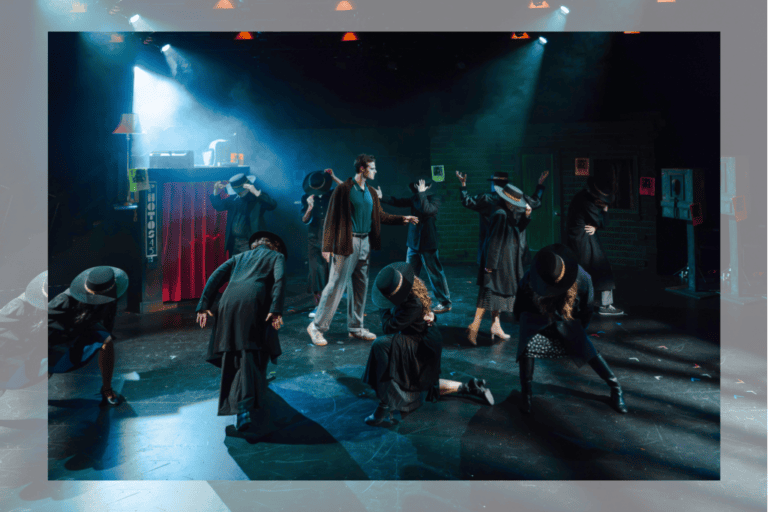 iPhoto caption: Graysen LaPointe and the company of 'Amélie.' Photo by Taylor Long.
REVIEW: Shifting Ground Collective’s Amélie is vivid and endearingly earnest
There’s an overwhelming sincerity to this production that, at times, overwrites the offbeat sensibility of the original film — although, I suspect that Anglicization and a shift to musical theatre conventions have something to do with this tonal incongruity as well.
 iPhoto caption: Karen Robinson in a promo photo for 'Prophetess.' Photo by Dahlia Katz.
When I spoke to actor Karen Robinson and playwright Ho Ka Kei about Prophetess' upcoming world premiere, they described an artistic process grounded in care and collaboration. Ho had long wanted to write the part of Queen Margaret for Robinson, and he framed the “love letter aspect” of writing for people he holds dear as key to the play’s origin story.
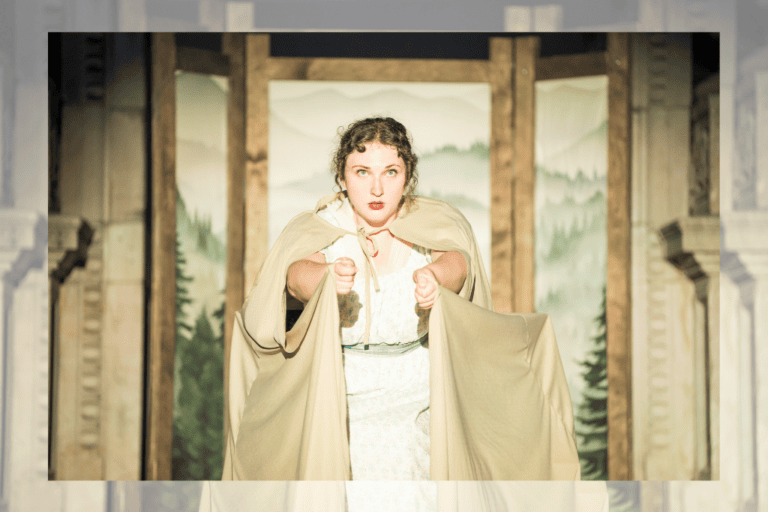 iPhoto caption: Georgia Findlay in 'Northanger Abbey.' Photo by Raph Nogal.
REVIEW: GFT’s Northanger Abbey embodies the delights and absurdities of Gothic fiction
Handwringing over popular fiction is hardly a thing of the past, as present panic about Romantasy attests. Unsurprisingly, both genres have a reputation for attracting women readers. Tyler J. Seguin’s Northanger Abbey displays how legitimate literary criticism can devolve into worrying that women are having too much fun.
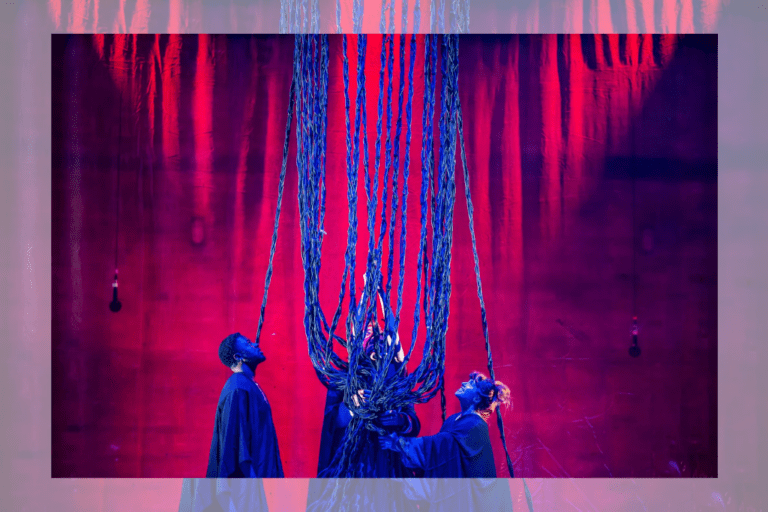 iPhoto caption: Members of the company of 'Medusa.' Photo by Dahlia Katz.
REVIEW: Soulpepper’s Medusa creates a mess it refuses to tidy
Speaking in sibilant murmurs via headsets wired into each seat of the Baillie Theatre, a chorus of intimate voices infiltrates the audience experience, drowning out dialogue and weaving an overstimulating soundscape.
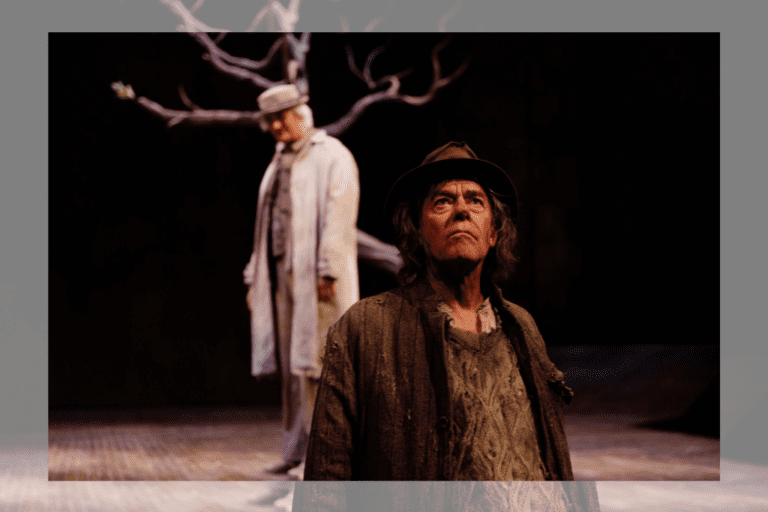 iPhoto caption: Paul Gross and Tom McCamus in 'Waiting for Godot.' Photo by David Hou.
REVIEW: Stratford Festival’s Waiting for Godot never feels fully its own
Tom McCamus' and Paul Gross' performances are clear and intentional. Nonetheless, I struggled to connect with this production.
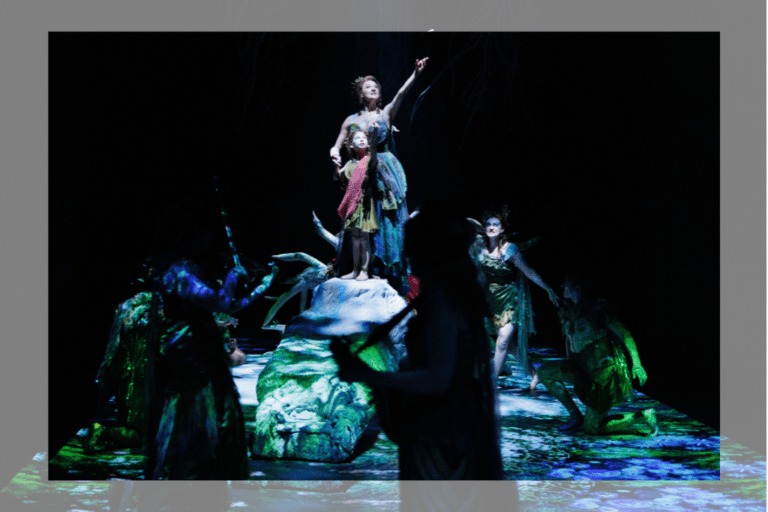 iPhoto caption: Members of the company of 'A Midsummer Night's Dream.' Photo by David Hou.
Developed in collaboration with Groundling Theatre, this A Midsummer Night’s Dream revels in the plights of its love-drugged protagonists through clever clowning, live music, and an animated landscape.
Comments