
Pochsy’s back! At VideoCabaret, a Canadian underground theatre icon returns to Toronto
 iPhoto caption: Promotional still for Citizen Pochsy (2003). Photo by Gary Mulcahey.
A billionaire in the White House, a burning planet, a theatre scene that cuddles up to banks for funding… Yes, now is the time for more Pochsy.
Amid this mayhem, I’m particularly refreshed by a line from playwright-performer Karen Hines’ 2004 intro to The Pochsy Plays: “I hope it is an entertainment which certain corporate warriors might come to see, laugh at, hum along with… only to awaken the next morning and inexplicably hang themselves with their Armani ties.”
Hines’ biting wish reverberates through the three solo plays contained in that Governor General’s Award-nominated volume: Pochsy’s Lips (1992), Oh, baby (1993), and Citizen Pochsy (2002). All centre Hines’ character Pochsy (pronounced “poxy”) — a satire of consumer culture that opposes a baby-dollish exterior with a roiling, existential darkness.
Pochsy returns to Toronto for the first time since 2010 in Pochsy IV: Unplugged, running this April at VideoCabaret’s Deanne Taylor Theatre. The show premiered in 2023 at Calgary’s High Performance Rodeo before playing at Edmonton’s Theatre Network and St. Catharines’ In the Soil Arts Festival. Roman numerals aside, the title recalls the mercury-poisoned Pochsy of Pochsy’s Lips, who appears onstage next to an IV pole. (This in turn lends sinister resonance to the subtitle “unplugged,” which arose because the VideoCabaret iteration will have minimal design.)
A joke inspired Pochsy’s return. “I was dared to make this show by my friend Bruce McCulloch, who is one of the Kids in the Hall,” Hines told me over Zoom. “I think now that he was more joking, but we were talking about irony and satire, and how both are very difficult during times of real trouble, because people are so raw, so tender — and so he challenged me to make a satire that would be for these times.”
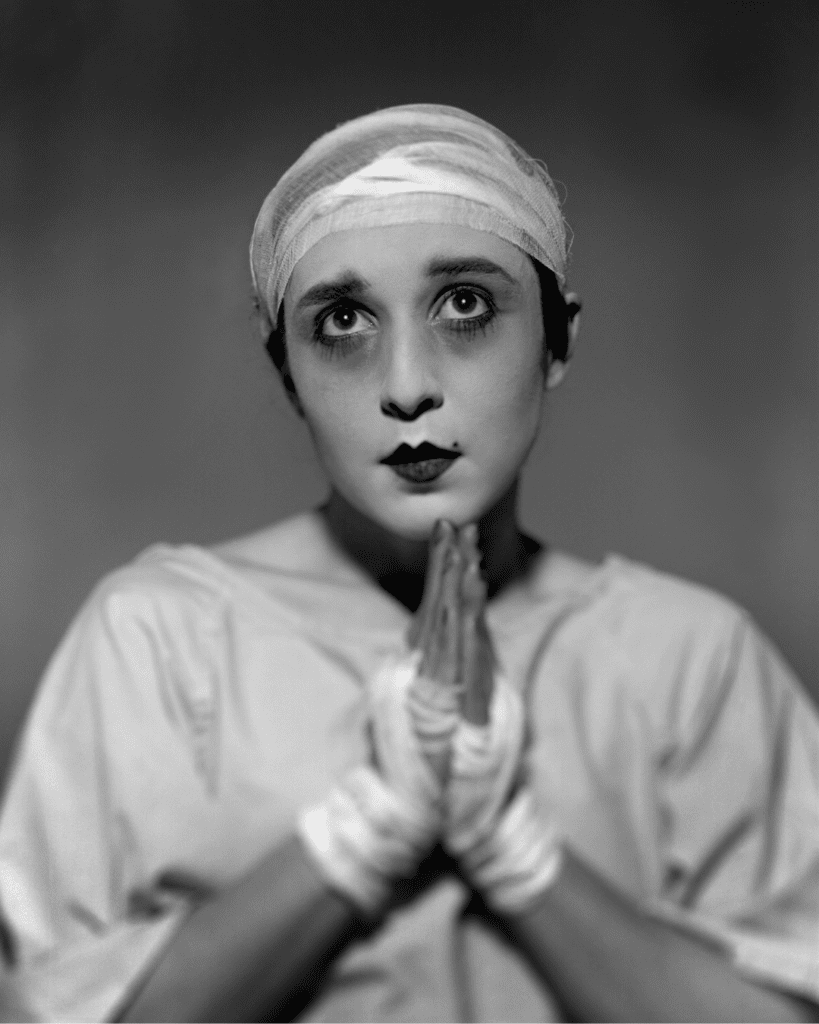
This need for sharp but compassionate cultural critique also fuelled Hines’ creation process in the ‘90s. “[The satires I was seeing] often felt preachy or cold or mean. They just didn’t speak to me,” said Hines. “Even when I was at Second City… you could get away with being mean, but not with being personal [or] actually cutting to the bone.”
That brief stint performing in mainstage revues at Second City did equip Hines with many tools for performing comedy, she explained: how to “pull a laugh,” “wait for a laugh,” “ride a laugh.” She fused this approach with aspects of the clown technique bouffon to create a character who embodies many of society’s spiritual and psychological afflictions but is always generous to the audience. “She’s both suffering and gleefully engaged with stuff,” Hines said.
Other key influences included silent movies, the landscape photography of Edward Burtynsky, and David Lynch’s Eraserhead. “I watched that film when I was in my very early 20s, and it disturbed me so much. It was so beautiful and magical, but so horrific,” said Hines. “I wanted to make something like that, but that was ultimately leaning into beauty, as opposed to the grotesque.” (Hines’ short film “My Name is Pochsy,” set in an industrial wasteland, really leans into this influence.)
Because Pochsy dies at the end of Pochsy’s Lips, the two subsequent shows are prequels, with Citizen Pochsy set the earliest. Pochsy IV, on the other hand, mostly unfolds in a liminal space; Hines told me that “place is less real in this one that it has been in the past.” But Hines welcomes all interpretations. She mentioned the plot could be “what Pochsy is experiencing in [the] 30 seconds as she moves from from life to death.” Or maybe she’s already dead: “If I’m looking for my actor’s choice, I can always fall back on ‘she’s a ghost, she’s haunting.’”
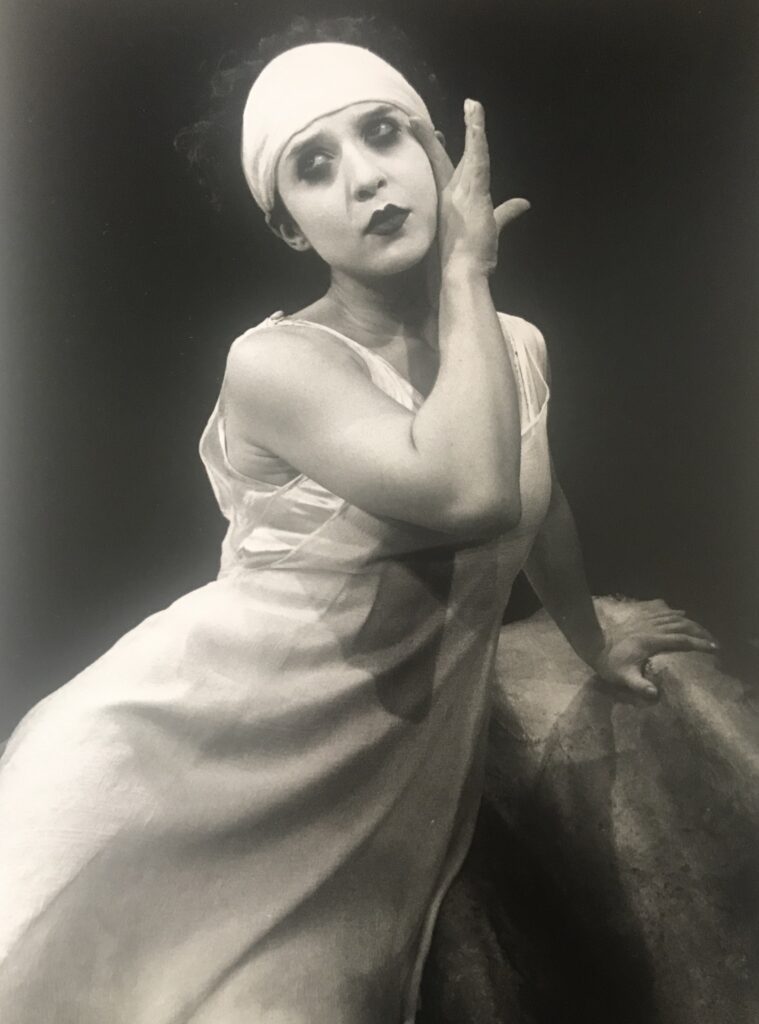
Hines enjoys letting the audience parse through layers of meaning. “There are opposites at play at all times — in the show, in the writing, in the performance,” she said. “When something gets dark, Pochsy might be super light in the delivery of it. When she’s being facetious or giggly, it might even be as she’s destroying a species.
“As we all do, right?” asked Hines. “We are all always searching for our joy… but at the same time, we are wreaking havoc. So it’s those sorts of opposites that, when the audience recognizes them, can provide catharsis, should provide laughter.”
Constant eye contact with the audience is a key tool for creating these tensions — Pochsy is always staring a little too intently for things to be as they seem. The plays have accordingly flourished in small venues, like the now-defunct Poor Alex, “a beautiful little rundown, rickety space,” where Pochsy’s Lips made its Toronto premiere. The character feels like a genuine creation of the underground.
So it’s fitting that she’s touching down at the intimate Deanne Taylor Theatre, which can be found nestled in a Leslieville alley, hidden away from the gaze of bankers.
“When you’re looking into a sea of 200 people, you ideally make them feel like you’re making eye contact with them all, but of course you can’t,” said Hines. “With a 50-seat theatre, you could.
“To me, that’s the epitome of theatre.”
Pochsy IV: Unplugged runs at VideoCabaret from April 4 to 20. Tickets are available here.
VideoCabaret is an Intermission partner. Learn more about Intermission’s partnership model here.
Liam Donovan
Liam is Intermission’s senior editor. He lives in Toronto. His Substack newsletter is available at loamdonovan.substack.com.
LEARN MORE iPhoto caption: Devon Michael Brown as Rusty Charlie with members of the 'Guys and Dolls' company. Stratford Festival 2026. Photo by Ann Baggley.
“It's so exhausting, but it's really rewarding when you get to dance so full-out,” says Devon Michael Brown. “You get to use your technique and your training to the fullest extent.”
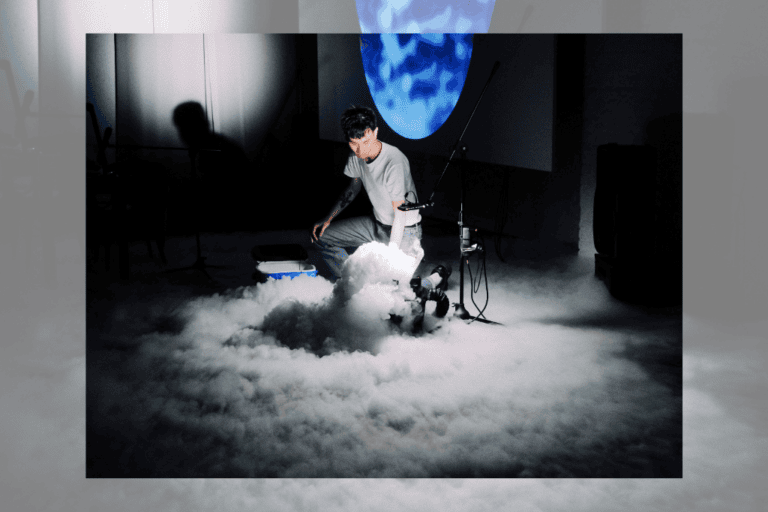 iPhoto caption: Ping-Hsiang Wang in 'Retina Maneuver.' Photo by Hang Su.
REVIEW: At this year’s SummerWorks Performance Festival, physical storytelling is central
From a dancer becoming a canine to a shy theatre director practicing his swordsmanship, the shows I’ve seen so far use performers’ bodies to dramatize defiance.
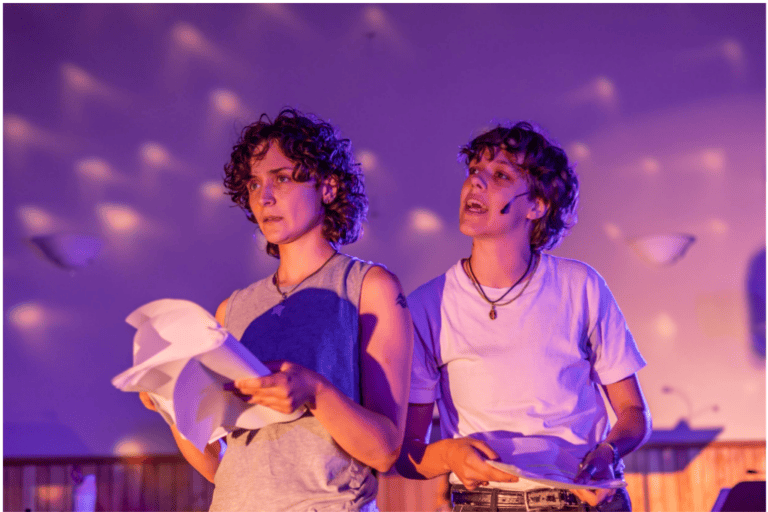 iPhoto caption: Anna Morreale and Luca McPhee perform in 'From Stardust' at the 2025 MADGEN Theatre Festival. Photo by Dave Klassen.
MADGEN Theatre Festival returns to the Danforth
Theatre of the Beat selected four producers under the age of 30 to receive paid mentorship from Toronto theatre-makers. From August 20 to 22, each member of the cohort mounts a new one-act Canadian play.
 iPhoto caption: Steven Sutcliffe and company in 'Twelfth Night.' Photo by Dahlia Katz.
REVIEW: High Park Twelfth Night pays tribute to the crazy things we do for love
As the play’s events ping-pong between seriousness and frivolity, Caroline Toal’s Viola appears constantly aware of the dangerous contradictions in the air, remaining guarded against the chaos' pull — and yet never entirely abandoning the possibility of enchantment.
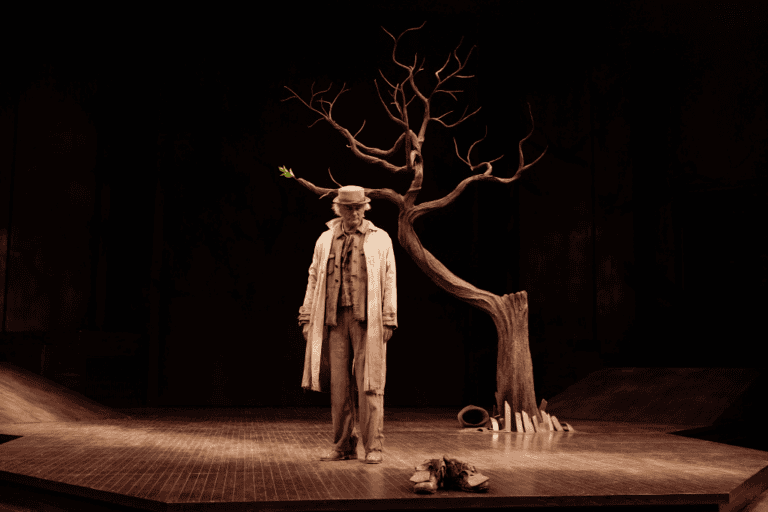 iPhoto caption: Paul Gross in 'Waiting for Godot.' Photo by David Hou.
Why Paul Gross thinks Waiting for Godot is ‘one of the great achievements of human creativity’
“The audience is with you. You bring them in. There isn't a big division between the stage and the audience,” says Gross, currently playing Vladimir in Waiting for Godot at the Stratford Festival. “They’re the final piece of the storytelling. We need them to complete the circle.”
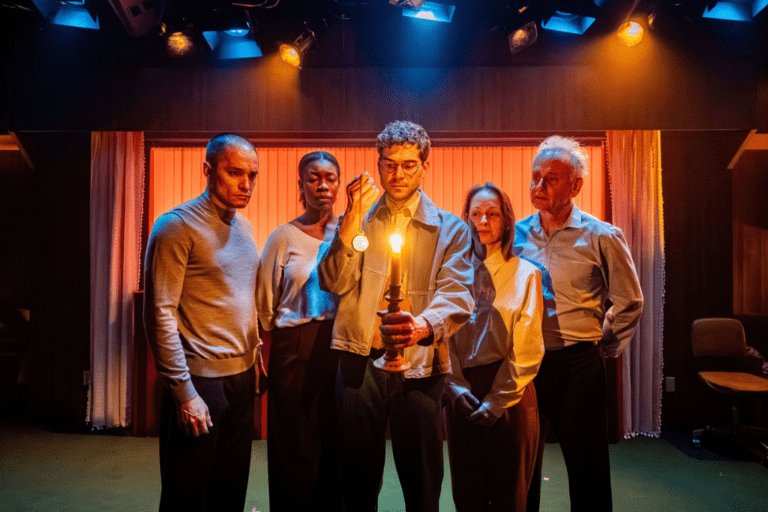 iPhoto caption: Karl Ang, Ivy Charles, Daniel Maslany, Mariya Khomutova, and Alon Nashman in 'The Division.' Photo by Dahlia Katz.
Productions at Crow’s and Theatre Passe Muraille win top honours at the 2026 Dora Awards
This evening at Meridian Hall, the Toronto Alliance for the Performing Arts (TAPA) announced the recipients of the 46th annual Dora Awards, celebrating local theatre, dance, and opera.
Comments