
REVIEW: The Bidding War is a Lear-worthy extravaganza of housing hell
 iPhoto caption: The Bidding War production still by Dahlia Katz.
The day before the opening of The Bidding War, Michael Ross Albert’s riotous dark comedy at Crow’s Theatre about the rotten core of our current housing crisis, I awoke to a de facto eviction notice. A 35-story apartment building is soon to rise where my home once stood, pushing me into a manic market on a strict deadline.
Albert’s feisty and sardonic script couldn’t have felt more topical, the cynical song in my heart duetting misanthropically with its rapid-fire satire. Aided by a fantastic cast, director Paolo Santalucia’s production covers a 24-hour bidding period for “the last nice house in the city” which turns into a King Lear-worthy extravaganza of scheming, backstabbing, and violence.
“Can I tell you what I love about this house?,” practices newly-licensed realtor Sam (Peter Fernandes), as he busily puts out trays of canapes on the trendy kitchen island of Ken MacKenzie and Sim Suzer’s sleek set, the inside of a newly renovated house staged with neutral hues and abstract art to increase appeal. The house currently belongs in part to Sam’s high school friend June (Veronica Hortiguela), a bohemian artist mostly living in Germany, who he’s desperately trying to impress; Fernandes charms as the bumbling, conniving lifelong loser, skidding on gray wood floors as he tries to keep things together.
An open house is perfect fodder for a farce, which the production gleefully embraces in the first act before it becomes something still entertaining but darker. Santalucia and fight director Anita Nittoly stage the mayhem with assurance, conversations converging and clashes ensuing as characters emerge from and disappear into the bedroom, basement, and backyard.
Albert’s caricatures of city homebuyers and realtors are exaggerated, but only barely; whining and jockeying for position, they all display their most venal tendencies as the claws come out.
The realtors swarm like jackals around their willing prey, pitting them against each other to earn more commission — or, perhaps, a place for themselves in the neighbourhood, gentrifying rapidly via forced displacement of low-income families. Aurora Browne’s Blayne, a swaggering villain secure in her right to take what’s hers, seems the shadiest, but none come away clean.
Their clients are no better. May-December gay couple Donovan (Izad Etemadi) and Ian (Steven Sutcliffe) are the best of the lot, Donovan falling in love with the backyard tree as a puppy oasis, while Ian claims they deserve the place to make up for a lifetime of discrimination. Sociopathic fitness bro Charlie (Gregory Waters), whose only human emotion — is flexing an emotion? — seems to be the joy he gets from making money by humiliating online devotees, wants to chop said tree to make room for a hot tub.
Fiona Reid is hilarious as the hapless, blunt Boomer Miriam, who doesn’t know how to call an Uber, but has a large nest egg from the house she’s owned for 40 years. Luke (Gregory Prest) and Lara (Amy Matysio), tellingly named like a famously turbulent soap opera couple, seem minutes away from delivering their first child; both leftist crusaders, he’s an unemployed journalist and she’s a sellout to Amazon Prime’s documentary unit. Wielding her protruding belly as both shield and weapon, Matysio makes doe eyes that hide the wolf inside at anyone who might take this house away from Lara’s unborn child.
Albert’s hard-hitting, relevant themes examine ownership in a world where we increasingly have to pay simply to exist, questions of who deserves comfort, and generational conflict between boomers trying to live their lives and millennials angry that they never got a chance at that same lifestyle. Ultimately, it’s not about the house; it’s about a sort of cosmic fairness that has never existed, and how we might feel justified in tipping the scales in our favour after seeing the unscrupulous get rewarded again and again.
As the play darkens, the characters grow more grotesque. Many both symbolically and literally disfigure, from one character’s animalistic run up the stairs on all fours to another’s swollen jaw that renders speech nearly impossible. Seeing the space swarming with the scuttling human scavengers, June brings out her father’s giant metal bug sculptures from the basement to complete the mini Metamorphosis.
Appropriately, that beautiful tree in the backyard, represented by a single branch that juts over part of the in-the-round audience, is dying. The bleak third act, which transplants the action to that backyard, similarly offers little comfort, because little comfort exists. It’s lucky that the whole endeavour is funny as hell, because this hell needs some humour.
Just let me know if any of you have a lead on a nice house in Toronto.
The Bidding War runs at Crow’s Theatre until December 15. Tickets are available here.
Intermission reviews are independent and unrelated to Intermission’s partnered content. Learn more about Intermission’s partnership model here.

Ilana Lucas
Ilana Lucas is a professor of English in Centennial College’s School of Advancement. She is the President of the Canadian Theatre Critics Association. She holds a BA in English and Theatre from Princeton University, an MFA in Dramaturgy and Script Development from Columbia University, and serves as Princeton’s Alumni Schools Committee Chair for Western Ontario. She has written for Brit+Co, Mooney on Theatre, and BroadwayWorld Toronto. Her most recent play, Let’s Talk, won the 2019 Toronto Fringe Festival’s 24-Hour Playwriting Contest. She has a deep and abiding love of musical theatre, and considers her year working for the estate of Tony winners Phyllis Newman and Adolph Green one of her most treasured memories.
LEARN MORE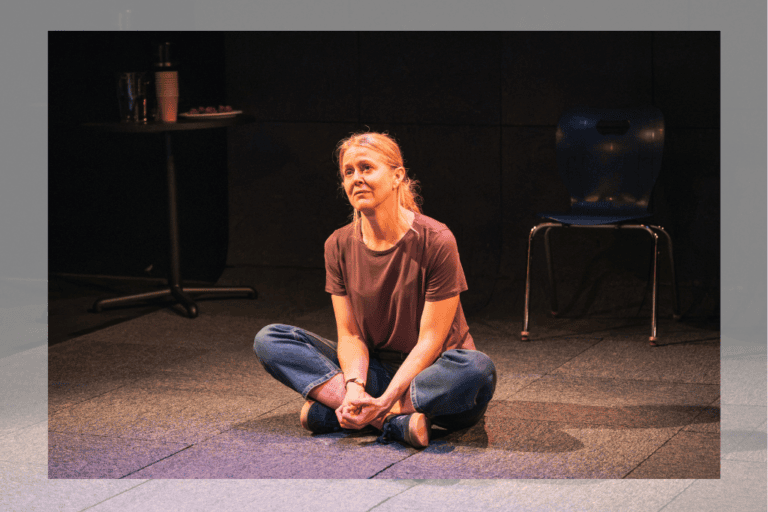 iPhoto caption: Amy Rutherford in 'Pre-Existing Condition.' Photo by Elana Emer.
In an attempt to create an issue-based work with a central everywoman, the play sends the message that we shouldn’t allow domestic violence to define a person while simultaneously staging that definition.
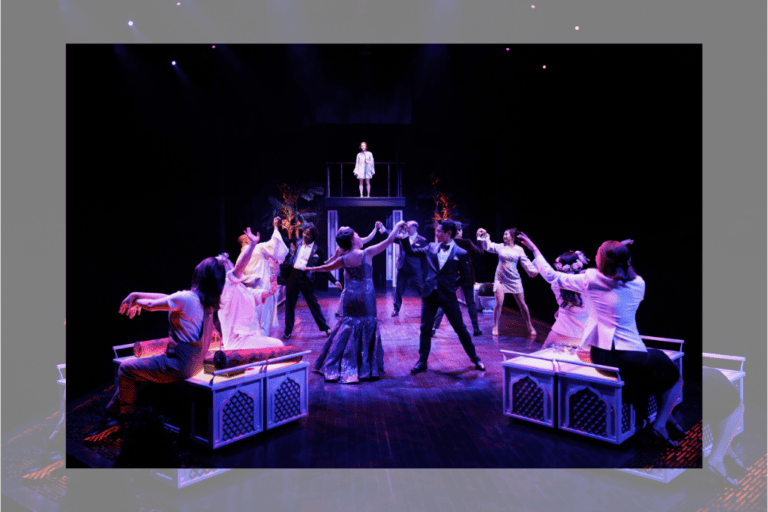 iPhoto caption: Members of the company in 'The Tao of the World.' Stratford Festival 2026. Photo by David Hou.
Set in an opulent world of Singaporean elites, writer-director Jovanni Sy 施崇梵’s world premiere work at the Tom Patterson Theatre is a bubbly, Crazy Rich Asians-style romcom that sweetens the palate before releasing a poignant pop of acidic social commentary, arguing that the concept of restoration is laughable to those who suffered most in the interim and returned to a status quo little better than the disruption.
 iPhoto caption: André Sills and Krystin Pellerin in 'Othello.' Photo by David Hou.
REVIEW: In The Tempest and Othello, the Stratford Festival gets vengeful — and it rocks
The two strong productions, seen as a double bill, make a compelling case against choosing vengeance, with director Haysam Kadri’s Othello an especially riveting and taut interpretation.
 iPhoto caption: Sara Farb and Qasim Khan in 'Funny Girl.' Photo by David Cooper.
REVIEW: Sara Farb shines in Funny Girl at the Shaw Festival
One theme of Funny Girl is acceptance of the self despite its flaws and inconsistencies. The musical, likewise, is full of flaws and inconsistencies, but compelling all the same. Luckily, Sara Farb as Fanny Brice in all her boastful vulnerability gives us that central figure who delights — an umbrella to ward off the rain.
 iPhoto caption: Raymond Strachan and Tom McCamus in 'Death of a Salesman.' Photo by David Hou.
REVIEW: Stratford Festival’s Death of a Salesman is stark and melancholy
The relatively straightforward production is aesthetically austere, but strong central performances of the family at its core keep it human.
 iPhoto caption: Members of the company of 'Fiddler on the Roof.' Photo by Dahlia Katz.
REVIEW: Exquisite Yiddish Fiddler on the Roof bursts with both elation and pain
The word “Torah” in Hebrew dominates centre stage, constantly illuminated and glowing like an eternal flame. The backdrop’s sanctification, desecration, and resurrection signifies the resilience and endurance of the people before it.
Comments