
Q&A: Casey and Diana director Andrew Kushnir on bringing the acclaimed drama to Theatre Aquarius
 iPhoto caption: Photo by Dahlia Katz.
After premiering at the Stratford Festival in 2023, transferring to Soulpepper Theatre the following January, and winning best new Canadian play at the 2024 Toronto Theatre Critics’ Awards, Nick Green’s Casey and Diana is returning to Ontario.
Playing at Theatre Aquarius in a co-production with Royal Manitoba Theatre Centre (RMTC), Casey and Diana is a six-actor drama inspired by Princess Diana’s historic 1991 visit to Casey House, a Toronto hospice for people living with AIDS.
While this version of Casey and Diana isn’t identical to the production that played at Stratford and Soulpepper, and sports an all-new cast, it does share the same director: Andrew Kushnir.
Over email, I connected with Kushnir for a brief Q&A about Casey and Diana, and the changes he’s making to this co-production. His answers have been lightly edited for length and clarity.
How has it been revisiting this text, a year after the Soulpepper remount, and in our current social/political moment? Are new themes emerging for you?
I’ve been thinking a lot about grief and grieving during this process — and how Casey and Diana gives us a rich, dynamic, cathartic, and often joyful public ritual for our grief. It’s the opposite of a downer for me.
There’s lots to grieve right now in the world. But there are so few communal places to be with that grief. And I do think grieving in public normalizes a universal human condition: that we’ve all loved and lost something (time, a dream, a way of life) — or, more commonly, a dear someone. I don’t think the ritual solves the grief, but it makes us feel less alone in it.
While Joshua Quinlan is back as set and costume designer, you have a new composer/sound designer (Ashley Au) and lighting designer (Logan Raju Cracknell). How’s that changing things?
My partner is a designer, and he often talks about how design is autobiographical. In the way I like to work, new collaborators mean new forms of seeing (and hearing) the play.
We haven’t yet started tech rehearsals on Casey and Diana, but all our prep has been fixated on making the show bespoke to the Aquarius and RMTC theatres. I think the relationship between story and space is paramount; these designers are bringing their considerable gifts to that.
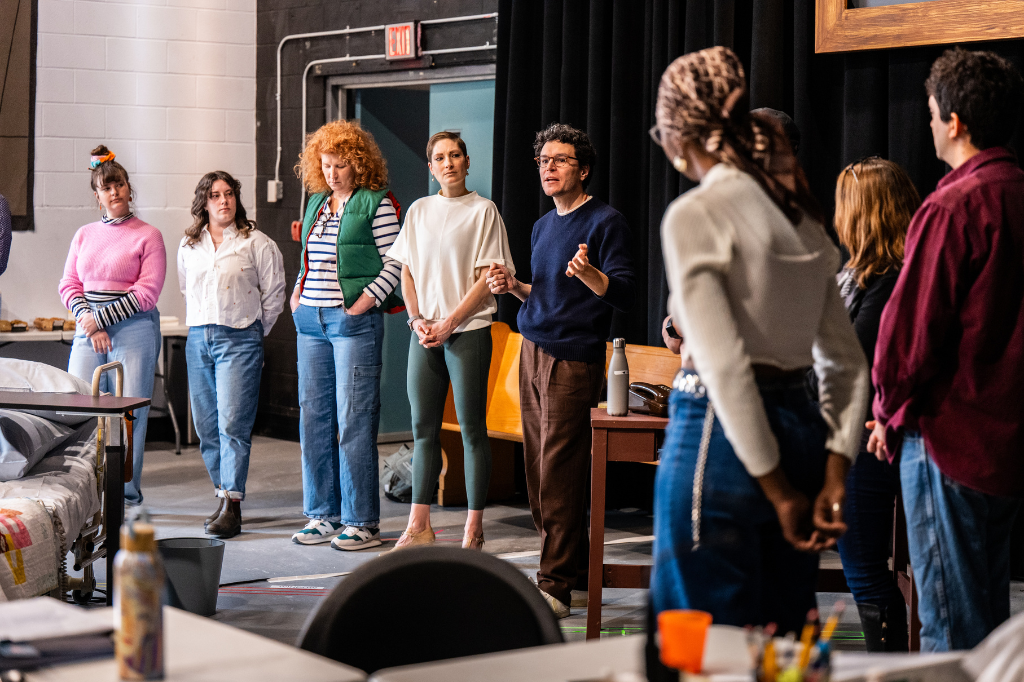
Speaking of space, the Aquarius mainstage theatre has about 700 seats — almost double the size of Soulpepper’s Marilyn and Charles Baillie Theatre. Does that lead to any changes? How do you keep things intimate?
Josh Quinlan and I have always wanted audience members to feel as though they’re in that room with Thomas and Diana at Casey House — no matter the theatre size. We’re not interested in the play being a voyeuristic experience, the stuff of strangers overhearing or spying on the deep intimacy of hospice care and men dying of AIDS.
In this design, we’ve created a series of stained glass “portals” and have gently raked the stage. The overall effect is pulling the audience toward those two beds and the men residing in them. I think we’ve created a powerful concentration of energy for the audience to step into.
What about the all-new cast, which includes Gregory Prest as Thomas and Catherine Wreford as Diana?
A mentor of mine told me that casting well — and casting “for love” (as in love of the piece, and what it’s trying to do in the world) — gets a production 90 per cent of the way there.
I’ve seen how this bi-provincial ensemble has become a fast family around this play. The humour of Nick’s script is such a huge part of the play’s lifeforce. And this is a room — including stage management — that gets the vibe. They also get the responsibility of this work: to honour history, community, and ghosts.
Is there anything else new about this co-production that people who’ve already seen the show might not expect?
When this show first premiered at Stratford, we were all freshly emerging from the worst of the pandemic.
I think the play, and its pandemic, made us think about proximity — what it means to make or withhold human contact. During COVID, I remember hearing this term “skin hunger” — starving for someone’s touch — and feeling how that was a possible entry point into the plight of those dying from both the physical and social dimensions of AIDS.
Now, for me, the play seems to be homing in on something else. I think we have compassion hunger. I think we’re looking at a world where we are unwilling or unable to suffer with others in a way that validates their humanity, and thereby our own. And I think people will be surprised to find how this play stirs and tends to that in such a compassionate way.
Casey and Diana runs at Theatre Aquarius from February 19 to March 8, and at Royal Manitoba Theatre Centre from March 19 to April 12.
Liam Donovan
Liam is Intermission’s senior editor. He lives in Toronto. His Substack newsletter is available at loamdonovan.substack.com.
LEARN MORE iPhoto caption: Stratford's Tom Patterson Theatre. Photo by Ann Baggley.
2027 highlights include a new Canadian Jacob Two-Two musical and two of the Bard’s thornier plays: The Merchant of Venice and The Taming of the Shrew.
 iPhoto caption: Devon Michael Brown as Rusty Charlie with members of the 'Guys and Dolls' company. Stratford Festival 2026. Photo by Ann Baggley.
“It's so exhausting, but it's really rewarding when you get to dance so full-out,” says Devon Michael Brown. “You get to use your technique and your training to the fullest extent.”
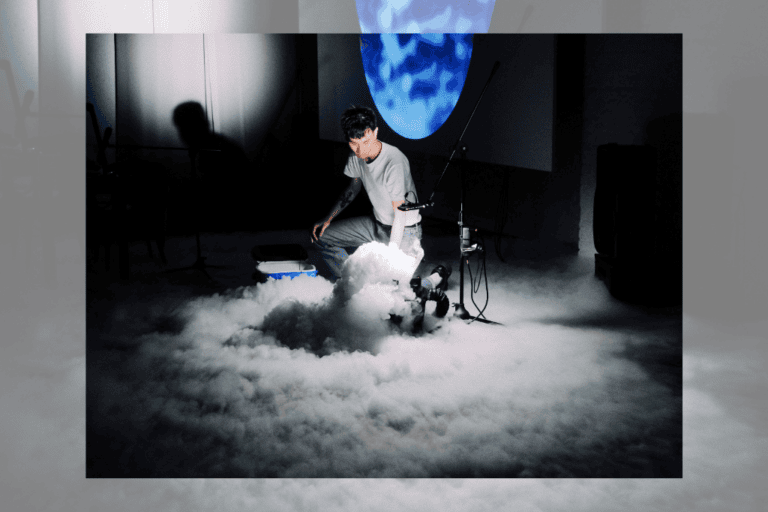 iPhoto caption: Ping-Hsiang Wang in 'Retina Maneuver.' Photo by Hang Su.
REVIEW: At this year’s SummerWorks Performance Festival, physical storytelling is central
From a dancer becoming a canine to a shy theatre director practicing his swordsmanship, the shows I’ve seen so far use performers’ bodies to dramatize defiance.
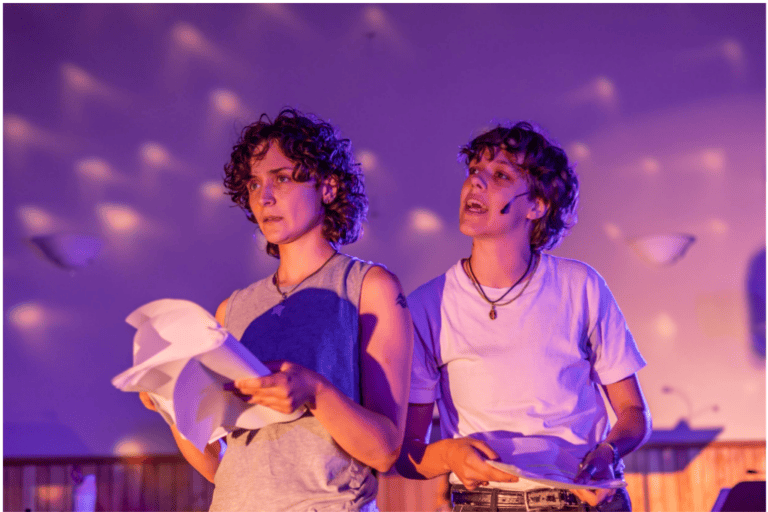 iPhoto caption: Anna Morreale and Luca McPhee perform in 'From Stardust' at the 2025 MADGEN Theatre Festival. Photo by Dave Klassen.
MADGEN Theatre Festival returns to the Danforth
Theatre of the Beat selected four producers under the age of 30 to receive paid mentorship from Toronto theatre-makers. From August 20 to 22, each member of the cohort mounts a new one-act Canadian play.
 iPhoto caption: Steven Sutcliffe and company in 'Twelfth Night.' Photo by Dahlia Katz.
REVIEW: High Park Twelfth Night pays tribute to the crazy things we do for love
As the play’s events ping-pong between seriousness and frivolity, Caroline Toal’s Viola appears constantly aware of the dangerous contradictions in the air, remaining guarded against the chaos' pull — and yet never entirely abandoning the possibility of enchantment.
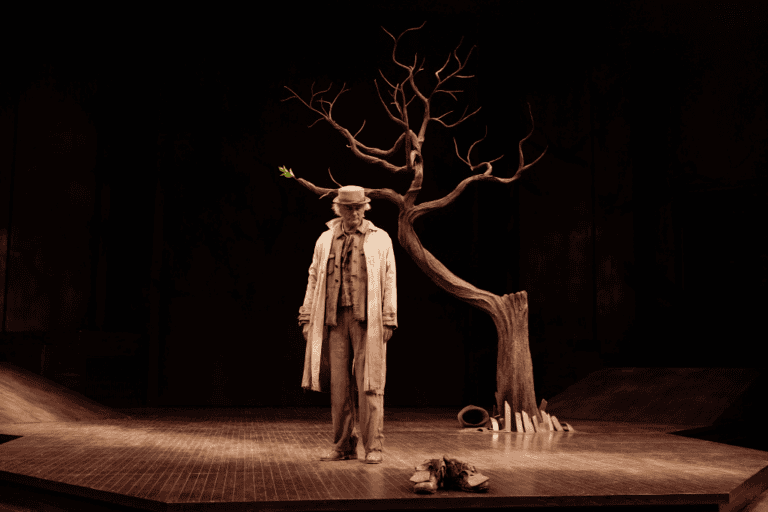 iPhoto caption: Paul Gross in 'Waiting for Godot.' Photo by David Hou.
Why Paul Gross thinks Waiting for Godot is ‘one of the great achievements of human creativity’
“The audience is with you. You bring them in. There isn't a big division between the stage and the audience,” says Gross, currently playing Vladimir in Waiting for Godot at the Stratford Festival. “They’re the final piece of the storytelling. We need them to complete the circle.”
Comments