
REVIEW: At a new venue on Toronto’s waterfront, a stalwart Irish company tackles Beckett
 iPhoto caption: Aaron Monaghan and Rory Nolan in Druid Theatre's 'Endgame.' Photo by Green Yang.
Endings of many sorts are rarer than they’ve ever been. At the multiplex, franchises extend for eternity; on the internet, platforms blast users with an infinity of images. In her new book-length essay Nos inachèvements, the French author Blanche Leridon puts a positive spin on this contemporary phobia of conclusions, suggesting that a way through our so-called end times may be to embrace the unfinished as a source of lucidity, courage, and freedom.
After living through the Second World War, Samuel Beckett wrestled with the concept of endings — but he, uh, wasn’t one for positive spins. Endgame, the dramatist’s favourite of his plays, takes a telescope to its characters’ many-sized failures, eviscerating the thin walls that tend to separate beginning, middle, and end. Among splashes of humour, Beckett maintains an undercurrent of pain.
At the Corleck, Canada Ireland Foundation’s new venue overlooking Lake Ontario, director Garry Hynes stages Endgame with a remarkable sense of musicality. The sold-out touring production from Galway’s Druid Theatre represents a rare chance for Toronto audiences to witness an esteemed international company throw its weight at a modern classic. Beckett’s text reverberates with such clarity that if this rendition remains my only in-person experience of it, I think I’d be satisfied.
Having lost his sight and ability to walk, the aging Hamm (Rory Nolan) spends his days decaying in a centre-stage armchair, next to two tin garbage bins housing his frail parents Nagg (Bosco Hogan) and Nell (Druid co-founder Marie Mullen). In a remote seaside home that feels vaguely like a post-apocalyptic bunker — Beckett’s setting is characteristically ambiguous, and set designer Francis O’Connor doesn’t spoil the mystery — the immobile family relies on the care of a butler-like figure named Clov (Aaron Monaghan). He breaks up the play’s cycles of existentialism by completing a variety of tasks, often returning from the adjoining kitchen to deliver Hamm objects like a handmade toy dog and an old-school alarm clock.
Hynes follows Beckett’s famously exacting stage directions. The production opens with an idiosyncratic multi-minute wordless sequence featuring Clov: he manoeuvres a ladder to peer out the barren grey room’s pair of out-of-reach windows, then checks inside the garbage cans and removes a bedsheet covering Hamm. Clov punctuates this entrancing movement score with brief laughs.
Monaghan’s specific physical and vocal performance is one of the production’s great delights. From the opening sequence onward, the actor fulfills his tasks with an alacrity that is bright enough to seem consenting, maybe even contented. At the same time, roboticism pervades his body and voice. Those brief laughs bubble with joy, but each one squeaks out the same mechanical two-note melody, echoing a door hinge. Whenever Hamm blows the whistle wrapped around his neck, Clov hoofs into the room like a gazelle before freezing in motion: one leg holding his weight, the other sticking out at a 45-degree angle.
Hamm’s petulant antics complete this bizarre, endearing pas de deux. If Clov dares perch behind his chair, his boss lashes out — “Don’t stay there, you give me the shivers” — and Clov returns to his usual position at the right of Hamm. It’s an image Hynes has set precisely, to the extent that the characters always appear to focus their eyes in the same two spots, directly away from each other. Nagg and Nell, whom Hogan and Mullen embody with sensitivity, also battle to connect during their scant appearances, at one point attempting a kiss even as they know the distance between their bins won’t allow it.
The round floor of O’Connor’s set — the audience sits opposite Hamm, in a very slight thrust arrangement — subtly frames the play’s room as a lodestone for decay. Thin lines cut through the concrete, sketching a concentric, dartboard-like pattern. At its bull’s-eye lives Hamm, and when Clov takes his armchair for a drive around the room, we discover a circular metal drain so perfectly central that it seems to exude a kind of gravity. Out of the room’s sole doorway flows a steady stream of theatrical haze; it wafts down a rectangular passageway of light toward the drain, where Hamm insists Clov, too, will eventually end up: “You’ll be sitting here, a speck in the void, in the dark, forever, like me.”
All these details combine to make Druid’s production a valuable portal through which to experience Beckett’s rhythmic examination of ending at the beginning and beginning at the end. If there’s a dose of hope waiting for contemporary audiences in Endgame, I think it lies in how the play’s cyclic nature cultivates awareness: by watching the same actions on repeat, we begin to understand them as a pattern — one that might finally end, if only the characters could see themselves as we do.
Endgame runs at the Corleck until November 28. More information is available here.
Intermission reviews are independent and unrelated to Intermission’s partnered content. Learn more about Intermission’s partnership model here.

Liam Donovan
Liam is Intermission’s senior editor. He lives in Toronto. His Substack newsletter is available at loamdonovan.substack.com.
LEARN MORE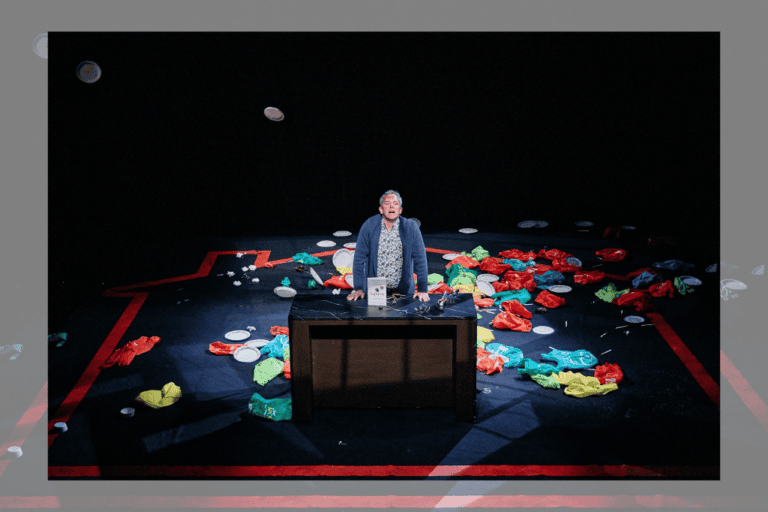 iPhoto caption: Adam Lazarus in 'Versus.' Photo by 852tangram.
REVIEW: Dazzling stagecraft fuels Adam Lazarus’ dynamic Versus
Playing at The Theatre Centre, Versus contends that during a crisis, the most important opportunities are collective ones.
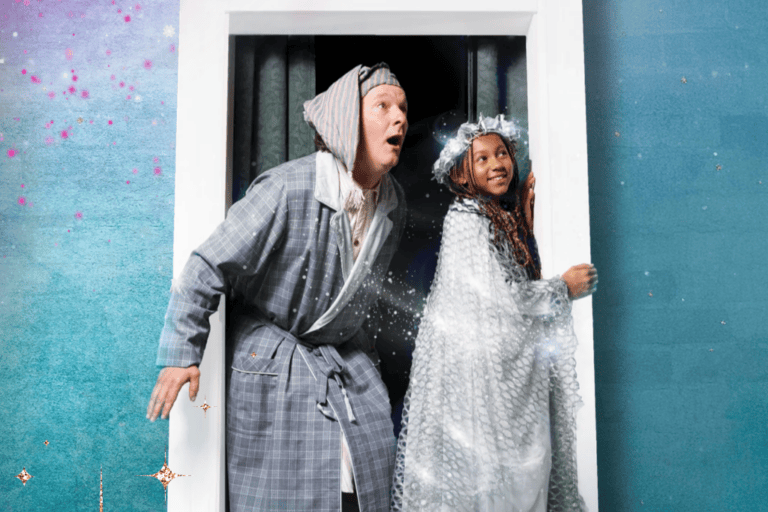 iPhoto caption: Geoffrey Armour and Harmony Holder in 'A Christmas Carol.' Photo by Mai Tilson.
Q&A: A Christmas Carol musical transports Dickens to the 1940s at London’s Grand Theatre
“A second production is such a gift for a playwright,” says adapter David van Belle.
 iPhoto caption: Two men hold an Equity banner in 1997. Photo courtesy of Equity.
“Live performance is so special because it challenges perspectives. It's inclusive. It's an economic engine. It knits us together as a society, and I think that we have to remember the value of it,” says Equity executive director Alex Levine.
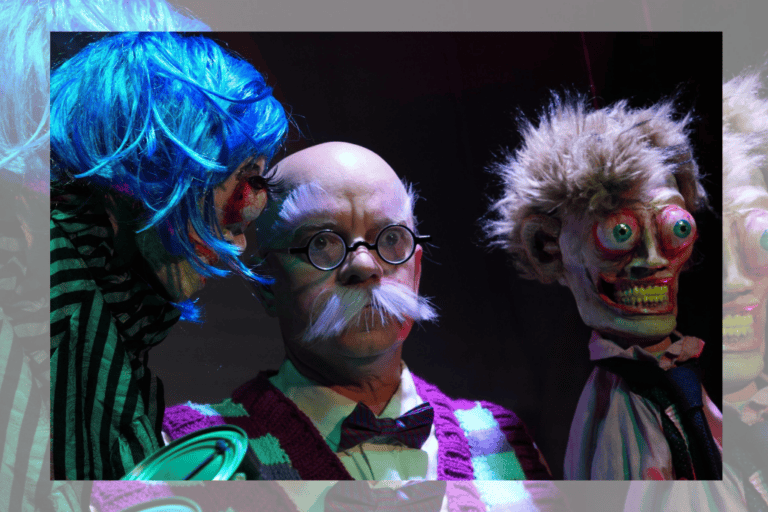 iPhoto caption: Eric Woolfe in 'The Call Centre of Cthulhu.' Photo by Jack Woolfe.
REVIEW: In Eldritch’s puppet-packed Call Centre of Cthulhu, coincidence signals apocalyptic doom
It's a campy-as-ever blend of puppets, character voices, and card tricks — a dose of classic Eldritch excess, timed to the Halloween season.
 iPhoto caption: The Lula Lounge in Toronto. Photo by Sam Gaetz.
At events across the country, Canadian Actors’ Equity Association celebrates 50 years
Equity represents nearly 6,000 professional artists working in opera, English-language theatre, and dance nationwide, advocating for fair wages, safe working conditions, and more.
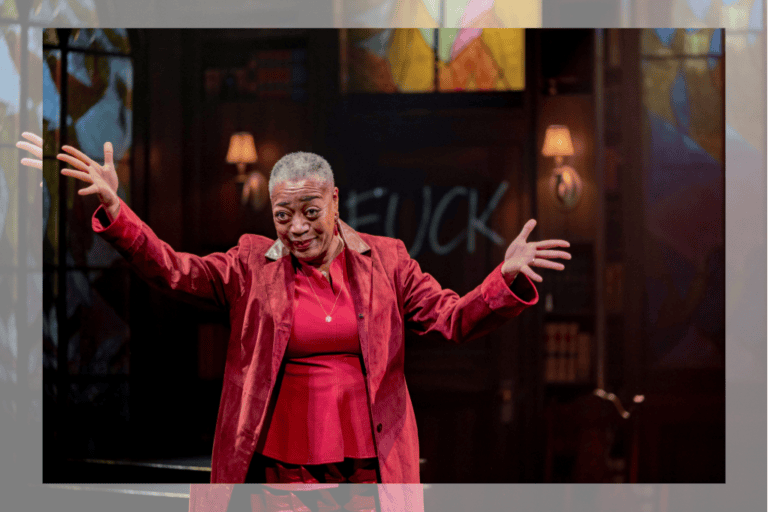 iPhoto caption: Karen Robinson in 'Prophetess.' Photo by Jae Yang.
REVIEW: In Tarragon’s outstanding Prophetess, language is both mighty and inadequate
Margaret’s facility with text helps her maneuver through an institution like York University, where words hold significant power. But the brilliant middle-aged scholar finds herself surprisingly unequipped to process the true sense of more elemental forces: love, grief, spiders.
Comments